New COVID omicron subvariant XBB.1.5 is ‘spreading like wildfire’ in US: Health experts reveal why

The new omicron subvariant, known as XBB.1.5, is spreading like wildfire across the U.S.

As colder weather brings in peak COVID infections, this novel mutation is beginning to worry health professionals.

So, what are some of the unique features of the strain that is now gripping swaths of the country?

THE NEW OMICRON SUBVARIANT XBB.1.5: WHAT YOU MUST KNOW NOW

First, this subvariant is immuno-evasive. It’s not as susceptible to natural immunity or vaccines — and it is very contagious, health professionals say. 

In a phone interview with Fox News Digital, Fox News medical contributor Dr. Marc Siegel explained that there are actually two subvariants at play: XBB and XBB.1.5.
New COVID omicron subvariant XBB.1.5 is ‘spreading like wildfire’ in US: Health experts reveal why

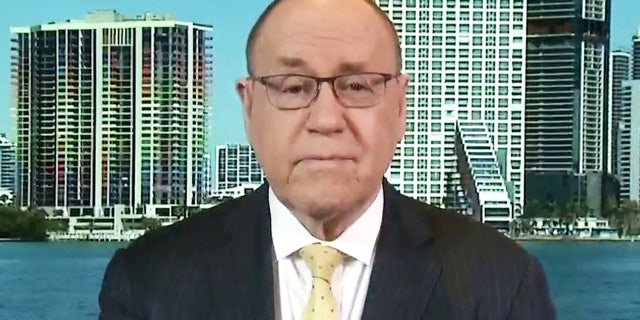
Fox News medical contributor Dr. Marc Siegel, pictured, said that the XBB subvariants sweeping parts of the nation are “highly contagious,” with spike proteins acting like “suction cups.”
(Fox News)

XBB.1.5 is more contagious, said Dr. Siegel, who is also a professor of medicine at NYU Langone Medical Center in New York City.

It’s more contagious due to its ability to grip tightly onto a host, he explained.

“The spike proteins are like suction cups,” he said. 

“Viruses always want to be more and more transmissible and infect more hosts.”

“So, the more it can get a grip … the more easily it transmits from cell to cell,” he added.

CDC: FLU SEASON STARTING TO WANE AFTER BRUTAL START, INCLUDING AT LEAST 12,000 DEATHS

Both XBB subvariants are “highly contagious,” Siegel added, since each omicron variant is “out-competing its predecessor.”

Dr. Shad Fani Marvasti, associate professor and director of public health and prevention at the University of Arizona College of Medicine – Phoenix, told Fox News Digital that each new strain develops with the intention of overshadowing those that went before it.
Dr. Shad Marvasti, associate professor and director of public health and prevention at the University of Arizona College of Medicine - Phoenix, said he hopes that COVID variants will become "less severe."

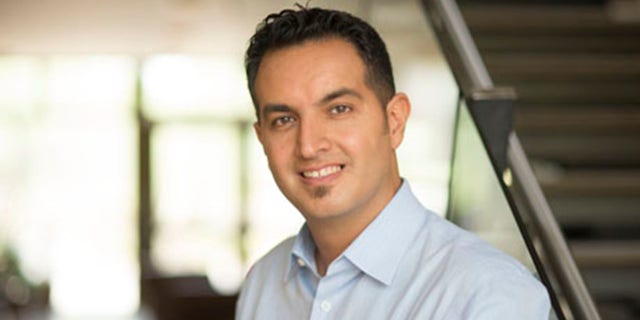
Dr. Shad Marvasti, associate professor and director of public health and prevention at the University of Arizona College of Medicine – Phoenix, said he hopes that COVID variants will become “less severe.”
(Shad Marvasti, MD, MPH)

“Viruses always want to be more and more transmissible and infect more hosts,” he said.

In some cases, there’s a “trade-off” between mutations, in which some may become more transmissible but less virulent in terms of the health impact, Marvasti also said.

This is the hope for omicron and its developing variants, such as the “sticky” XBB, he noted.

‘GREAT CONCERN’: INVASIVE GROUP A STREP CASES SPIKING IN SOME PARTS OF US — CDC IS INVESTIGATING

He said he hopes that “we start seeing [the variants becoming] less severe,” he said. 

“And that can be both a function of the evolution of the virus … and also the fact that more people have been exposed to the virus through either vaccination boosters or previous infections,” he said.
A nurse administers a pediatric dose of the COVID-19 vaccine to a young girl. Dr. Marc Siegel noted that since fewer hospitalizations are occurring with current COVID subvariants, they are actually less severe, though health professionals are not sure why this is.

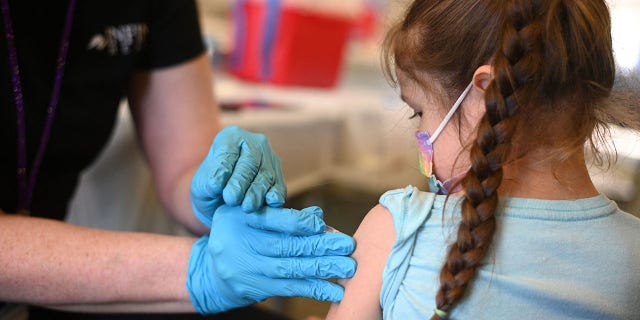
A nurse administers a pediatric dose of the COVID-19 vaccine to a young girl. Dr. Marc Siegel noted that since fewer hospitalizations are occurring with current COVID subvariants, they are actually less severe, though health professionals are not sure why this is.
(ROBYN BECK/AFP via Getty Images)

Dr. Siegel added that so far there’s “no evidence” that XBB is more virulent.

“If it’s spreading like wildfire and it’s not killing more people, that means it’s less virulent,” he said. “But we don’t know the reason for that.”

“It’s definitely the majority of cases in the Northeast, and we expect that to be for the whole country.”

Currently, XBB.1.5 accounts for almost 41{bf0515afdcaddba073662ceb89fbb62b6b1bf123143c0e06b788e1946e8c353f} of confirmed COVID-19 cases across the country, according to data from the Centers for Disease Control and Prevention (CDC).

CHINA TO STOP TESTING, DISINFECTING IMPORTED FROZEN FOOD FOR COVID

The XBB mutation has picked up speed, jumping from just 21{bf0515afdcaddba073662ceb89fbb62b6b1bf123143c0e06b788e1946e8c353f} of COVID-19 cases on Christmas Eve, the CDC noted.

During the last week of December 2022, XBB.1.5 made up 75.3{bf0515afdcaddba073662ceb89fbb62b6b1bf123143c0e06b788e1946e8c353f} of COVID-19 cases in northeastern states.
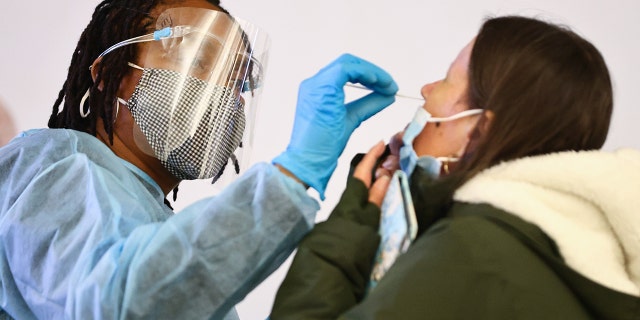
Merline Jimenez, left, administers a COVID-19 nasopharyngeal swab to a person at a testing site in the international terminal at Los Angeles International Airport (LAX) in December. The XBB subvariant will likely spread across the nation, Dr. Shad Marvasti said.

Merline Jimenez, left, administers a COVID-19 nasopharyngeal swab to a person at a testing site in the international terminal at Los Angeles International Airport (LAX) in December. The XBB subvariant will likely spread across the nation, Dr. Shad Marvasti said.
(Mario Tama/Getty Images)

Those states include Connecticut, Maine, Massachusetts, New Hampshire, Rhode Island and Vermont, the CDC said.

Even though XBB numbers are currently lower in western parts of the country, Dr. Marvasti of Arizona stressed there’s no doubt the subvariant will catch on just about everywhere else.

“It’s going to increase in the coming weeks no matter what level it’s at right now.”

“It’s definitely the majority of cases in the Northeast, and we expect that to be for the whole country,” he said.

“In Arizona, my expectation is that it’s going to climb pretty quickly, especially since we have a lot of winter visitors here this time of year, and we’re going to have more folks with the Phoenix Open and the Super Bowl,” he also said. (The Phoenix Open golf tournament takes place Feb. 6-12, 2023; the Super Bowl is Feb. 12, 2023.) 
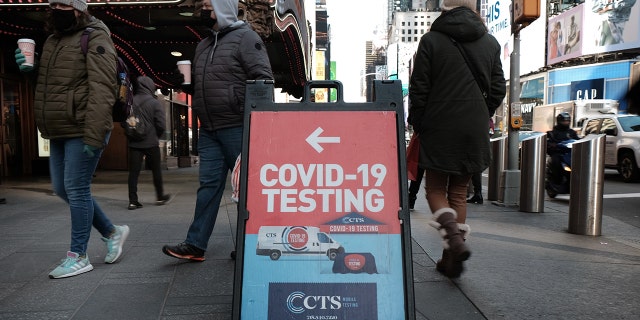
People are shown passing a COVID-19 testing site along a Manhattan street on Jan. 21, 2022 in New York City. Omincron variants are known for attacking the upper respiratory tract – the nose and sinuses – instead of the lungs, said Dr. Marvasti.

People are shown passing a COVID-19 testing site along a Manhattan street on Jan. 21, 2022 in New York City. Omincron variants are known for attacking the upper respiratory tract – the nose and sinuses – instead of the lungs, said Dr. Marvasti.
(Spencer Platt/Getty Images)

“It’s going to increase in the coming weeks no matter what level it’s at right now,” he added.

Although it’s still too soon to tell how the new strain will impact hospitalization and death rates, neither Siegel nor Marvasti is expecting a steep increase.

BELGIUM TO TEST WASTEWATER ON FLIGHTS ARRIVING FROM CHINA FOR COVID

Marvasti noted that hospitalizations have been less of an issue since omicron’s appearance.

Keeping up with vaccinations is important, yet Dr. Siegel said the constantly emerging variants question the efficacy of current vaccines on the market.

This is because omicron variants are known for attacking the upper respiratory tract — the nose and sinuses — instead of the lower respiratory tract in the lungs, he said.

“Which is one of the reasons why you see less people on ventilators,” he explained.
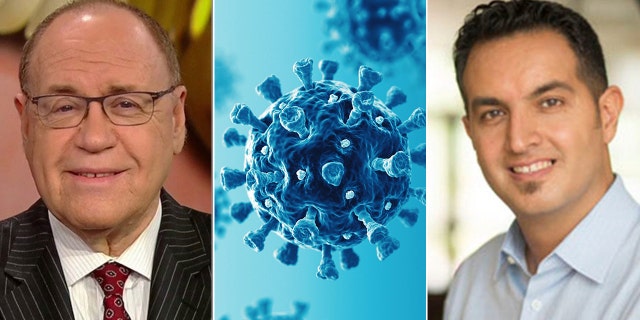
Fox News medical contributor Dr. Marc Siegel, at left; Dr. Shad Marvasti of University of Arizona College of Medicine, at right. A microscopic COVID germ is shown in the center. Both medical professionals encourage people to take appropriate steps to stay healthy, including wearing masks and getting vaccinated, when appropriate.

Fox News medical contributor Dr. Marc Siegel, at left; Dr. Shad Marvasti of University of Arizona College of Medicine, at right. A microscopic COVID germ is shown in the center. Both medical professionals encourage people to take appropriate steps to stay healthy, including wearing masks and getting vaccinated, when appropriate.
(Fox News / Dr. Shad Marvasti)

Both experts stressed that even though symptoms may be less severe, people who are at high risk or immunocompromised should continue taking appropriate steps toward prevention, including wearing masks and getting vaccinated.

“There are a lot of things you can do to help boost immunity and improve your ability to fight off infections, including COVID.”

While keeping up with vaccinations is important, Siegel said, he added that these constantly emerging variants question the efficacy of current vaccines on the market.

The XBB’s immuno-evasive properties are “bothering” health experts the most, he noted.

At a recent news briefing, Harvard Medical School assistant professor of medicine Kathryn Stephenson said that even though the original COVID vaccines may have lost some of their punch against new variants, they’re still holding up well against severe illness and death.
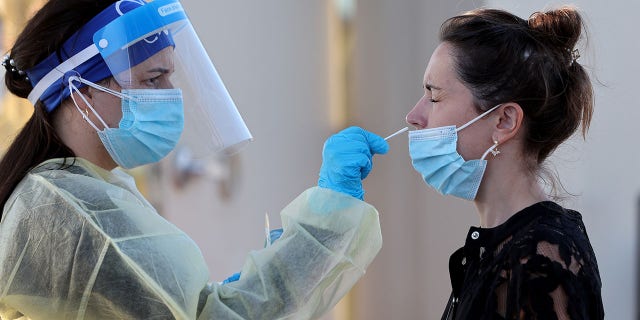
Jordane Domain gets a COVID-19 test done by a health care worker on Jan. 13, 2022 in North Miami, Florida. Dr. Siegel noted that more research and better funding are required for COVID prevention, which might include inhaled vaccines in the future.

Jordane Domain gets a COVID-19 test done by a health care worker on Jan. 13, 2022 in North Miami, Florida. Dr. Siegel noted that more research and better funding are required for COVID prevention, which might include inhaled vaccines in the future.
(Joe Raedle/Getty Images)

One possible solution could be incorporating Omicron-updated boosters to further enhance protection, she said.

This would require more research and funding into “better” vaccines such as inhaled vaccinations, said Dr. Siegel.

“My philosophy toward protection from this virus is the more immunity you have, the better,” he said.

CLICK HERE TO GET THE FOX NEWS APP

In an effort for everyone to stay healthy, Dr. Marvasti encouraged practicing other ways to boost immunity, including getting enough sleep, managing stress, reducing inflammation, eating healthier, taking probiotics, staying hydrated and exercising.

“People should recognize that there are a lot of things you can do to help boost immunity and improve your ability to fight off infections including COVID,” he said.

CLICK HERE TO SIGN UP FOR OUR HEALTH NEWSLETTER

Those who’ve come down with either XBB subvariant can continue treating it as they would any other coronavirus case.

Siegel also recommended the prescription medication Paxlovid as a treatment in some cases, under the guidance of a doctor. 

Top 7 Holiday Fitness Tips From Fitness Experts

Health and fitness professionals practical experience the exact troubles that we all expertise through the holiday seasons. You know the difficulty during the holidays and other active times when your regime is pretty much unattainable to follow. That is why we attained out to these seven health and fitness professionals to get them to share their favourite holiday break health strategies to fight the big holiday break issue when it arrives to our conditioning aims: time and temptation. Time as in all the factors that demand from customers your time and focus that take you away from want you want to do, like a training. Temptation, particularly close to the holidays, with all the excellent foodstuff and drink in just access.

Denying the issue does not make it go absent, but acquiring remedies to your issue is exactly where it is at. Coaches are terrific at offering you way and accountability and are underrated dilemma solvers. Listed here the 7 leading coaches share their shopper methods to support hold you on keep track of throughout the holiday craziness.

Mike T. Nelson, Ph.D.

Holiday getaway Fitness Guidelines: Obtain the Time To Do Some Schooling, Pre-Take in

Top 7 Holiday Fitness Tips From Fitness Experts
Westend61 / Getty

Instruction: Discovering time to remain on track with your common exercise routine all-around the holidays is hard. My most effective assistance is to not stress about perfect or the mythical exceptional and work to locate a way to do a thing coaching similar to your normal routine. For instance, if you usually do an hour of higher physique function at the gym on Mondays, but you come across that you only have 20 minutes, as a substitute of skipping it solely, bang out some pushups, inverted table rows, and system body weight squats.

Nourishment: The vacations existing several nutritional challenges. You may be expecting me to say matters like, “just buckle down and stick to your macros no subject what,” or some other linked nonsense. The truth is that eating is portion of the vacations, no matter how you reduce the pie. My information is to fill up protein very first in advance of any big meal. Pre-consume 20 -40 grams of protein in advance of the key, and then chill out and consume right up until you are comprehensive.

Mike T. Nelson, Ph.D. is a rate of metabolism health and fitness specialist, power mentor, and educator specializing in tailoring nutrition to every single individual’s needs.

Andrew Heming, MS, CSCS, NSCA-CPT

Getaway Health Recommendations: Exercising Snacking, Consume Protein To start with

Man-Eating-Turkey-Leg-Drumstick
Lisa A / Shutterstock

Education: Physical exercise snacking is a newer idea in investigate. The plan is to slip physical exercise in all over the day as an alternative of taking time for a complete workout. For case in point, one may possibly choose a 10-moment walk following breakfast, do a established of solitary leg squats mid-morning, do a further 10-minute wander just after lunch, do a established of drive-ups mid-afternoon, and do a set of TRX rows in the evening.

Nourishment: Eating protein initial can make it quite tough to achieve fats from protein. It also helps to create and preserve lean muscle mass. By filling up on protein 1st, it is easier to appreciate the Xmas treats in moderation.

Andrew Heming, MS, CSCS, NSCA-CPT, a former college head energy coach, professor, and trainer

Chris Cooper, strength and nutrition mentor at Nerd physical fitness

Holiday getaway Exercise Ideas: Do What You Can, Really do not Go Back again For Seconds

Many-People-On-Buffet-Line-Serving-Food
Rawpixel.com / Shutterstock

Coaching: Modify your expectations. A exercise routine does not always have to be an hour-and-a-50 percent endeavor, primarily when time and strain are significant during the holiday getaway time. Do what you can base on your readily available means and move on.

Nourishment: Under no circumstances two in a row. If you have one food that goes off strategy or is significantly less than optimal for our goals, the strategy is to not back it up with yet another considerably less than optimal food. Get back on monitor the up coming meal or the following working day, so we keep away from environment a streak.

Chris Cooper, strength and diet coach at Nerd health and fitness

Detric Smith, trainer and proprietor of Outcomes Efficiency Schooling

Holidays Fitness Strategies: HIIT, Do not Binge at the Get together

4 Compound Moves for Massive Biceps and Triceps
Constantinis / Getty

Training: HIIT it! If the vacation slam is leaving you stressed for time, consider short exercise sessions at a high depth. Even 20 minutes is ample time to burn off fats and preserve conditioning. The key listed here is upkeep. Prioritize compound movements and combos that hit a number of spots at when. Supersets and circuits enable you preserve on relaxation time and intensify your exercise session.

Nourishment: Don’t quick in advance of a feast. You’re additional most likely to get famished and overeat! Pregame the bash with a small snack that features some protein, very good fats, and fiber to enable suppress your hunger.

Allan Bacon, Ph.D., is an on the internet particular trainer specializing in training powerlifters and overall body composition shoppers

Holiday break Fitness Suggestions: Concentrate on the Sets, Prioritize Important Occasions

Red-Push-Pins-Marked-On-Calendar
Brian A Jackson / Shutterstock

Conditioning: I suggest making the most out of your time in the health club by innovative education procedures. The pursuing two techniques are not excellent to straight sets for muscle progress but are usually shown to be on par with them in the research, and they can enable sustain strength all through your active interval till you can get again to your standard plan.

  • Dropsets: Dropsets contain completing an first set conventionally, then immediately lowering the load (bodyweight lifted) by 25-50{bf0515afdcaddba073662ceb89fbb62b6b1bf123143c0e06b788e1946e8c353f} and executing a next set until momentary muscular failure, then dropping the load a 3rd time by 25-50{bf0515afdcaddba073662ceb89fbb62b6b1bf123143c0e06b788e1946e8c353f} of the next set and finishing a final set right up until momentary muscular failure. In this manner, you have one common set with two “drops” counting as a one all round drop Set. Soon after just about every dropset, rest as extensive as you ordinarily would amongst standard sets.
  • Cluster Sets: Cluster sets require large excess weight lifted in a triplet vogue, with very small relaxation in between the triplets (usually 15-20 seconds). Every triplet eventually counts as a single set in your programming. There are a wide range of strategies applied in cluster sets, so I will give you one as an instance that I often use: 4 sets of 2-2-1. Choose a weight that difficulties you for two reps. Start out the triplet off with two reps, relaxation 15 seconds, conduct two extra reps with the very same pounds, relaxation 15 seconds, then complete a single previous rep to comprehensive the initial cluster established of the four whole you programmed. Just after every single cluster set, rest as prolonged as you typically would between traditional sets.

Diet: Setting a precedence listing at the starting of each and every month. This is good exercise every single month but is specifically beneficial in months you are more busy with obligations. At the beginning of each and every month, list the important events you have coming up, and rank them from minimum to most significant. The moment you have an purchase of significance, you can come to a decision on how considerably, if any, you prepare to average on these situations. If you know you have a holiday that is essential to you coming up, that place of work bash the 7 days in advance of could not look as crucial to you…which can give you the assurance to average additional on the days you have not deemed a precedence.


Dr. Bo Babenko, physical therapist and energy mentor

Vacation Physical fitness Tips: Focus on Smaller sized Bodyweight Movements, Protein Protein Protein!

Squats
RossHelen / Getty

Coaching: Get your movement snacks—10 pushups and an hour or 20 squats in between zoom phone calls, for instance. All actions are fantastic, and relatively than worrying about getting a whole exercise when time-pressured, decide a person motion and do a specified sum of reps per hour.

Nourishment: PROTEIN!! Target on protein to be a lot more satiated and aid avoid the a lot less-than-suitable stuff. I get most of my customers to strike .7 grams for every pound of perfect system fat. And this gets significantly crucial when you are pulled just about every which way all through the getaway time.


Raphael Konforti MS, senior director of physical fitness at You In good shape Gyms

Holiday Physical fitness Recommendations: 15 Minute Workout routines and 5/2 Calorie Split

Fit man working out at home by doing diamond pushup exercise
Diego Cervo

Schooling: Preserve a 15-minute bodyweight work out on hand. The greatest problem is staying steady. Owning a exercise you can do at any time, wherever, retains you regular. Even as simple as heading back and forth in between force-ups, lunges, and planks. Operating out consistently will trigger you to make far better health conclusions the relaxation of the day around nourishment and sleep.

Diet: Comply with a 5/2 calorie break up. You can consider to resist temptation, or you can balance out temptation. The 5/2 food plan has 5 days of moderate to substantial energy and 2 days of very low calories, typically low carb and moderate unwanted fat. This allows you to indulge and continue to keep in general energy in verify. You can exit the holidays without having any body weight get if you find two times a week without having a occasion or meal. It’s finest to lift on the high-calorie times and get better or carry out cardio on the small-calorie times.

WRAPPING UP

The widespread topic is that by all usually means, attempt to keep up your regime the most effective you can on the conditioning and diet side. And when that doesn’t perform, and a little something has to give, use these techniques and approaches to keep on the straight and narrow the ideal you can. The target throughout the holiday seasons and other fast paced moments is servicing.

Content vacations and see you on the other facet.


2022’s most interesting health care research papers, according to the experts

Though the pandemic and all its attendant health care crises remained the major health care story of 2022, churning all the while in the background has been the critical work of academic scholars, operating on longer timelines, who are still trying to make sense of US health care and of medicine itself, to get a better idea of what’s wrong and how to make it better.

To wrap up this year, I asked a couple dozen health policy experts what research released this year (though, as one of them reminded me, these papers are often years in the making) had surprised them, changed their thinking, or struck them as especially notable.

Here are five particularly interesting papers, at least in my view. Because many more than that warrant mention, I have tried to cram in as many references to other work as I could. One of my lessons from this exercise was that there are noteworthy new studies being produced all the time. The US health system certainly merits such extensive investigation, given the number and diversity of its flaws.

These studies cover a broad range of subjects, from the intricacies of Medicaid provider networks to prescription uptake by Medicare beneficiaries to how bystanders react when a person experiences a cardiac episode in public. But first, on the topic of the pandemic…

1) Vaccination education campaigns in nursing homes didn’t make much difference

Several experts pointed me to data sets related to Covid-19 vaccination in nursing homes, the scenes of so much illness and death in that frightening first year of the pandemic. Larry Levitt, executive vice president of the Kaiser Family Foundation, flagged one recent KFF survey that found less than half of nursing-home residents are up to date on their vaccines.

That put into sharp relief the findings of a study that Harvard Medical School’s David Grabowski cited as one of his favorites of the year. The paper, published in JAMA Internal Medicine in January 2022, evaluated an effort to use educational campaigns and other incentives to improve vaccination rates among residents and staff in nursing homes.

They did not find a meaningful effect, despite three months of programming. There was plenty of room to grow, particularly among the staff, roughly half of whom were unvaccinated during the study period. (Vaccination rates among residents were already high at the time, though the experiment still did not find a significant effect of the multi-faceted campaign.)

“The conventional wisdom was that a big part of lagging vaccination rates was a lack of information and knowledge about the benefits of vaccination,” Grabowski said. But this study found instead that “these educational efforts were unsuccessful at encouraging greater vaccination. Although information campaigns sound like great policy, they really aren’t.”

He lamented that the study had been ignored by policymakers, noting federal efforts to increase vaccination rates among this population remain focused on education. Grabowski said the policies with the strongest evidence are vaccine clinics and vaccine mandates for staff.

2) Medicaid’s “phantom” networks may overstate patients’ access to health care

I love good jargon, and “ghost physicians” is one of my favorite new phrases of the year, which was recently brought to my attention by Harvard University professor (and former Vox contributor) Adrianna McIntyre.

It comes from this May 2022 Health Affairs paper, authored by Yale University’s Avital Ludomirsky and colleagues, which evaluated the provider networks of Medicaid managed-care plans. Those are privately administrated plans for low-income people that must follow state and federal Medicaid rules; they have grown in enrollment in recent years, with more states deciding to outsource their role in providing health coverage for the most vulnerable.

One of those rules is that enough doctors and hospitals accept those Medicaid plans, otherwise known as network adequacy. The Health Affairs study examined managed-care plans in four states over several years to get a better sense of providers’ participation in the program.

Their most striking finding is that while nominal participation was fairly high, about one-third of providers who technically accepted Medicaid actually saw less than 10 Medicaid beneficiaries in a given year. The responsibility for providing care to these patients was concentrated among a small number of practices, with 25 percent of primary care doctors providing 86 percent of the care and 25 percent of specialists providing 75 percent of those services.

In other words, while plenty of doctors might say they accept the plans, people who are enrolled in them may in practice find they have relatively few doctors to choose from. “Our findings suggest that current network adequacy standards might not reflect actual access,” the authors wrote in their conclusion. “New methods are needed that account for beneficiaries’ preferences and physicians’ willingness to serve Medicaid patients.”

The move toward more Medicaid-managed care has spurred a lot of debate and study. Matthew Fiedler, senior fellow at the Brooking Institution, sent me a Harvard study with its own surprising finding: In Texas, transitioning Medicaid enrollees to managed care had actually led to an increase in the use of prescription drugs and outpatient services, while the number of avoidable hospitalizations fell.

What seems to have happened, Fiedler said, is the state had been “penny-wise, pound-foolish” when running the program itself by imposing an unusually strict cap on the number of prescriptions patients could fill in a year. With that cap relaxed under the managed-care plans, patients filled more prescriptions and that corresponded to fewer episodes in which they ended up in the hospital when they didn’t have to.

Fiedler thought the study could also have implications for Medicare Advantage as well, another version of a government health insurance program that is being administered by private companies.

“To be clear, in many of these cases, it might well be better to fix this problem by just fixing the public program directly,” he told me. “But given that we often seem unwilling to do that, this does point to one very real advantage of involvement from private plans.”

3) Many Medicare beneficiaries don’t fill important prescriptions

Rachel Sachs, who studies prescription drug policy at Washington University in St. Louis, highlighted a study on a similar subject that was published in Health Affairs in April 2022, led by Vanderbilt University’s Stacie Dusetzina. The researchers studied the difference in prescription uptake by Medicare beneficiaries who receive a government subsidy to offset their drug costs versus those who do not.

The latter group, who can sometimes be on the hook for hundreds of dollars for every prescription they fill, was substantially less likely to actually use their medication as it had been prescribed, even for serious diagnoses like cancer. People receiving subsidies were twice as likely to fill their prescriptions. The study found that 30 percent of prescriptions for anti-cancer drugs and 22 of prescriptions for hepatitis-C treatment were never started.

The problem of drug affordability for Medicare patients has been an ongoing concern. Because of how the program is currently structured, beneficiaries who are enrolled in the traditional Medicare program but do not qualify for subsidies have no upper limit on how much they can be asked to spend on pharmaceuticals in a given year.

As part of the Inflation Reduction Act, Congress is instituting such a cap for the first time, using savings from the new drug pricing controls also included in the law, capping out-of-pocket costs at $2,000 starting in 2025. That is the kind of intervention the Health Affairs authors were calling for when they published the paper. Now we’ll see if that policy change has an effect on seniors actually taking their medicine.

4) Black and Hispanic Americans are less likely to receive CPR in public spaces

One of the experts I asked for input is Harvard Medical School’s Michael Barnett, who publishes his own overview of the year’s best research every year on Twitter. He sent me a few studies, most of which I’ll let him share in his own overview, but one study in particular stuck out, looking at which people are more (or less) likely to get assistance when they have a health emergency in a public setting with other people around.

The paper, published in the New England Journal of Medicine in October by a collection of scholars across the country, examined more than 100,000 incidents of cardiac arrest that occurred outside of the hospital from 2013 to 2019. They focused in particular on whether the person experiencing cardiac arrest in public received CPR from a bystander.

The results were profound: Black and Hispanic people were significantly less likely to be given CPR than a white person, 45 percent versus 60 percent. And this pattern held across neighborhoods of different racial and socioeconomic make-ups. Whether the neighborhood was predominantly white, Black, or Hispanic, up and down the income ladder, in integrated neighborhoods, white people were more likely to receive CPR than someone who is Black and Hispanic.

“Racial and ethnic differences in bystander CPR in public locations raise additional concerns about implicit and explicit biases in layperson response to out-of-hospital cardiac arrests,” the authors wrote.

Racism within the medical system is well established. Black and Hispanic Americans tend to have less access to health care. They tend to have worse experiences with doctors. Clinical trials and other research does not prioritize them. Medical treatments tend to be developed and designed with white people in mind.

But this study would suggest that even the more casual forms of racism and internalized bias can have a real health effect for marginalized Americans.

5) Prices go up after private equity acquires a physician’s practice

Private equity’s deeper investment into US health care is one of the most important ongoing stories in the field right now. The stakes can be life or death, as one paper that I covered last year about mortality rates in nursing homes purchased by private equity firms found. (Of note this year, according to Harvard’s Amitabh Chandra, was another paper that documented the wide disparities in outcomes among nursing homes, even those who are located in the same area.)

A report published by scholars from Johns Hopkins, Harvard, and Oregon Science & Health University in September 2022 in JAMA Health Forum, which Emma Sandoe of North Carolina Medicaid and Duke University shared with me, examined what happened to costs and care utilization when private equity firms had purchased outpatient practices specializing in ophthalmology, dermatology, and gastroenterology, some of their favorite targets.

The study detected several effects: The cost of individual services went up and those practices were seeing more new patients and also charging more time for their existing patients. The amount billed by the private equity-acquired offices per service increased by 20 percent compared to the study’s control group. They saw 38 percent more new patients and there was a 9 percent increase in the number of existing patient visits that were billed as lasting longer than 30 minutes.

On the surface, that could look like partially good news, in spite of the price hikes, with more patients being seen and spending more time with their doctor. But some of the other findings call into question the value of those increases in service volume. In dermatology, the increase in outpatient visits did not correspond to an increase in biopsies ordered. In the gastroenterology practices, there were more visits and scopes but no notable increase in polyp removals. And likewise, at the eye clinics, there was more diagnostic imaging but not any effect on actual cataract removals.

The authors ended their paper with this warning. “Private equity ownership of physician practices has added a distinctly private and market-driven influence to the broader trends in corporate consolidation of physicians by health systems and insurers,” they wrote. “This study contributes evidence for potential overutilization and higher spending on care that will be important for policy makers to monitor.”

IMIDomics Announces Appointment of Key Science and Medical Research Experts to Newly Formed Immunology Advisory Board

SAN RAFAEL, Calif. & BARCELONA, December 07, 2022–(Small business WIRE)–IMIDomics, Inc., a biotechnology organization concentrated on the discovery and development of new medications for the cure of patients with immune-mediated inflammatory diseases (IMIDs), announced now the development of an Immunology Advisory Board consisting of a range of scientific and field luminaries with working experience in building and bringing to marketplace new therapies focusing on IMIDs.

“As we proceed to refine our Precision Discovery Engine, transfer ahead with determining and pursuing targets for likely new remedies and forge critical partnership inside of the pharmaceutical and biotechnology room, owning this seasoned, respected and passionate group of advisors will be key to ensuring we’re maximizing the potential of IMIDomics to provide meaningful effects for IMID clients,” claimed Fred Craves, CEO of IMIDomics. “We are honored and thrilled to get the job done intently with just about every of them and tap their unparalleled knowledge.”

Customers of the IMIDomics Immunology Advisory Board consist of:

  • André Veillette, M.D.: Dr. Veillette is a earth-recognized immunologist and medical oncologist who, over the earlier 3 many years, has finished revolutionary get the job done on figuring out and characterizing intracellular molecules and receptors that participate in important roles in typical immune regulation. Dr. Veillete is a member of the COVID-19 Vaccine Activity Force and the Very long COVID Undertaking Force of the Federal government of Canada.

  • Arthur Weiss, M.D., Ph.D.: Dr. Weiss is the Ephraim P. Engleman Distinguished Professor of Rheumatology at the College of California San Francisco the place he has been on school considering the fact that 1985. From 1988 via 2011, he served as Main of Rheumatology at UCSF. Dr. Weiss scientific tests signal transduction in the immune method, concentrating on the roles of tyrosine kinases and phosphatases in regulating lymphocyte activation and how abnormalities in tyrosine phosphorylation pathways lead to immunologically mediated conditions.

  • Dan Littman, M.D., Ph.D.: Dr. Littman, is the Helen L. and Martin S. Kimmel Professor of Molecular Immunology at the New York University School of Medicine and an investigator of the Howard Hughes Medical lnstitute. Dr. Littman investigates how microbiota and their solutions impact host immune responses, contributing to homeostasis or inflammatory illness. He serves on various educational and business advisory boards and the Pfizer Board of Administrators.

  • Lewis Lanier, Ph.D.: Dr. Lanier is an American Most cancers Culture Professor, and J. Michael Bishop, MD, Distinguished Professor and Chairman of Microbiology and Immunology at the University of California San Francisco, and Director of the Parker Institute for Cancer Immunotherapy. His research group research Pure Killer cells, which recognize and reduce cells that have become transformed or contaminated by viruses. He has served as President of the American Association of Immunologists and is a member of the Countrywide Academy of Sciences.

  • Pablo Engel, M.D., Ph.D.: Dr. Engel is a Professor of Immunology and Head of the Immunology Device in the Office of Biomedical Sciences at the College of Barcelona. His analysis is focused on lymphocyte mobile-surface molecules and their role in the regulation of immune responses. In addition to his research, Pablo has been Secretary Basic of the European Federation of Immunological Societies (EFIS).

ABOUT IMIDOMICS, INC.

IMIDomics, Inc. is a privately held international biotechnology corporation focused on the discovery and growth of new medicines for the therapy of immune-mediated inflammatory health conditions (IMIDs). Using an exclusive industrial license with the Vall d’Hebron Clinic IMID Biobank’s to accessibility anonymized details from extra than 17,000 patients across 150 wellness facilities, IMIDomics specializes in producing exclusive insights into IMID client encounters, situations and underlying disease mechanisms. This facts sorts the foundation of the IMIDomics Precision Discovery™ Engine which leverages point out-of-the-art analytics, machine understanding and bioinformatics abilities to uncover new insights about IMIDs primarily based on precisely outlined patient populations. These insights are enabling new discoveries for remedies, diagnostics and other innovations created to deal with the unmet requires of folks living with these complex and tough ailments.

IMIDomics was established in Barcelona, Spain in 2015 by Dr. Sara Marsal, Head of the Rheumatology Office at the Vall d’Hebron University Clinic, and Dr. Richard M. Myers, President and Scientific Director at the HudsonAlpha Institute for Biotechnology. Current investors in IMIDomics include DNS Funds, Tao Capital, The Pritzker Organization, Evotec and Bristol Myers Squibb. To learn more about IMIDomics, make sure you go to www.imidomics.com.

Perspective source edition on businesswire.com: https://www.businesswire.com/news/house/20221207005088/en/

Contacts

IMIDomics Press Get hold of:
Casey Blickenstaff at Genuine Chemistry
cblickenstaff@realchemistry.com

Amazon’s Creep Into Health Care Has Some Experts Spooked

Smith told WIRED that Amazon keeps patient health information confidential and secure in compliance with federal law and regulations, and in line with industry standards; Amazon Clinic customer data will be protected through the use of HIPAA-compliant encryption methods. “Protecting patient information is an important part of our business; we are not in the business of selling or sharing it,” Smith wrote.

Amazon’s recent efforts to break into health care raise a more fundamental question: Should Big Tech even be allowed in the sector? The motivations of a private company—efficiency, optimization, and above all, profit—don’t exactly square with serving the public good, says Tamar Sharon, a professor at Radboud University in the Netherlands whose work explores the politics and ethics of Big Tech in health and medicine—or as she dubs it, the “Googlization of health.” 

Amazon Care, a telehealth service Amazon piloted among its employees and then rolled out to other customers, shows how things can go wrong. Its shutdown was announced a few months ago, with the senior vice president in charge of the program, Neil Lindsay, writing in an internal memo Amazon shared with WIRED: “Although our enrolled members have loved many aspects of Amazon Care, it is not a complete enough offering for the large enterprise customers we have been targeting, and wasn’t going to work long-term.”  

But it was plagued by other problems, too. A Washington Post investigation alleged that moving at top speed and efficiency sometimes conflicted with best practices in medicine: For example, nurses were asked to process patient blood samples in their personal cars, the paper reported, and to store and dispose of medical supplies at home, which they protested. (Amazon told the Post that they could not find records of complaints about these matters.)  

“Amazon Care followed common practices for in-home care and know them to be safe and appropriate,” Smith told WIRED. “For example, Amazon Care clinicians were always equipped with Stericycle medical waste return equipment to properly and securely return or dispose of supplies.” 

For Sharon, a big concern is how reliant we risk becoming on big companies as mediators of fundamental public needs. “This is a dangerous situation—that we would become dependent on a handful of private actors for the distribution of very basic goods, like health, or education, or public services,” she says. For instance, as these companies increasingly fund and perform their own research, it’s possible they could influence how the research agenda is set. That could be a problem if tech founders’ penchant for wanting to live forever results in a focus on funding longevity research over, say, cancer treatments.

Yet private companies entering public spaces isn’t always inherently bad, says Wachter. Arguably, the multitrillion-dollar American health care system is the perfect target for new players. As Scott Galloway, a professor of marketing at the New York University Stern School of Business, points out in his newsletter, health care spending in the US far surpasses that of other rich countries, yet life expectancy is lower, creating an opportunity for new services to offer better value to patients. “The US health care industry is a wounded 7-ton seal, drifting aimlessly, bleeding into the sea. Predators are circling,” he wrote. “Amazon is the lurking megalodon, its 11-foot jaws and 7-inch teeth the largest in history.”

You could argue that Amazon is simply filling a gap in a broken system. With its new service, the company appears to be applying the same principles that made it so successful as a retailer: easy access, rapid delivery, competitive pricing—hard-to-refuse conveniences that appeal to humans’ inherent laziness, for sure, but which might also make good health care more affordable in a system divided between the haves and have-nots. 

In exchange for convenience and better access, there are likely to be tradeoffs. “If we do that, we want to do it right,” says Wachter. “We just have to think about all the possible negative consequences to make sure that they don’t happen.”

Public health experts are losing their jobs at a critical time


KHN
 — 

As covid-19 raged, roughly 4,000 highly skilled epidemiologists, interaction experts, and community overall health nurses have been hired by a nonprofit tied to the Centers for Sickness Manage and Prevention to plug the holes at battered general public overall health departments on the front traces.

But around the previous couple months, the the greater part of the CDC Foundation’s contracts for individuals general public wellbeing workers at regional and state departments have ended as the team has spent practically all of its just about $289 million in covid reduction funding. The CDC Basis, an impartial nonprofit that supports the CDC’s perform, anticipates that no extra than about 800 of its 4,000 hires will ultimately personnel these jurisdictions, spokesperson Pierce Nelson said.

That has left several neighborhood and state health and fitness departments going through staffing shortages as the nation eyes a doable winter uptick in covid situations and grapples with the ongoing risk of monkeypox, exploding caseloads of sexually transmitted infections, and other general public health and fitness issues.

The public well being workforce in the U.S. has been underfunded for a long time — just prior to the begin of the pandemic, only 28{bf0515afdcaddba073662ceb89fbb62b6b1bf123143c0e06b788e1946e8c353f} of community well being departments experienced an epidemiologist or statistician, a 2020 Related Push-KHN investigation identified. Then, immediately after the pandemic commenced, general public overall health officers left in droves as they had been lambasted for instituting covid principles, blamed for the financial downturn, and grappled with burnout.

And even if funding had been out there to retain all 4,000 basis workforce, that would not have fulfilled community well being staffing desires, in accordance to new research in the Journal of Public Overall health Management and Exercise. The study says at least 80,000 new staff are demanded for condition and neighborhood community wellbeing departments to put into action the minimum amount deal of public wellness services.

Having said that, the funding for the basis careers was constantly time-minimal due to the fact it was supposed to assistance the emergency reaction to covid. And while the American public’s covid worries have waned, public wellness specialists alert this is yet an additional example of the failure to adequately fund the general public health sector with once-a-year, guaranteed cash — leaving the region not able to protect against and effectively combat outbreaks.

“So the increase-and-the-bust cycle proceeds irrespective of dropping a million American lives to covid,” reported Brian Castrucci, who co-authored the report and heads the de Beaumont Basis, which advocates for raising assist for the nation’s community overall health. “How quite a few American deaths is it heading to get right up until we take care of this challenge?”

As opposed to the hundreds of inexperienced call tracers hired to abide by up with covid people to stem the unfold amid the surge, this CDC Foundation workforce ordinarily experienced community well being know-how that also could fill preexisting gaps. The foundation’s head, Dr. Judy Monroe, said local and state officials loved the foundation’s potential to lower as a result of selecting pink tape, telling her “it was like the cavalry showed up.”

In Chicago, CDC Basis staff members made up about as a great deal as a tenth of the city’s general public wellbeing workforce, stated Dr. Allison Arwady, commissioner of the city’s community wellbeing department. Despite the fact that she acquired 26 of people 66 workers extended into December, she claimed it’ll hurt to get rid of the rest. They’ve contributed to everything from general public health nursing to communicating the newest direction about the pandemic to Chicagoans.

Cayenne Levorse, a CDC Basis chief who served organize the foundation’s response in Ohio until eventually her deal finished in October, said her 20 workforce experienced to established down not only covid tasks but also helping community well being departments monitor most cancers clusters, rural overall health disparities, and environmental overall health difficulties.

“Those jobs are just sitting there, all that work still left unfinished,” she explained.

Five persons hired for CDC Foundation covid contracts informed KHN they were underneath the perception their contracts would most likely be extended or they would be hired by nearby or state governments acquiring a flood of covid pounds. Only one particular of them had a agreement as of Nov. 8.

Senior epidemiologist Katie Schenk, who has a doctorate in general public wellness, did covid surveillance for the CDC Basis at the Illinois and Washington, D.C., overall health departments. Both contracts ran out, and she was still left without having a work this summer season.

“How do you demonstrate that there is no funding for work in our area when there is clearly so a great deal operate to be completed?” she asked. “It’s to the detriment of the general public wellbeing procedure, which is shedding employees like there’s no tomorrow.”

Someday in November, condition and neighborhood health and fitness officers are anticipating $3 billion in covid reduction dollars qualified at buttressing the community wellbeing workforce. But that funding is coming after most of the CDC Basis contracts have expired and individuals staff have moved on with their lives.

Even though that sum is considerable and will assistance near the 80,000-employee hole, a lot of general public well being officials and industry experts pressured that the money is brief-term and slated to final 5 a long time — which can make positions more durable to fill as candidates seek out job steadiness. It also is divided among the 50 states, U.S. territories, and various large health and fitness departments. And some point out and area officials, this kind of as people in Missouri and Michigan, have refused to shell out covid dollars on community health departments amid the backlash versus the pandemic reaction.

Condition and neighborhood governments often have caps on using the services of complete-time staff members even if federal income is obtainable to do so, Monroe reported. Some localities have shell out freezes or are not willing to invest extra on health officers than on other governing administration employees, producing remarkably competent personnel these as epidemiologists more durable to use, she mentioned. And the CDC Basis salaries and advantages were being occasionally better than what is accessible at community and point out-stage work opportunities, Monroe explained. A lot of of the foundation workers could experience a shell out slash if they preferred to remain on with the community departments.

“You certainly do not go into general public wellbeing to get prosperous,” explained epidemiologist Susan Knoll, who took a personal-sector task as a overall health advisor just after doing work for the CDC Foundation in Ohio. “You get a grant-funded career. And then you’re always on the lookout for a different career.”

Which is “the actuality of how we fund general public health and fitness in this nation,” reported Chrissie Juliano, govt director of the Significant Cities Health Coalition.

“We ramp up, and we ramp down, and we do not consider about routine perform,” she said. “We ought to not as a subject be losing experienced folks who are committed to functioning in public health and fitness. All those are the persons who require to be saved.”

At the very least 38,000 public wellness careers at the point out and community degree ended up misplaced from the 2008 recession via 2019. Then covid strike, and 1 in 5 Us residents misplaced a area general public wellbeing leader amid the political backlash of the initially many years of the pandemic, a 2021 AP-KHN investigation located.

Some of the remaining workforce is eyeing the doorway. The director of North Carolina’s Granville Vance Public Well being office, Lisa Macon Harrison, claimed that even following instituting adaptable advantages, she’s viewing 15{bf0515afdcaddba073662ceb89fbb62b6b1bf123143c0e06b788e1946e8c353f} to 20{bf0515afdcaddba073662ceb89fbb62b6b1bf123143c0e06b788e1946e8c353f} turnover, which she blames on burnout.

Levorse noted that epidemiologists and other staffers with state-of-the-art levels have student loans to pay back off and worry about getting rid of well being insurance plan every time a grant operates out.

The deficiency of a constant resource of funds from yr to yr is jeopardizing health and fitness division systems, Chicago’s Arwady mentioned. She estimates the town will get rid of 86{bf0515afdcaddba073662ceb89fbb62b6b1bf123143c0e06b788e1946e8c353f} of its latest grant funding in two years, placing wastewater monitoring, some of her department’s IT personnel, and community-primarily based outreach on the attainable chopping block.

“We’re not heading to be in a position to do fifty percent a dozen factors that the city of Chicago clearly expects we need to be ready to do. Forget about ‘Can I bring vaccine to your residence?’ It is ‘Can I even stand up, like, a vaccine clinic in your neighborhood?’” she stated. “It’s that degree of how much backwards I’m worried we’re likely to slide.”

Harrison stated she’s seen this all in advance of: A flood of funding for pandemic preparedness came following 9/11, and then the income for staffing went away, leaving departments flat-footed for covid.

Castrucci, of the de Beaumont Basis, rued how the recent funding composition guarantees that the community health sector, which exists to avoid outbreaks and disease, will not be presented the staff to do so right until an crisis arrives.

“You’re mainly indicating, ‘We will wait around for the fireplace to burn right up until we employ the firefighters,’” he mentioned.