An air fryer makes healthier fast food

Comment

As a health columnist, I spend a lot of time writing about the benefits of healthy eating. But many evenings I end up asking myself the same question: What can I make for dinner tonight that’s quick, nutritious and that the whole family will enjoy?

Like many people juggling work, child care and other responsibilities, my wife and I often struggle to find time to cook a healthy meal at the end of a long day.

But a few months ago, I bought an air fryer.

These devices are essentially countertop convection ovens that can give your food the crunchiness and tenderness that you get from roasting or deep-frying, but in a fraction of the time and without all the oil.

My expectations were low. But to my surprise, I found that this amazing little device opened the door to making an endless variety of fun, delicious and nutritious meals. And I can make dinner in 20 minutes or less, without expensive ingredients or extra cleanup.

Using my air fryer, I’ve made roasted Brussels sprouts, potatoes, broccoli, carrots, and sweet potato fries that have the perfect texture and are ready in 10 minutes. I’ve made chicken nuggets at home that my 3-year-old son devoured, and organic teriyaki-flavored tofu cubes that make a great topping for a quick vegetable stir fry or vegetable curry.

One of our favorite recipes is salmon with broccoli, soba noodles and sesame ginger sauce. We start by steaming broccoli and boiling soba noodles. Then we combine soy sauce, sesame oil, ginger and fresh lime juice to make the sauce.

I pop a pound of fresh salmon into our air fryer and let it cook for 12 minutes. When the salmon is done, we combine it with the broccoli and noodles, and drizzle on the sauce. This meal requires very little time and effort, and it tastes delicious. Even my 1-year-old daughter scarfs it down.

Why air fryers are different

I’m by no means the first person to discover the joys of air-fryer cooking. The modern air fryer was introduced to the public in 2010 by Philips, the consumer electronics maker. It was developed by a Dutch inventor, Fred van der Weij, who was looking for a way to make perfectly crispy french fries without much oil or hassle. Sales surged during the pandemic as people were stuck at home with more time on their hands to cook. According to the NPD Group, more than 25 million air fryers were sold between January 2020 and December 2021, a 76 percent increase over the previous two-year period.

I purchased my air fryer, made by Chefman, for about $70, which takes up about as much counter space as a large coffee maker. It contains a basket with a perforated tray where the food is placed. A powerful fan above the food circulates hot air throughout the chamber.

Preheating only takes a few minutes. While it’s not necessary to use oil in an air fryer, using a spray bottle to spritz a little olive or avocado oil on foods such as fresh vegetables, sweet potato fries, chicken tenders and salmon helps to keep them moist while also giving them a golden-brown color.

“The perforated tray promotes air circulation around the food and that’s what causes the crispiness and crunchiness on the outside and the juiciness on the inside,” said Mona Dolgov, a nutritionist and cookbook author. “Your food cooks for less time than it would in an oven, and you get great results.”

Videos of mouthwatering foods cooked in air fryers have gone viral on social media. But Dolgov noticed that many of the popular items made in air fryers, such as grilled cheese, French toast and pasta chips, aren’t appealing to people with health-conscious meals in mind. So she wrote “SatisFry: The Air Fryer Cookbook,” which shows people how to use air fryers to make easy and nutritious meals and snacks.

It includes meals such as a spinach, avocado and mushroom frittata that takes about 15 minutes, and a hummus-crusted chicken that’s made with artichoke hearts, olive oil and lemon sauce.

Air-fried vegetables can win over picky eaters

Air fryers can turn sticks of carrots, parsnips and other root vegetables into better-for-you french fries (you just need a bit of olive oil and cornstarch). You can toss Brussels sprouts with a little olive oil, garlic powder and parmesan cheese to make crispy air fryer Brussels sprouts.

There are recipes for avocado fries, buffalo cauliflower bites, and zucchini chips with lemon and herb dip. “My husband never used to eat a lot of vegetables. and now he eats them all the time because I put them in the air fryer and they come out great,” Dolgov said.

Air fryers can be a “huge game changer and a super useful tool for anyone looking to start a healthier routine,” said Jaclyn London, a registered dietitian and the author of “Dressing on the Side (and Other Diet Myths Debunked).”

Many of her clients for example love eating deli meats such as slicked turkey and chicken but are often shocked when they find out how much sodium these foods contain. “About 80 percent of the sodium we consume in our everyday lives is from meals we’re not making at home,” she said.

When shopping for an air fryer, you might want to look for one with a rotisserie function. London pointed out that a rotisserie chicken can feed a large family and provide leftovers you can use in other meals.

“Having the ability to make something at home on a rotisserie is amazing because you get the flavors that you’re looking for but without all the salt,” she added.

There is now a burgeoning world of cookbooks dedicated to the art of using air fryers. Katie Hale, a food blogger and cookbook author who grew up in Arkansas, said that buying an air fryer was life-changing for her and her family.

“I grew up in the South where deep-fried food was everything,” she said. “Right away I loved that I could have the crispy things I wanted from the deep fryer without all the oil.”

Hale, who has two teenage children, has written two air fryer cookbooks, including “Mediterranean Air Fryer” and “Clean Eating Air Fryer Cookbook.”

“We live a fast-paced lifestyle where more and more people are working two jobs or both parents are working outside the home,” she said. “Anything that makes it easier for you to feed your family healthier meals and save time is at the top of my list.”

Do you have a question about healthy eating? Email EatingLab@washpost.com and we may answer your question in a future column.

Sign up for the Well+Being newsletter, your source of expert advice and simple tips to help you live well every day

The Green Mediterranean Diet Reduces Twice as Much Visceral Fat as the Mediterranean Diet and 10{bf0515afdcaddba073662ceb89fbb62b6b1bf123143c0e06b788e1946e8c353f} More Than a Healthy Diet

Summary: A modified version of the Mediterranean diet called the green Mediterranean diet, which consists of enriched dietary polyphenols such as green tea, walnuts, and duckweed, and decreased red meats, reduced more visceral fat than the traditional Mediterranean diet or a traditional diet plan.

Source: Ben-Gurion University of the Negev

The green Mediterranean diet (MED) significantly reduces visceral adipose tissue, a type of fat around internal organs that is much more dangerous than the extra “tire” around your waist.

The green Mediterranean diet was pitted against the Mediterranean diet and a healthy diet in a large-scale clinical interventional trial- the DIRECT PLUS. Subsequent analysis found that the green Med diet reduced visceral fat by 14{bf0515afdcaddba073662ceb89fbb62b6b1bf123143c0e06b788e1946e8c353f}, the Med diet by 7{bf0515afdcaddba073662ceb89fbb62b6b1bf123143c0e06b788e1946e8c353f} and the healthy diet by 4.5{bf0515afdcaddba073662ceb89fbb62b6b1bf123143c0e06b788e1946e8c353f}.

The study was published in BMC Medicine.

Reducing visceral fat is considered the true goal of weight loss as it is a more important indicator than a person’s weight or the circumference of their waist. Visceral fat aggregates over time between organs and produces hormones and poisons linked to heart disease, diabetes, dementia and premature death.

The research was led by Prof. Iris Shai of Ben-Gurion University of the Negev, Israel, an adjunct Professor from the Harvard School of Public Health, and an Honorary Professor, University of Leipzig, Germany, together with her doctoral student Dr. Hila Zelicha and Italian, German, and American colleagues.

The DIRECT-PLUS trial research team was the first to introduce the concept of the green-Mediterranean diet. This modified MED diet is further enriched with dietary polyphenols and lower in red/processed meat than the traditional healthy MED diet. On top of a daily intake of walnuts (28 grams), the participants consumed 3-4 cups of green tea/day and 100 grams (frozen cubes) of duckweed green shake/day. The aquatic green plant duckweed is high in bioavailable protein, iron, B12, vitamins, minerals, and polyphenols and substituted meat intake.

The Green Mediterranean Diet Reduces Twice as Much Visceral Fat as the Mediterranean Diet and 10{bf0515afdcaddba073662ceb89fbb62b6b1bf123143c0e06b788e1946e8c353f} More Than a Healthy Diet
On top of a daily intake of walnuts (28 grams), the participants consumed 3-4 cups of green tea/day and 100 grams (frozen cubes) of duckweed green shake/day. Image is in the public domain

The team has shown in previous studies that the green MED diet has a variety of salutary effects ranging from the microbiome to age-related degenerative diseases.

Two hundred and ninety four participants took part in the 18-month long trial.

“A healthy lifestyle is a strong basis for any weight loss program. We learned from the results of our experiment that the quality of food is no less important than the number of calories consumed and the goal today is to understand the mechanisms of various nutrients, for example, positive ones such as the polyphenols, and negative ones such as empty carbohydrates and processed red meat, on the pace of fat cell differentiation and their aggregation in the viscera,” says Prof. Shai.

“A 14{bf0515afdcaddba073662ceb89fbb62b6b1bf123143c0e06b788e1946e8c353f} reduction in visceral fat is a dramatic achievement for making simple changes to your diet and lifestyle. Weight loss is an important goal only if it is accompanied by impressive results in reducing adipose tissue,” notes Dr. Hila Zelicha.

Funding: This work was funded by grants from the Deutsche Forschungsgemeinschaft (DFG, German Research Foundation) – Project number 209933838- SFB 1052; the Rosetrees trust (grant A2623); Israel Ministry of Health grant 87472511; Israel Ministry of Science and Technology grant 3-13604; and the California Walnuts Commission.

None of the funding providers was involved in any stage of the design, conduct, or analysis of the study and they had no access to the study results before publication.

About this diet and fat reduction research news

Author: Ehud Zion Waldoks
Source: Ben-Gurion University of the Negev
Contact: Ehud Zion Waldoks – Ben-Gurion University of the Negev
Image: The image is in the public domain

Original Research: Open access.
“The effect of high-polyphenol Mediterranean diet on visceral adiposity: the DIRECT PLUS randomized controlled trial” by Hila Zelicha et al. BMC Medicine

See also

This shows a woman drinking coffee

Abstract

The effect of high-polyphenol Mediterranean diet on visceral adiposity: the DIRECT PLUS randomized controlled trial

Background

Mediterranean (MED) diet is a rich source of polyphenols, which benefit adiposity by several mechanisms. We explored the effect of the green-MED diet, twice fortified in dietary polyphenols and lower in red/processed meat, on visceral adipose tissue (VAT).

Methods

In the 18-month Dietary Intervention Randomized Controlled Trial PoLyphenols UnproceSsed (DIRECT-PLUS) weight-loss trial, 294 participants were randomized to (A) healthy dietary guidelines (HDG), (B) MED, or (C) green-MED diets, all combined with physical activity. Both isocaloric MED groups consumed 28 g/day of walnuts (+ 440 mg/day polyphenols). The green-MED group further consumed green tea (3–4 cups/day) and Wolffia globosa (duckweed strain) plant green shake (100 g frozen cubes/day) (+ 800mg/day polyphenols) and reduced red meat intake. We used magnetic resonance imaging (MRI) to quantify the abdominal adipose tissues.

Results

Participants (age = 51 years; 88{bf0515afdcaddba073662ceb89fbb62b6b1bf123143c0e06b788e1946e8c353f} men; body mass index = 31.2 kg/m2; 29{bf0515afdcaddba073662ceb89fbb62b6b1bf123143c0e06b788e1946e8c353f} VAT) had an 89.8{bf0515afdcaddba073662ceb89fbb62b6b1bf123143c0e06b788e1946e8c353f} retention rate and 79.3{bf0515afdcaddba073662ceb89fbb62b6b1bf123143c0e06b788e1946e8c353f} completed eligible MRIs. While both MED diets reached similar moderate weight (MED: − 2.7{bf0515afdcaddba073662ceb89fbb62b6b1bf123143c0e06b788e1946e8c353f}, green-MED: − 3.9{bf0515afdcaddba073662ceb89fbb62b6b1bf123143c0e06b788e1946e8c353f}) and waist circumference (MED: − 4.7{bf0515afdcaddba073662ceb89fbb62b6b1bf123143c0e06b788e1946e8c353f}, green-MED: − 5.7{bf0515afdcaddba073662ceb89fbb62b6b1bf123143c0e06b788e1946e8c353f}) loss, the green-MED dieters doubled the VAT loss (HDG: − 4.2{bf0515afdcaddba073662ceb89fbb62b6b1bf123143c0e06b788e1946e8c353f}, MED: − 6.0{bf0515afdcaddba073662ceb89fbb62b6b1bf123143c0e06b788e1946e8c353f}, green-MED: − 14.1{bf0515afdcaddba073662ceb89fbb62b6b1bf123143c0e06b788e1946e8c353f}; p < 0.05, independent of age, sex, waist circumference, or weight loss). Higher dietary consumption of green tea, walnuts, and Wolffia globosa; lower red meat intake; higher total plasma polyphenols (mainly hippuric acid), and elevated urine urolithin A polyphenol were significantly related to greater VAT loss (p < 0.05, multivariate models).

Conclusions

A green-MED diet, enriched with plant-based polyphenols and lower in red/processed meat, may be a potent intervention to promote visceral adiposity regression.

Trial registration

ClinicalTrials.gov, NCT03020186

How to Keep Your Heart Healthy Through Your Diet

Heart disease is a leading health issue in the US. When it comes to your risk level, some factors are out of your control — like, say, your blood type. But other factors are more changeable, including your diet. Everyone from the American Heart Association to the US Department of Health and Human Services recommends making specific food choices to support a healthy heart. Because foods for heart health can reduce other potential cardiovascular issues — like high blood pressure and high cholesterol — it’s worth keeping in mind as you plan your weekly meals. 

Keep reading to find out which foods to look for and what a heart-healthy diet looks like overall.


Now playing:
Watch this:

How Healthy is Your Heart, Really? 5 Ways to Tell at…


3:59

What is a heart-healthy diet?

Studies have revealed two things: foods that are riskier for your heart and foods that strengthen it. Fortunately, you’re not about to get hit with a bunch of curveballs. The best foods for heart health are ones you probably already think of as healthy. Similarly, the not-so-heart-healthy foods are probably already on your radar for not doing your body any favors.

Before we dive in here, let’s say: everything in moderation. Unless you already know you have a heart health issue, you don’t need to cut out any foods or make drastic changes. We’re not saying you can never have another piece of bacon or crack open another soda. Instead, being mindful of what a heart-healthy diet looks like can help you incorporate more of those foods into your meals.

Now, let’s talk details. According to the AHA and Department of Health, a heart-healthy diet is rich in:

  • Produce
  • Lean proteins
  • Fiber-rich complex carbs
  • Healthy fats

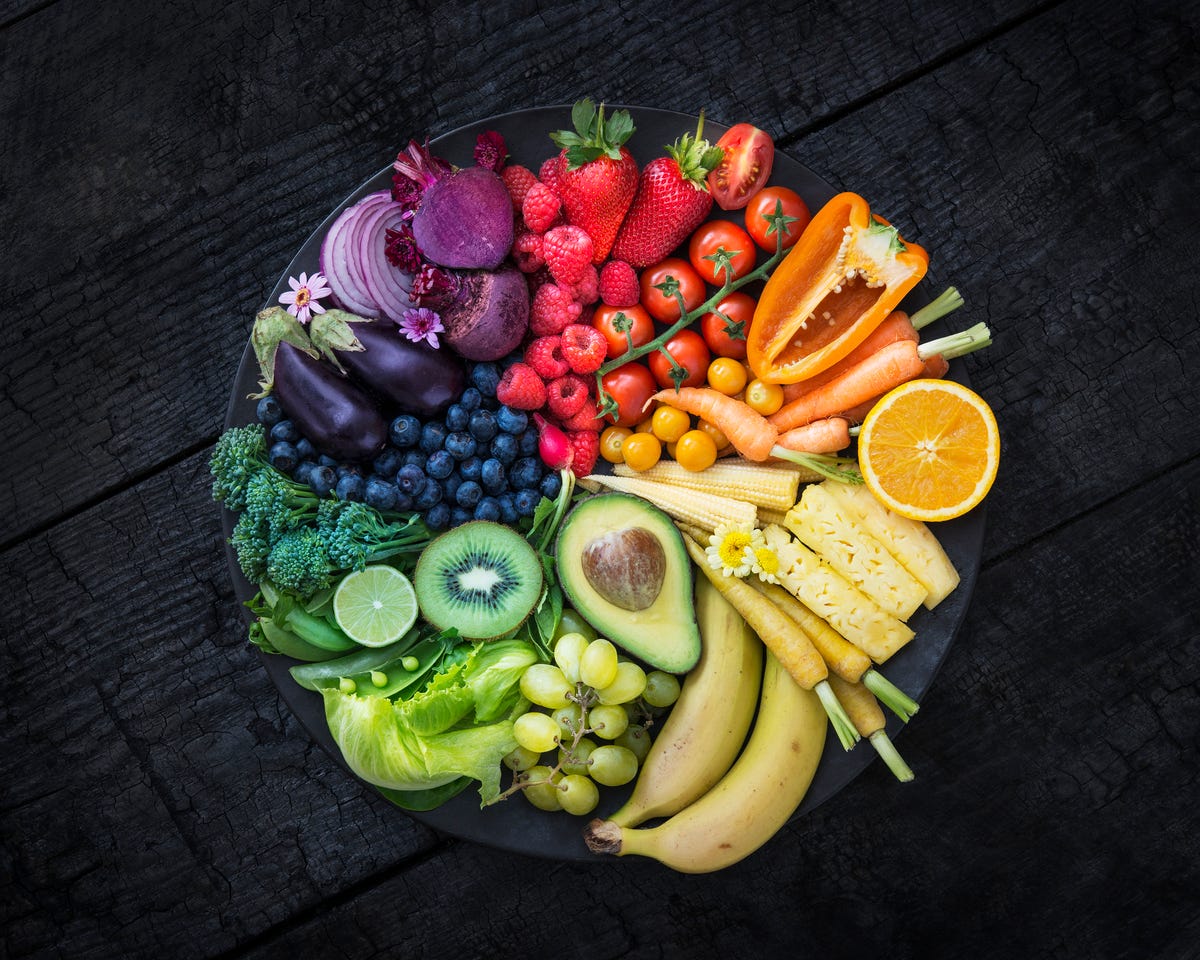
A diet full of colorful fruits and vegetables, whole grains and healthy proteins and fats will give your body the fiber, vitamins and minerals it needs to support a healthy heart. 

A bright rainbow spectrum of produce on a platter.

David Malan/Getty Images

Conversely, if you’re trying to boost cardiovascular health, you want to limit your intake of:

  • Trans fats
  • Saturated fats
  • Processed meats (for example, lunch meat, salami and hot dogs)
  • Excess salt
  • Excess sugar
  • Refined carbohydrates (for example, white breads and snacks)
  • Red meat
  • Excess alcohol

If a lot of your favorites are on the less heart-healthy list, don’t panic. You can still include them in your diet (unless your doctor says otherwise). Just make sure that these foods aren’t taking over every meal, and try to add as many heart-healthy foods into your day as you can.

Heart-healthy foods

Person in a long brown dress browses a grocery store aisle.

d3sign/Getty Images

If you want to feel good about what your next grocery trip will do for your heart health, you can grab items in these specific categories.

1. Fruits and vegetables

Remember the food pyramid from back in the day? It was on to something. Your body benefits from eating quite a bit of produce.

That’s because veggies and fruit load in a lot of nutritional density per bite. Bananas and sweet potatoes deliver potassium, a key mineral for heart health. Cruciferous veggies may help to prevent clogged arteries. Leafy greens deliver fiber, which can help to lower cholesterol and blood pressure. 

Long story short, the more produce you’re packing in, the better. And if fresh produce doesn’t work for your budget or your lifestyle, don’t worry. You can get plenty of nutritional benefits from frozen, dried and canned options. Just make sure they’re marked low-sodium. 

2. Whole grains

Not all carbs are bad. Refined carbs like the ones in white bread fly through your body, usually doing you more harm than good. But complex carbohydrates, like the ones you’ll find in whole grain products, deliver fiber, which we’ve already mentioned as a heart health booster. 

Plus, they often come packed with vitamins and minerals like iron, selenium, thiamin (Vitamin B1), riboflavin (Vitamin B2), niacin (Vitamin B3), folate (Vitamin B9) and magnesium. If you’re looking for a heart-healthy diet, choose products that have whole grains in their ingredient list. Plus, complex carbs can also be found in beans, potatoes, peas and corn.

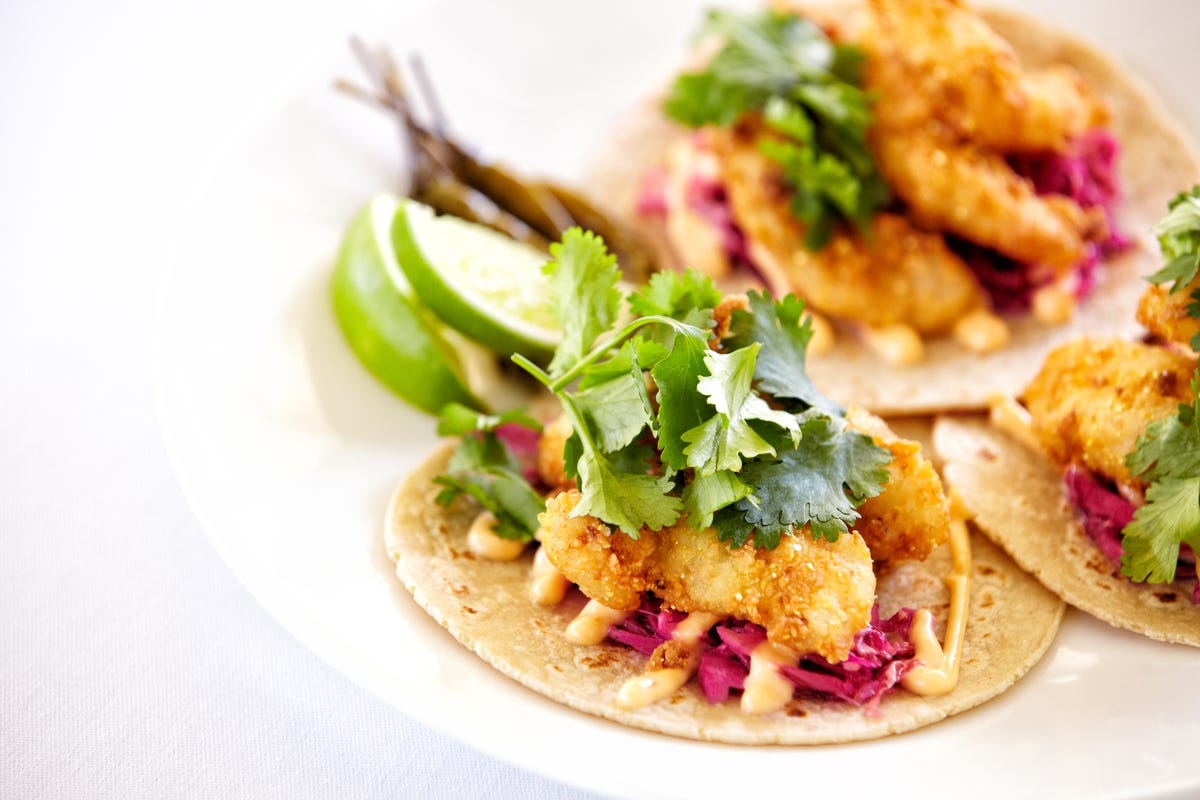
Fish tacos on a plate, with corn tortillas and fresh cilantro.

GSPictures/Getty Images

3. Lean and plant protein

While certain proteins — like red and processed meat — can be hard on your heart, others top the list of foods for heart health. The key here is to look for plant-based protein, lean animal proteins and fish. Experts recommend mixing up your protein sources. So you have plenty of options, stock up on:

  • Lentils
  • Beans
  • Nuts
  • Seeds
  • Tofu
  • Fish, especially ones high in omega-3 fatty acids
  • Eggs
  • Low-fat dairy products
  • Poultry
  • Seeds

Swap some of your red meat and cured pork for the options above and you’ll be doing your heart a favor. 

4. Healthy fats

You might think that fat spells heart trouble, but it’s all about the type of fat. While trans and saturated fats have been linked to cardiovascular issues in numerous studies, your body, including your heart, needs healthy fats. You can get these from fish, nuts and seeds, along with avocados and moderate amounts of plant oils like:

  • Olive oil
  • Sesame oil
  • Sunflower 
  • Soybean oil
  • Canola oil
  • Corn oil
  • Safflower oil

As a general rule of thumb, if the fat would be solid at room temp, it’s probably saturated. If it would be a liquid, it most likely falls under the unsaturated variety. Think butter (controversial for health) versus olive oil (definitely part of a heart-healthy diet). 

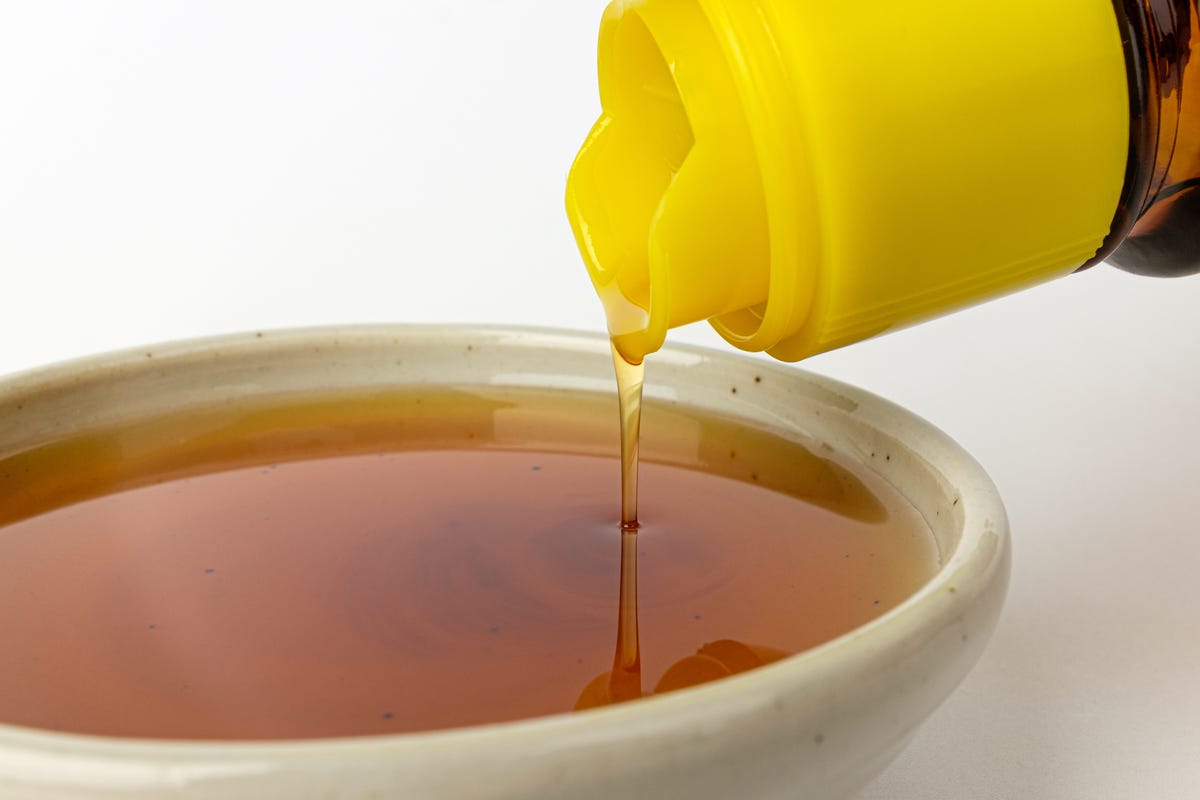
Sesame oil pouring into a small dish.

SUNGMIN/Getty Images

5. Heart-check foods

The American Heart Association has certified certain foods for heart health and given them the Heart-Check seal, which you can find on some food packaging. Once you learn that seal, it can make it easier to stock your cart with foods for heart health. 

For the best results, pair your heart-healthy diet with other heart health boosters like regular exercise, sleep and stress management techniques. It can also be helpful to learn your blood type and what it means for your risk of specific cardiovascular conditions. 

The information contained in this article is for educational and informational purposes only and is not intended as health or medical advice. Always consult a physician or other qualified health provider regarding any questions you may have about a medical condition or health objectives.

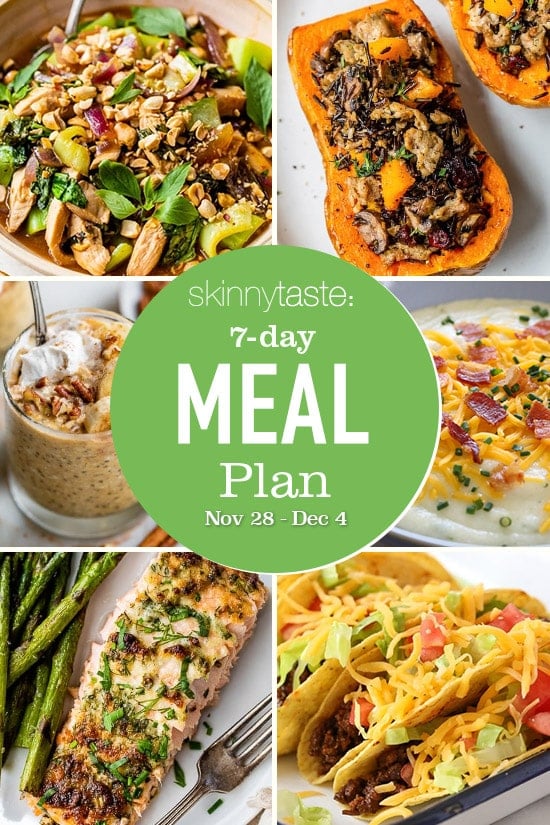
7 Day Healthy Meal Plan (Nov 28-Dec 4)

posted November 26, 2022 by Gina

This post may contain affiliate links. Read my disclosure policy.

A free 7-day, flexible weight loss meal plan including breakfast, lunch and dinner ideas and a shopping list. All recipes include macros and links to WW recipe builder to get your personal points.

7 Day Healthy Meal Plan

I hope everyone enjoyed their holiday weekend! I always cherish time spent with my family- I am so thankful for them! If you went off plan this weekend, don’t stress!  It is OK to indulge every now and then, just recalibrate and keep going!

With grocery prices soaring, many of us are having to adjust, scale back and/or get more creative with our meals. One of the absolute BEST ways to stay within a budget and maintain healthy eating habits is to MEAL PLAN. You can get more 5-day Budget Friendly Meal Plans by signing up for Relish+ (get a 14-day free trial here!)

Ultimate Skinnytaste Meal Planner

Skinnytaste Ultimate Meal Planner

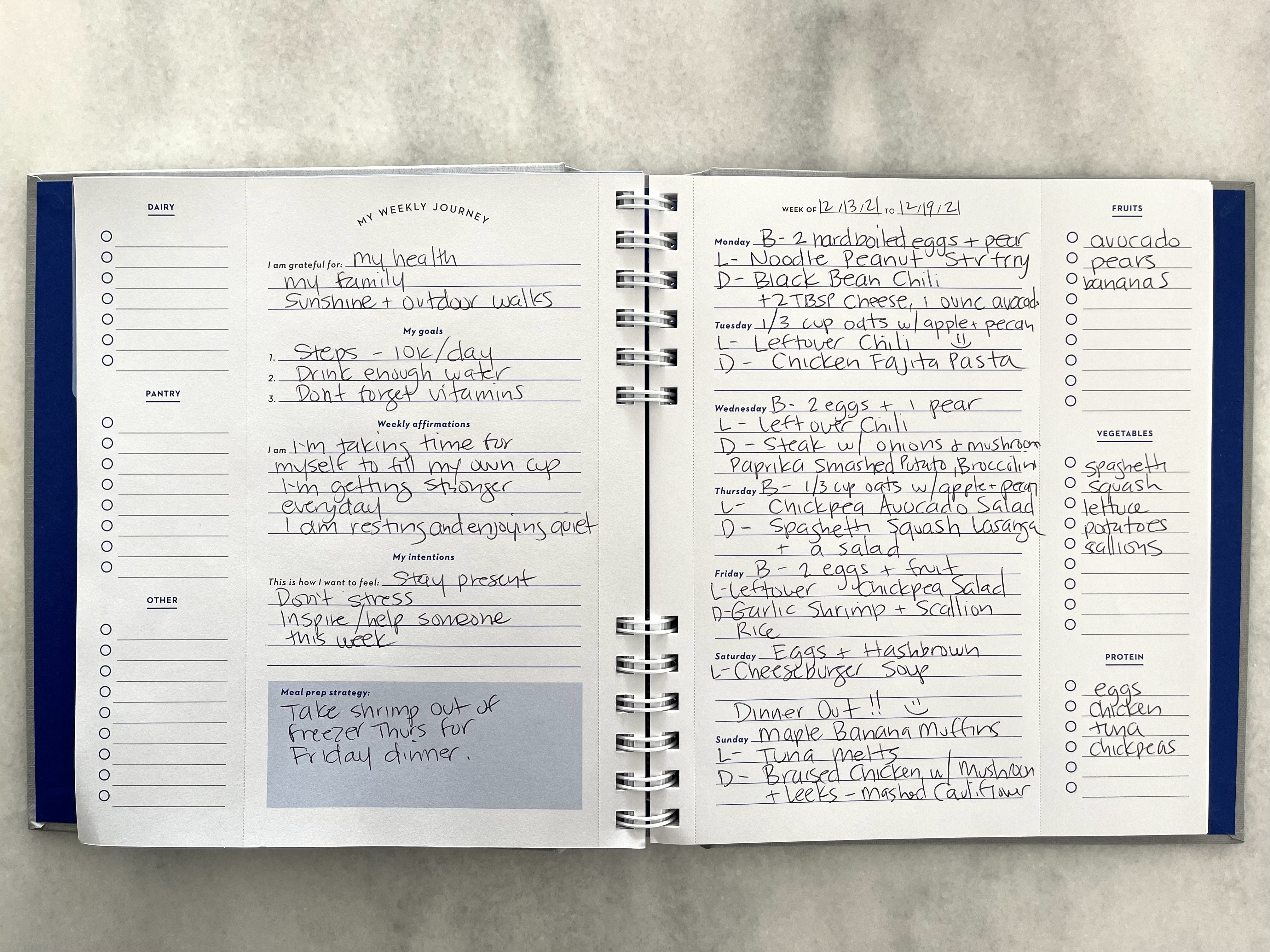
I’m also excited to share the Skinnytaste Ultimate Meal Planner is now available! The 52 week spiral bound meal planner has weekly meal planning grids you can tear out and put on your fridge if you wish, a 12-week meal plan, 30 (15 new) recipes, and tear-out grocery lists. I love starting my week with gratitude, affirmations and intentions, so I included a space for that as well. I hope you will love this as much as I do!

Skinnytaste Ultimate Meal Planner

Buy the meal planner here:

A note about WW Personal Points:

I no longer provide points since they vary on the new Weight Watchers plans but I do provide links to WW Personal points recipe builder for all recipes. Look for the orange button in the recipe card says my WW personal points. Click on that and it takes you to the Weight Watchers website where you can see the WW points and add it to your day (US only, you must be logged into your account). All cookbook recipes in the cookbook index are also updated!

About The Meal Plan

If you’re new to my meal plans, I’ve been sharing these free, 7-day flexible healthy meal plans (you can see my previous meal plans here) that are meant as a guide, with plenty of wiggle room for you to add more food, coffee, beverages, fruits, snacks, dessert, wine, etc. or swap recipes out for meals you prefer, you can search for recipes by course in the index. Depending on your goals, you should aim for at least 1500 calories* per day. There’s no one size fits all, this will range by your goals, your age, weight, etc.

There’s also a precise, organized grocery list that will make grocery shopping so much easier and much less stressful. Save you money and time. You’ll dine out less often, waste less food and you’ll have everything you need on hand to help keep you on track.

Lastly, if you’re on Facebook join my Skinnytaste Facebook Community where everyone’s sharing photos of recipes they are making, you can join here. I’m loving all the ideas everyone’s sharing! If you wish to get on the email list, you can subscribe here so you never miss a meal plan!

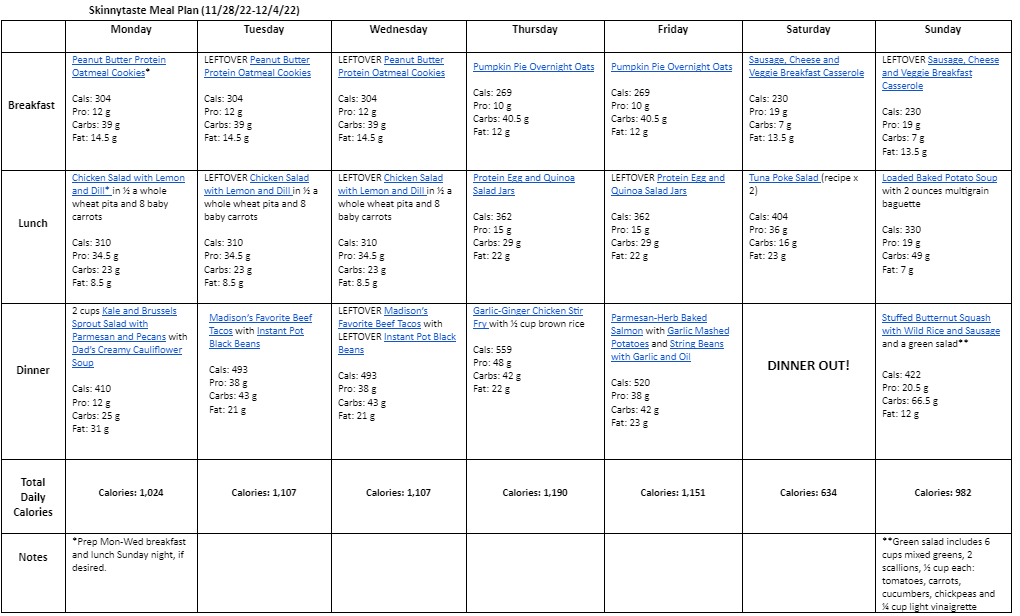
Meal Plan:

Breakfast and lunch Monday-Friday, are designed to serve 1 while dinners and all meals on Saturday and Sunday are designed to serve a family of 4. Some recipes make enough leftovers for two nights or lunch the next day. The grocery list is comprehensive and includes everything you need to make all meals on the plan.

MONDAY (11/28)
B: Peanut Butter Protein Oatmeal Cookies*
L: Chicken Salad with Lemon and Dill *in ½ a whole wheat pita and 8 baby carrots
D: 2 cups Kale and Brussels Sprout Salad with Parmesan and Pecans with Dad’s Creamy Cauliflower Soup

Total Calories: 1,024**

TUESDAY (11/29)
B: LEFTOVER Peanut Butter Protein Oatmeal Cookies
L: LEFTOVER Chicken Salad with Lemon and Dill in ½ a whole wheat pita and 8 baby carrots
D: Madison’s Favorite Beef Tacos with Instant Pot Black Beans
Total Calories: 1,107**

WEDNESDAY (11/30)
B: LEFTOVER Peanut Butter Protein Oatmeal Cookies
L: LEFTOVER Chicken Salad with Lemon and Dill in ½ a whole wheat pita and 8 baby carrots
D: LEFTOVER Madison’s Favorite Beef Tacos with LEFTOVER Instant Pot Black Beans

Total Calories: 1,107**

THURSDAY (12/1)
B: Pumpkin Pie Overnight Oats
L: Protein Egg and Quinoa Salad Jars
D: Garlic-Ginger Chicken Stir Fry with ½ cup brown rice

Total Calories: 1,190**

FRIDAY (12/2)
B: Pumpkin Pie Overnight Oats
L: LEFTOVER Protein Egg and Quinoa Salad Jars
D: Parmesan-Herb Baked Salmon with Garlic Mashed Potatoes and String Beans with Garlic and Oil

Total Calories: 1151**

SATURDAY (12/3)
B: Sausage, Cheese and Veggie Breakfast Casserole
L: Tuna Poke Salad (recipe x 2)
D: DINNER OUT

Total Calories: 634**

SUNDAY (12/4)
B: LEFTOVER Sausage, Cheese and Veggie Breakfast Casserole
L: Loaded Baked Potato Soup with 2 ounces multigrain baguette
D: Stuffed Butternut Squash with Wild Rice and Sausage and a green salad #
Total Calories: 982**

*Prep Mon-Wed breakfast and lunch Sunday night, if desired.
**This is just a guide, women should aim for around 1500 calories per day. Here’s a helpful calculator to estimate
your calorie needs. I’ve left plenty of wiggle room for you to add more food such as coffee, beverages, fruits,
snacks, dessert, wine, etc.

# Green salad includes 12 cups mixed greens, 4 scallions and 1 cup each: tomatoes, cucumbers, carrots and chickpeas
with ½ cup light vinaigrette.  Set aside ½ the salad, with dressing on the side, for dinner Tuesday.

*Google doc

4 Tips for Damage Control After Eating Too Much

So you’ve just finished up a massive, delicious meal—but now, you have to pay the price for eating too much. When you overeat, your body may start to feel bloated and lethargic. You may even begin to experience abdominal pain and cramping. No matter what symptoms may accompany feeling stuffed, this physical discomfort can put a damper on the rest of your day.

While the best way to deal with overeating would be to avoid it by always eating in moderation, this is honestly sometimes easier said than done. When all your favorite foods are in front of you, the temptation might prove too great—especially during food-centric holidays like Thanksgiving. So, how do you avoid your eyes growing bigger than your stomach while indulging in a decadent, delicious meal?

If you find yourself overeating and more often than not feeling too full after chowing down, you’re not alone. In order to find out the best ways to healthily approach damage control after eating too much, we consulted a few dietitians to get their insight. So here are some dietitian-recommended tips to help you process your post-meal slump after eating too much—and for more dietitian-approved advice on healthy eating habits, be sure to also read 5 Best Eating Habits to Help Boost Your Metabolism, Say Dietitians.

Make sure you’re hydrating

Eating foods higher in sodium “can contribute to feeling ‘puffy’ or bloated the next day,” according to Amy Goodson, MS, RD, CSSD, LD, who is the author of The Sports Nutrition Playbook and member of our Expert Medical Board. That is why Goodson stresses the importance of making sure you stay hydrated before and after a big meal.

In addition to drinking plenty of water, you can also try boosting your hydration by adding a little something extra to your beverage.

“One thing you can do is hydrate throughout the day with water infusions, like this Apple Cider Vinegar Lemon “Detox” Drink or this Cranberry Orange Ginger “Detox” Water,” says Tammy Lakatos Shames, RDN, CDN, CFT, and Lyssie Lakatos, RDN, CDN, CFT, also known as The Nutrition Twins. “The fluid will help to restore normal hydration status as it flushes out the excess sodium, sugar, water that’s retained with them, alleviating bloat and heaviness.”

RELATED: The Best Electrolyte Drinks & Powders To Keep You Hydrated All Day

Go for a walk after your big meal

4 Tips for Damage Control After Eating Too Much
Shutterstock

One of the best things you can do for yourself to provide more immediate relief after eating too much and feeling overly full is to go for a walk after your meal.

“The walk will help clear your mind. And if you break a sweat, you can secrete some chemicals and small amounts of salt while also increasing blood flow to the brain,” says the Nutrition Twins. “You’ll burn a few extra calories while you’re at it too, which will help to offset some of the extra calories you may have consumed.”

If you’re not in the mood for a walk, Goodson has some alternative suggestions for moving your body after a heavy meal.

“You can start a friendly game of football in the backyard with family,” Goodson suggests. “Or if that doesn’t work, maybe hit the gym the next morning, or park at the back of all the parking lots when you head out to run errands.”

Get back on track with some vegetables

According to the Nutrition Twins, eating some antioxidant-rich, fiber-packed greens in your next meal can help get your body back to feeling better.

“Fiber from the greens helps push waste and toxins out of the colon, helping to keep you regular so you can quickly spring back and feel lighter,” the Nutrition Twins claim. “And the antioxidants in the green vegetables counteract some damage created from overindulging in inflammatory sugary, fatty, and highly-processed foods.”

Start the next morning with a balanced breakfast

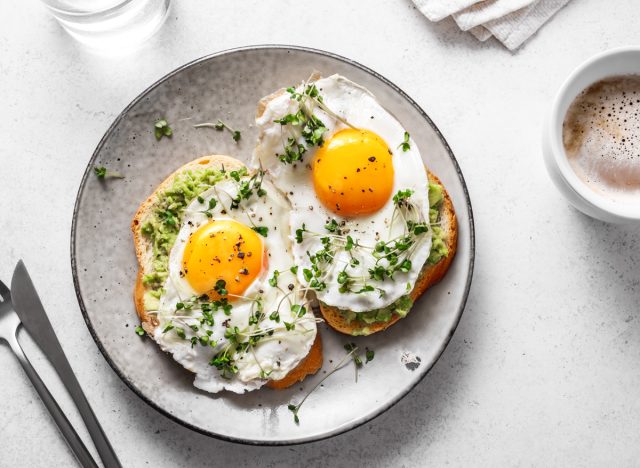
high protein breakfast egg avocado toast
Shutterstock

One of the things you can do the day after you go a little overboard with eating is making sure you’re starting your day off with a healthy, balanced breakfast.

“The day after overeating, start with a protein and fiber-rich breakfast to get your blood sugar going in the right direction,” says Goodson. “Eggs and oatmeal or whole grain toast with peanut butter and a side of Greek yogurt are great options. This will help with feeling better throughout the day.”

Samantha Boesch

Samantha was born and raised in Orlando, Florida and now works as a writer in Brooklyn, NY. Read more about Samantha

13 Foods You Should Eat for Optimal Kidney Health

Think of your kidneys like filters that rid your body of all the things you don’t want. These two fist-sized, bean-shaped organs filter your blood. In doing so, they remove toxins and excess fluids while keeping your levels of potassium, sodium and more in check. At the same time, they produce hormones that help to regulate everything from your blood pressure to your bone strength. Long story short: Your kidneys do a lot. 

So much, in fact, that they can get overtaxed. Roughly one in seven Americans has chronic kidney disease, which can cause waste and fluid buildup in your body. Worse yet, most people with CKD don’t know they have it. 

Poor eating habits heighten your risk for CKD. But when you eat the best foods for your kidneys, the reverse can be true. Since certain foods are good for kidneys, what you eat can help to protect your kidney health. 

Best foods for healthy kidneys

These are our top picks for foods to add to your diet for optimal kidney health.

1. Fatty fish 

Fish delivers protein, and when you choose a fatty fish like tuna, salmon or trout, you’re also getting omega-3 fatty acids. According to the National Kidney Foundation, omega-3 fats may help reduce fat levels (triglycerides) in the blood and may also lower blood pressure.

If you have CKD, you may need to keep an eye on the phosphorus and potassium levels of the fish you choose. The National Kidney Foundation has a chart you can use to determine levels in specific types of fish. Although, it’s best to consult with your doctor.

2. Cabbage 

This nutrient-dense vegetable is low in both potassium and sodium while packing in fiber, vitamins C and K and more. 

Plus, cabbage is versatile. You can use it in salads and slaws, but you can also use it as a wrap for tacos, sandwiches and more. 

3. Bell peppers 

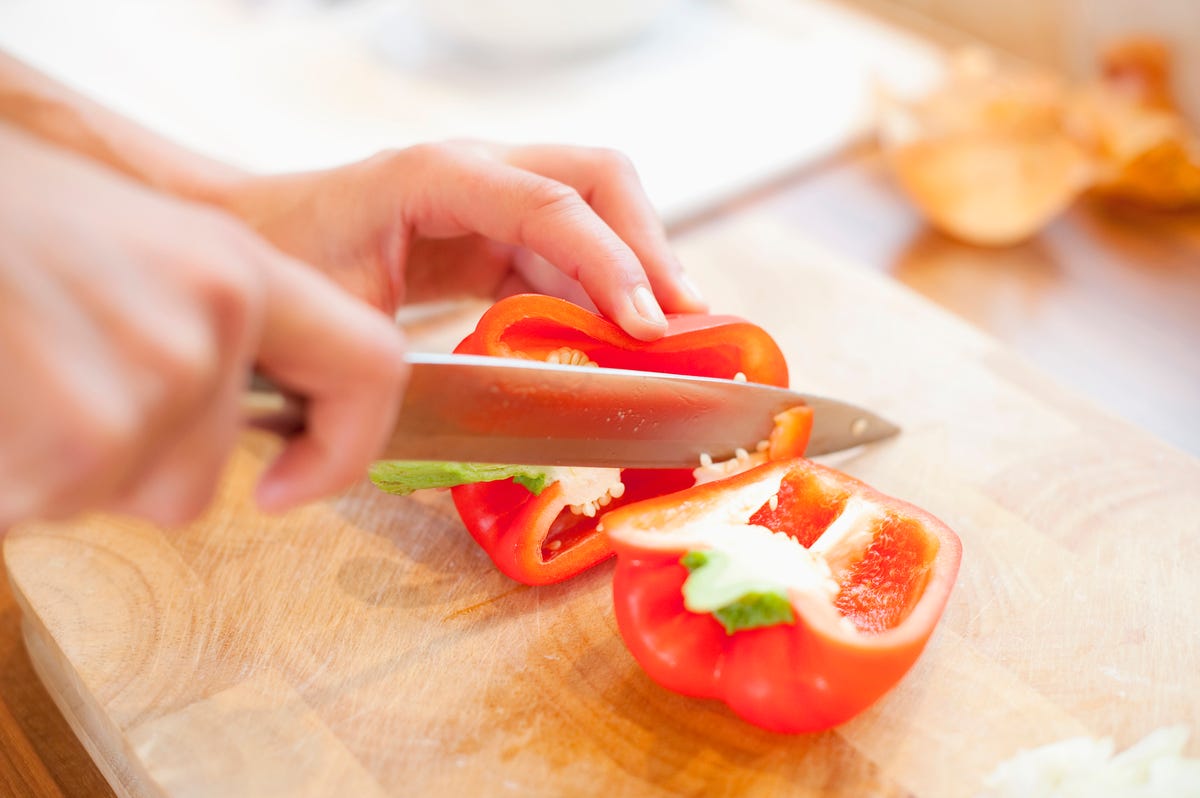
Like cabbage, bell peppers pack in lots of good nutrients with low levels of potassium. With them, you get vitamins B6, B9, C and K, plus fiber. And they deliver antioxidants, too. 

You can slice them and eat them with dips or roast them up and add them to dinner. 

Red bed pepper on cutting board with hands and knife slicing it

Jacobs Stock Photography/Getty Images

4. Cranberries 

Cranberries help to prevent urinary tract infections. While these usually stay in your bladder, they can travel up to your kidney, making kidney problems worse. Fortunately, regularly consuming cranberries can help you avoid this unwelcome situation. 

Plus, cranberries have antioxidants that can help to fight inflammation, and they can boost your heart and digestive health. It turns out, these tart berries aren’t just for the Thanksgiving table. 

5. Blueberries 

We’ve talked about some of the best foods for kidneys, but you can take it a step further. The question is: what foods help repair kidneys? Blueberries deliver here. 

With high levels of antioxidants and loads of vitamin C and fiber, blueberries are all-around healthy. They can also help to reduce inflammation and support bone health, reversing some of the issues that can come with CKD. 

6. Dark, leafy greens 

Still wondering what foods help repair kidneys? You can turn to dark, leafy greens like spinach or kale. They deliver so many nutrients that they can help you get key vitamins and minerals, plus immunity-boosting benefits. 

Be advised, though, that greens can come with a decent amount of potassium. If you have CKD, talk to your doctor before adding more of these to your diet. 

7. Olive oil

Rich in antioxidants and healthy fatty acids, olive oil can boost your overall wellness. A study from the University of Harvard, found that olive oil may lower cholesterol levels and the risk of cardiovascular disease, dementia and some types of cancer.

Beyond all this, it can help you add flavor to dishes without turning to salt or butter. 

To get more antioxidants, choose unrefined or cold-pressed olive oil that’s virgin or extra virgin. 

8. Garlic 

Another antioxidant-rich, inflammation-fighting food, garlic also contains a specific compound called allicin. For people with CKD, allicin — an active compound found in garlic — worked just as effectively to help protect kidney health as a prescription drug. If you’re looking for the best foods for kidneys, garlic has to make the list. 

Plus, it’s an excellent way to add flavor even when you’re skimping on salt. 

9. Onions 

From the same family as garlic, onions give you another excellent and salt-free way to add flavor (bonus points if you saute them in olive oil). Onions also deliver important nutrients like vitamins B6 and C, manganese and copper. 

They also contain quercetin, a chemical that can help your body fight cancer, and organic sulfur compounds that can reduce your risk of high blood pressure, stroke and heart disease. 

10. Cauliflower 

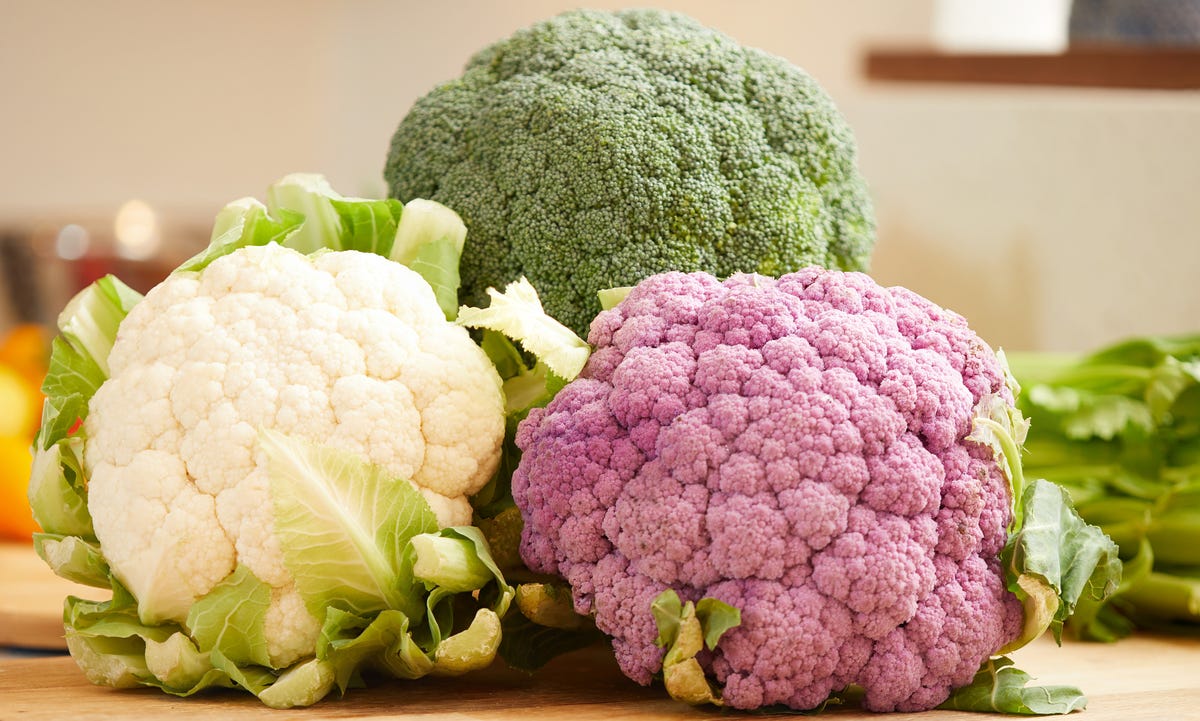
Cauliflower brings the crunch, paired with plenty of vitamins C, B6, B9 and K, along with fiber. It also contains compounds your body can use to neutralize certain toxins — a big help when your kidneys aren’t doing their best filtration work. 

Cauliflower does contain some potassium and phosphorus, though, so while it makes the list of foods good for kidneys, people with CKD may want to moderate their intake. 

Green, white and purple cauliflowers on cutting board

Thanasis/Getty Images

11. Egg whites 

Egg whites are specifically recommended for people with kidney problems. They give you a way to increase your protein levels — which can be especially important with later-stage CKD, and especially if you’re on dialysis. 

12. Arugula 

Arugula is packed with nutrients your body needs like magnesium, iron, calcium and vitamins A, B9, C and K. Plus, it’s antioxidant-rich and has glucosinolates, which can help your body protect itself against a range of cancer types. 

You can eat arugula raw (it’s a great salad base), but you can also sprinkle it over whatever you’re whipping up. It’s great on pizzas, in omelets and in pastas, for example. 

13. Apples 

Apples deliver the cancer-fighting quercetin and fiber that can help to keep your cholesterol and blood sugar at healthy levels. And they’ve got plenty of antioxidants. 

Better yet, they’re easy to work into your diet. Leave a bowl of apples on your counter and you’ll have a kidney-healthy grab-and-go snack whenever you need one. 

The information contained in this article is for educational and informational purposes only and is not intended as health or medical advice. Always consult a physician or other qualified health provider regarding any questions you may have about a medical condition or health objectives.