Despite successes, lack of regulation raises concerns over medical devices

Janice Berger isn’t a big fan of bowling shoes.

“Oh my gosh, who knows whose dirty feet have been in those shoes,” Berger said.

But sporting a pair at Signature Lanes in Elkhart, Berger is just glad to be able to lace them up on her own. It wasn’t long ago the senior from Goshen couldn’t put on her own shoes. Much less bowl.

Chronic pain has kept Berger from bowling for the last seven years.

“I couldn’t bowl, I couldn’t ride my bike,” Berger said. “I couldn’t enjoy my grandchildren. So it is frustrating when you are so tired of pain there is absolutely no joy in your life.”

She has diabetic neuropathy; nerve damage in her feet caused by diabetes. It affects 28{bf0515afdcaddba073662ceb89fbb62b6b1bf123143c0e06b788e1946e8c353f} of all diabetic patients according to the National Library of Medicine.

Berger was at the point she was willing to do anything to stop the pain.

“I just thought, I’m going to start with a podiatrist and work my way up to God if that’s what it takes,” Berger said.

You couldn’t see it even while Berger grabbed a bowling ball, rolled it down the lane, or watched her first gutter ball in years; but sitting in the base of her spine is a Nevro HFX. A spinal cord stimulator stopping the pain. She had it implanted in November, 2021 after trying medications, therapy, and other methods that never worked.

“Last time I talked to her, she told me she had 100{bf0515afdcaddba073662ceb89fbb62b6b1bf123143c0e06b788e1946e8c353f} relief. She was smiling the whole time. She was extremely happy,” said interventional pain specialist Dr. Jerry Grewal.

Dr. Grewal implanted Berger’s Nevro HFX, which is the first time it’s been used for diabetic neuropathy.

“Hopefully patients will improve, their quality of life will get better, their pain will decrease, and they can be less reliant on medications,” Dr. Grewal said. “And hopefully they don’t have to be on opiates long term.”

Jeanne Lenzer, author of The Danger Within Us: America’s Untested, Unregulated Medical Device Industry and One Man’s Battle to Survive It, worries some patients don’t consider that medical devices have their own side effects which can be serious.

She’s spent years studying the medical device industry.

“It’s a wild west out there,” Lenzer said. “Devices are the wild west.”

About one in ten Americans will have a medical device implanted in their lifetime. But less than half a percent of these devices have been tested in rigorous clinical trials, according to the American Medical Association Journal of Ethics.

There are at least 500 FDA consumer complaints over the last five years following a Nevro Senza device implant. Reported issues include infections, sepsis, shocking sensations, and numbness.

In these cases, no issues were found with the device. But it’s the manufacturer itself investigating whether the device is at fault.

“We’ve [implanted], between the trials and everything else, almost 100,000 of these devices. And we very carefully track any reports of adverse events. We’re required to,” Nevro chief medical officer Dr. David Caraway said.

Dr. Caraway points to an 18-month trial showing Nevro’s spinal cord stimulators leading to pain relief for nearly three quarters of patients.

“We’re really focused on evidence building and providing the safest and most effective therapies that are out there,” Dr. Caraway said.

And the Nevro HFX went through the FDA’s more stringent pre-market approval process.

But 82{bf0515afdcaddba073662ceb89fbb62b6b1bf123143c0e06b788e1946e8c353f} of devices go through 510(k) approval, which requires no clinical data. According to a study published in the Journal of the American Medical Association, 510(K)-approved devices make up 97{bf0515afdcaddba073662ceb89fbb62b6b1bf123143c0e06b788e1946e8c353f} of medical device recalls.

“A lot of people think that the FDA actually tests things. They don’t do any testing at all,” Lenzer said. “What they do is they ask the manufacturer to provide their information. And that’s what they go on.”

Patients considering a medical device can look up reported issues on the FDA database. Lenzer recommends researching complaints, considering possible side effects, and weighing them against the intended benefit. Patients should also ask their medical provider how often they’ve implanted the device.

So far, Berger hasn’t had any issues.

“It’s a dream come true,” Berger said.

And even if it’s not helping her score on the lanes, she is just glad to be back in the game.

5 dietary switches for a healthy lifestyle

Our sedentary life have led to diminished levels of bodily exercise, coupled with the deficiency of moderation and imbalance in our foodstuff habits that include things like excessive use of processed meals large in refined sugar, salt and higher-in extra fat consisting of saturated and trans-body fat. The vital to minimising health hazards is not as difficult as you may well imagine.

Get started adopting uncomplicated nutritional and life style alterations to sustain over-all wellbeing as follows:

Decide on granola bars over Indian dessert: Even however sugar is component of our frequent diet one wants to be mindful about the usage pattern, portion dimensions and need to go for a snack which is a lot more excellent. Granola bars are a swift snack for these who need a ability enhance.

Handmade granola bars can be made at home with oats, berries, edible seeds and dry fruits that are high sources of fibre and protein.

Soluble fibre: aids to decrease LDL levels i.e., undesirable cholesterol and blood pressure which will retain your heart healthful. Swap fruit juices with total fruits. Consuming full fruits in the morning can help in better absorption of natural vitamins from the fruits. Having said that, individuals select the hassle-free option and eat fruit juices.

Organic and canned fruit juices are a concentrated resources of sugars without the need of the reward of fibre. Therefore, it is advisable to consist of whole fruits as component of your breakfast, which have nutrition like fibre, nutritional vitamins, minerals, and phytonutrients. Seasonal fruits can be a good way to incorporate fruits in your breakfast every single day.

Select blended oils around one seed oils: Though solitary seed oils like floor nut, soybean, canola and so forth. do have well being positive aspects, they are not plenty of to deliver the correct stability of fatty acids which are encouraged in our eating plan. A more healthy swap would be opting for multi-resource oils, also regarded as blended oils. Blended oils with antioxidants have several positive aspects like furnishing nourishment from fat and strengthening immunity. It is organized by combining two or a lot more oils into 1 to obtain advantages of two oils in a single. They are scientifically blended to offer fantastic balance of MUFAs and PUFAs that assist handle cholesterol.

Reduce sodium and saturated extra fat rich snack food items: The American Heart Association and Indian Council of Professional medical Analysis suggest great intake of sodium to be not a lot more than 2000 mg a day. You can also choose for a healthier switch and eat foodstuff like fruits, sprouts, oats, yogurt or millet primarily based foods for snacks.

Swap fast food items with nutritious options: Quick meals could have excess quantities of saturated fat, refined sugar and sodium, increasing the probability of weight problems, diabetic issues, hypertension and cholesterol imbalance. To counter this, it is better to eat nutritious alternatives like hummus wrap, savoury oatmeal, and millet dosas.

Chickpeas, oats, millet flour and veggies have excellent resource of plant-based mostly protein and fiber which increases your superior intestine germs and have lower glycemic index that assists to manage blood sugar degrees. Leafy vegetables like spinach, cabbage, fenugreek leaves, kale and collard greens are substantial in fibre, nutritional vitamins and minerals that market overall health and heart overall health.

Maintaining a balanced way of life can seem too much to handle, especially with all the information and facts out there. Having said that, breaking down your health objectives and generating very simple, straightforward adjustments to your day to day routines can help accomplish a healthier life-style.

(To acquire our E-paper on whatsapp daily, remember to click right here. To obtain it on Telegram, you should click here. We permit sharing of the paper’s PDF on WhatsApp and other social media platforms.)


4 Tips for Damage Control After Eating Too Much

So you’ve just finished up a massive, delicious meal—but now, you have to pay the price for eating too much. When you overeat, your body may start to feel bloated and lethargic. You may even begin to experience abdominal pain and cramping. No matter what symptoms may accompany feeling stuffed, this physical discomfort can put a damper on the rest of your day.

While the best way to deal with overeating would be to avoid it by always eating in moderation, this is honestly sometimes easier said than done. When all your favorite foods are in front of you, the temptation might prove too great—especially during food-centric holidays like Thanksgiving. So, how do you avoid your eyes growing bigger than your stomach while indulging in a decadent, delicious meal?

If you find yourself overeating and more often than not feeling too full after chowing down, you’re not alone. In order to find out the best ways to healthily approach damage control after eating too much, we consulted a few dietitians to get their insight. So here are some dietitian-recommended tips to help you process your post-meal slump after eating too much—and for more dietitian-approved advice on healthy eating habits, be sure to also read 5 Best Eating Habits to Help Boost Your Metabolism, Say Dietitians.

Make sure you’re hydrating

Eating foods higher in sodium “can contribute to feeling ‘puffy’ or bloated the next day,” according to Amy Goodson, MS, RD, CSSD, LD, who is the author of The Sports Nutrition Playbook and member of our Expert Medical Board. That is why Goodson stresses the importance of making sure you stay hydrated before and after a big meal.

In addition to drinking plenty of water, you can also try boosting your hydration by adding a little something extra to your beverage.

“One thing you can do is hydrate throughout the day with water infusions, like this Apple Cider Vinegar Lemon “Detox” Drink or this Cranberry Orange Ginger “Detox” Water,” says Tammy Lakatos Shames, RDN, CDN, CFT, and Lyssie Lakatos, RDN, CDN, CFT, also known as The Nutrition Twins. “The fluid will help to restore normal hydration status as it flushes out the excess sodium, sugar, water that’s retained with them, alleviating bloat and heaviness.”

RELATED: The Best Electrolyte Drinks & Powders To Keep You Hydrated All Day

Go for a walk after your big meal

4 Tips for Damage Control After Eating Too Much
Shutterstock

One of the best things you can do for yourself to provide more immediate relief after eating too much and feeling overly full is to go for a walk after your meal.

“The walk will help clear your mind. And if you break a sweat, you can secrete some chemicals and small amounts of salt while also increasing blood flow to the brain,” says the Nutrition Twins. “You’ll burn a few extra calories while you’re at it too, which will help to offset some of the extra calories you may have consumed.”

If you’re not in the mood for a walk, Goodson has some alternative suggestions for moving your body after a heavy meal.

“You can start a friendly game of football in the backyard with family,” Goodson suggests. “Or if that doesn’t work, maybe hit the gym the next morning, or park at the back of all the parking lots when you head out to run errands.”

Get back on track with some vegetables

According to the Nutrition Twins, eating some antioxidant-rich, fiber-packed greens in your next meal can help get your body back to feeling better.

“Fiber from the greens helps push waste and toxins out of the colon, helping to keep you regular so you can quickly spring back and feel lighter,” the Nutrition Twins claim. “And the antioxidants in the green vegetables counteract some damage created from overindulging in inflammatory sugary, fatty, and highly-processed foods.”

Start the next morning with a balanced breakfast

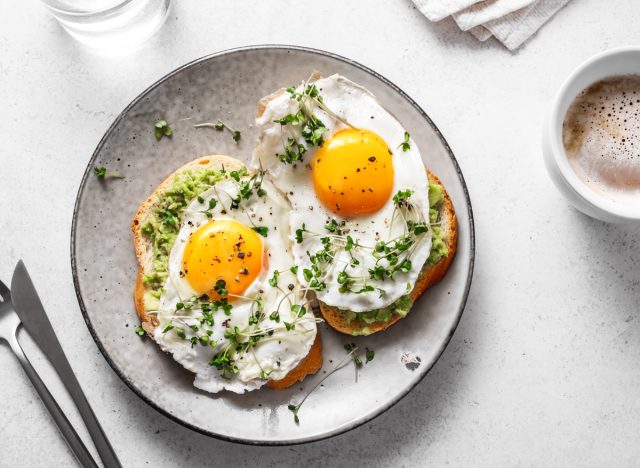
high protein breakfast egg avocado toast
Shutterstock

One of the things you can do the day after you go a little overboard with eating is making sure you’re starting your day off with a healthy, balanced breakfast.

“The day after overeating, start with a protein and fiber-rich breakfast to get your blood sugar going in the right direction,” says Goodson. “Eggs and oatmeal or whole grain toast with peanut butter and a side of Greek yogurt are great options. This will help with feeling better throughout the day.”

Samantha Boesch

Samantha was born and raised in Orlando, Florida and now works as a writer in Brooklyn, NY. Read more about Samantha

211 hotline is a quick connection for non-emergency health and social services

Unsure where by to go for assistance, a homeless one mom named Mary designed an important contact immediately after she had a newborn in 2020. She dialed 211, a social provider hotline that place her in contact with transitional housing.

Even though she was doing the job two positions, Mary, who declined to give her last title, couldn’t pay for each hire and boy or girl treatment. But 211 operators in Lake County hooked her up with YWCA child treatment, monetary aid for a safety deposit, 3 months’ rent, and a landlord who’d acknowledge both equally.

“I by no means would have recognized if I did not contact 211,” Mary stated in a video job interview with United Way, which can help sponsor the support. She now has a one secure career and a household. “I sense like 211 … has served me tremendously.”

A comparable 211 company has just lately appear to DuPage County, and additional are prepared to launch early subsequent 12 months — probably on Feb. 11 — in Chicago, suburban Cook County, and Kendall County. 211, like the improved recognised 911 for emergencies and Chicago’s 311 for metropolis providers, puts callers in touch with nonemergency well being and social products and services.

211 hotline is a quick connection for non-emergency health and social services

The most common providers are enable shelling out hire and utilities, but they also incorporate free and confidential disaster counseling, disaster guidance, food items pantries, overall health treatment, insurance plan, employment, and veterans products and services.

Kane, Lake, McHenry, and Will are amongst the many counties that present the support in Illinois. As a whole, the point out lags behind the rest of the country in utilizing the hotline, with almost fifty percent of its counties continue to without.

But as soon as Chicago and Kendall appear on-line early upcoming year, practically 90{bf0515afdcaddba073662ceb89fbb62b6b1bf123143c0e06b788e1946e8c353f} of the state’s populace will be protected.

In DuPage, the second most populated county in Illinois after Cook, officers established apart $1.6 million in federal American Rescue Approach Act money to fund the plan for the first a few years.

The round-the-clock, multilingual phone lender will be operated by Addison Consolidated Dispatch Middle, which also provides 911 dispatch products and services, County Board Chairman Dan Cronin claimed.

“We are thrilled to introduce however another ingredient of DuPage County’s solution of strengthening our social services safety net,” Cronin stated.

Anticipating elevated desires for the duration of and following the COVID pandemic, DuPage officials also have delivered tens of millions of dollars in funding to beef up the county’s social solutions. That included buying and transforming a previous Red Roof Inn in Downers Grove for PADS to use as a homeless shelter.

Expenses change by county. Kane County, whose services is presented by Path, has an annual spending budget of about $86,000. The additional populous Lake County, which has dealt with 150,000 calls in a few a long time, has a spending plan approaching $500,000, with funding from the county, local governments, foundations and personal contributors.

Phone calls have elevated noticeably since the onset of the COVID pandemic. Apart from the mobile phone hotline, persons can entry services in quite a few counties via 211 web-sites. Past yr, Lake County counted more than 57,000 contacts with 211 — most of them on-line.

But it generally can help to communicate to a 211 operator, United Way of Lake County spokeswoman Lori Nerheim stated.

“The reward of speaking to another person is they are trained navigators to get to the root of the need,” she stated. “Many men and women may simply call with one particular need, say housing, but it may well be result of domestic violence, or there might be a food have to have. Getting another person to guideline you is genuinely important.”

Also using federal American Rescue Strategy resources, Kendall County has budgeted $136,000 for its software by way of 2025, county Administrator Scott Koeppel mentioned. Outgoing County Board Chairman Scott Gryder aided to set up the system as a result of a nonprofit agency, Koeppel stated.

The up coming action is to make certain persons know about the amount. Only 21{bf0515afdcaddba073662ceb89fbb62b6b1bf123143c0e06b788e1946e8c353f} of Lake County people realized about the 211 provider in a current county study.

“Ultimately, we want it to be as memorable as 911,” United Way of Lake County President Kristi Extended claimed.

DuPage County board member Julie Renehan claimed officers hope 30,000 to 40,000 calls for aid a year.

“211 meets genuine requires in actual time,” she mentioned. “It’s the quantity to call when you don’t know who to connect with. This is a person we can all be proud of.”

Tackle systemic racism to diversify health care and clinical research

Tackle systemic racism to diversify health care and clinical research

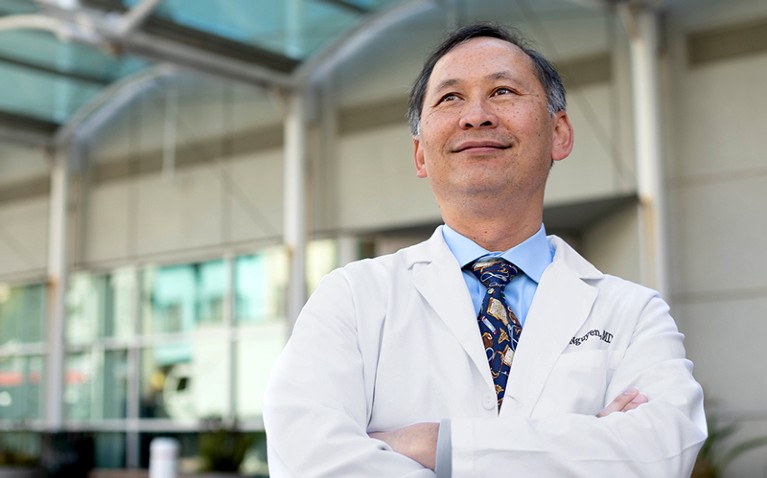
Health-equity researcher Tung Nguyen guides several anti-racism efforts at the University of California, San Francisco.Credit: Susan Merrell

Decolonizing science

Science is steeped in injustice and exploitation. Scientific insights from marginalized people have been erased, natural-history specimens have been taken without consent and genetics data have been manipulated to back eugenics movements. Without acknowledgement and redress of this legacy, many people from minority ethnic groups have little trust in science and certainly don’t feel welcome in academia — an ongoing barrier to the levels of diversity that many universities claim to pursue.

In the next of a short series of articles about decolonizing the biosciences, Tung Nguyen, who was appointed associate vice-chancellor for research inclusion, diversity, equity and anti-racism at University of California, San Francisco (UCSF) in September, offers advice for reforms in health research. Nguyen, a health-equity researcher who is also the director of the UCSF Asian American Research Center on Health, says anti-racism efforts start with engaging underserved communities and nurturing diverse trainees in health research and health care.

I studied medicine because I didn’t see health care and health research addressing the needs of the Asian community in the San Francisco Bay area — the part of California where I moved, as an 11-year-old non-English speaker, when my family emigrated from Vietnam. For the past 20 years, I’ve been doing health-equity research, focusing on cancer interventions.

In this country, the health-research world has many aspects that are anti-Asian. A lack of data on one racial identity is always a sign of racism because it essentially means that a portion of the population is invisible. For example, we know that about one-third to one-half of Asian Americans don’t speak English well enough to take a medical survey conducted in English. The ‘Asian’ responses to such a survey will include only English speakers; in addition, all of the ‘Asian’ respondents will be lumped together, despite the diversity of Asian cultures.

Lack of urgency

Although some institutions are trying to hire diverse candidates, there is a fundamental lack of urgency when it comes to addressing systemic racism. The issues I’ve mentioned are all structural problems. I think that there can be no systematic change without engaging everyone involved — from medical-department heads to members of the communities that institutions purportedly serve.

In 2020, my colleagues and I created an anti-racism task force at the University of California, San Francisco. Using a community-engagement approach, we convened a committee of 25 members, including institutional and community leaders, staff, faculty members and trainees. Over the course of a year, we solicited information throughout the university and produced a report with 160 recommendations — ranging from funding for research that investigates the structures that sustain racism, to conducting more community engagement in scholarship.

Most institutions are too top-down. I’ve learnt that the academic hierarchy is a basic challenge to doing equity work on campuses. White men tend to be over-represented among faculty members, whereas non-faculty staff members tend to include more women and under-represented minority groups. We make sure the staff and faculty members meet and are mindful of — and acknowledge — the power dynamics that exist. Otherwise, our efforts wouldn’t be inclusive.

To better diversify recruitment of study participants, in 2021, my colleagues and I created the Research Action Group for Equity, or RAGE — an acronym we deliberately chose because we are angry about the lack of minority-health data and participation, and we want to make things uncomfortable for the powers that be. RAGE works with the UCSF Clinical & Translational Science Institute to make sure that recruitment is an inclusive process. We engage community leaders who are bicultural or bilingual to provide translation support or address cultural concerns.

If my colleagues and I can diversify the health-care workforce at UCSF, we can definitely improve the economic status of diverse communities as well as the reach of biomedical research into those communities. We have a US National Institutes of Health BUILD award to address the lack of diversity among biomedical researchers. If you want minority students and trainees, you have got to go to where they are. In our case, we recruited trainees from San Francisco State University, a Hispanic-focused, minority-serving institution. We trained these junior research and health professionals to become, for example, clinical research coordinators to manage studies and conduct experiments.

This expands the job opportunities available to these trainees and diversifies participation in research. But when people talk about efforts to increase the numbers of early-career scholars from diverse backgrounds, I hate the term ‘pipeline programme’. ‘Pipeline’ implies that you have to fit into a pipeline to begin with and you come out the other end, where the system wants you to come out. Furthermore, if the pipeline is producing a steady stream of talented PhDs from under-represented communities but the system does not increase the number of senior roles these people hold, it’s not a pipeline problem. Instead, it’s a dam problem — pun intended; there are structural barriers to workplace diversity that need to be removed.

UCSF has its own continuing challenges in terms of anti-racism efforts, but the institution has been transparent. It has a dashboard that highlights racial, ethnic and gender diversity among faculty members, staff and trainees. The situation fluctuates, and the numbers have never been great for typically under-represented groups in medicine, such as Black and Hispanic people. But it’s important that the problem be visible so that we can actually improve.

It’s frustrating that successful diversity, equity and inclusivity programmes often don’t get sustained. Under-represented groups are used to people coming in with money and then leaving. I have helped to develop the AEIOU principles, which will be the foundation of my work as the newly appointed associate vice-chancellor for research inclusion, diversity, equity and anti-racism. A is for accountability and anti-racism, E is for engagement, I is for individual-centred institutional change, O is opportunity, and U is unity. These principles are key to making progress against racism. The system has to change for under-represented groups to be successful, and that requires an increase in opportunities. Oppressive structures maintain oppression by making people perceive a zero-sum game — if someone wins, someone else has to lose. To increase diversity, equity and justice, we need to quit pitting one group against another.

This interview has been edited for length and clarity.

What medical mysteries can teach us about getting better health care

Comment

You are reading our weekly Well+Being newsletter. Sign up here to get it delivered to your inbox every Thursday.

Who doesn’t love a good mystery?

For 15 years, medical reporter Sandra G. Boodman has chased down the most unusual, quirkiest and weirdest medical cases for her monthly Medical Mysteries series. Recent stories have focused on a teenager who couldn’t wake up, a woman wrongly diagnosed with ALS, and an entire family and guest felled by a strange flu-like illness.

I checked in with Sandra to find out more about how she writes the column and the lessons we can learn from it.

Here’s our edited conversation.

Q. How do you choose your ideas?

A: It has to be something I haven’t written about. It has to be a solved case. I need to know the ultimate diagnosis. Even though it’s a solved case, there has to be a mystery. And there has to be a human story.

Q. Once you pick a case, how do you report it?

A: I ask for a chronology of events and medical records that confirm the diagnosis. The medical records and chronology enable me to see whether, indeed, this is a mystery, whether it unfolded in an interesting way. Will this be an interesting case?

Then, I interview the patient, sometimes the parent, sometimes the spouse. The last step is to talk to the doctor who made the diagnosis or the current treating physicians. Any step along the way, the process can fail.

Q. Do you write about unsolved cases?

A. No, it has to be a solved case. A lot of people write to me and say, “I have this problem, can you help me?” Unfortunately, that’s not what I do. I did once write about a lawyer in Detroit who had gone to the undiagnosed-disease program at the National Institutes of Health. He’s seen more than 100 doctors and still doesn’t have an answer. But I thought his case was so unusual and interesting, I did make an exception that time.

Q. What are some of your most memorable medical mysteries?

A: I wrote about a family that kept getting recurrent strep throat. They couldn’t figure it out. An enterprising veterinarian got involved. It turned out their cat may have been the vector. When they finally treated the cat, nobody has had strep.

One of the weirder ones — there was a woman who had serious kidney and heart problems. It turned out she was eating too much licorice. That was really odd.

And I still vividly remember a State Department worker who had terrible itching on her head at night. She had even been worked up for a type of cancer. She had seen multiple dermatologists. It turned out she had head lice for an entire year. How did they miss that? That was really stunning.

Q. What have you learned about the medical system from writing about medical mysteries?

A. Medical care has become increasingly specialized. Doctors are familiar with a small slice of what’s going on, yet diagnosis is an inherently complex process. I also think time pressures are worsening. It’s like: “You’ve got 10 minutes. Go.” That’s not going to work with a complicated problem.

I also think sometimes patients are not good at describing the problems. The people who tend to do better are organized and can describe their symptoms in a way that is intelligible for a doctor.

Q. What’s your best advice to patients for getting better medical care?

A. Primary-care doctors can really help a patient. I often see people who go right to specialists. They may not have a primary-care doctor, or they use urgent care when they’re sick. That can be problematic. People really undervalue the role of a good primary-care doctor.

Sign up for the Well+Being newsletter, your source of expert advice and simple tips to help you live well every day

The 2022 Well+Being Gift Guide

Need a gift idea? The Well+Being team shared our favorite finds for cooking, exercising, spending time at home, improving our mental health, presents for your pets and more.

Some gifts are practical and affordable; others are definite splurges. I just bought air fryers for my family members because our Eating Lab columnist Anahad O’Connor recommended it. Runners will appreciate the perfect running shorts recommended by fitness writer Kelyn Soong. Amanda Morris, who writes about disability, suggested hearing-aid jewelry. Reporter Teddy Amenabar has found the perfect traveling coffee mug.

There are lots to choose from, and every item brought us closer to living healthy, fulfilled lives. We hope they do the same for you and your loved ones this year.

Please let us know how we are doing. Email me at wellbeing@washpost.com.