Health care reparations, explained – Vox

In 1972, two social workers set Debra Blackmon’s sterilization in motion.

The primary diagnosis in her medical records read: mental retardation severe. Soon, Blackmon would undergo a total abdominal hysterectomy, a procedure, sanctioned by the local government, to remove her uterus and cervix.

She was 14.

Since 1929, the state of North Carolina had been signing off on forced sterilization for those they deemed unfit to have children. Through its eugenics programs, the state sterilized more than 7,600 people, under the notion that halting reproduction by “mentally defective” people would benefit society.

While white people made up the majority of sterilizations prior to the 1960s, Black women were disproportionately targeted for the state-sanctioned surgeries in the later years of the program.

“It was heart-wrenching,” says Bob Bollinger, the attorney who represented Blackmon and a handful of others with similar stories in separate legal cases against the state.

Although 30 states have had sterilization laws on the books, North Carolina’s program — which ran until 1974 — was one of the largest and most aggressive. Its victims were also the first to receive compensation, in an unprecedented reparations effort.

In 2013, state lawmakers set aside $10 million for one-time payments to the 1,500 to 2,000 victims they estimated were still alive. The compensatory funds covered those who had been sterilized through the state eugenics board’s formal process, but left out many who had been involuntarily sterilized by local welfare departments that had bypassed the state board. Until they came forward seeking reparations, the legislature was likely unaware such individuals existed.

Blackmon was among them. She’d never receive payment under the statute.

“We lost all the cases because of how the law was written,” says Bollinger. North Carolina’s reparations program was successful as far as it went, he said. “It just didn’t go far enough.”

The effort was one of the most well-known examples of reparations paid to Black Americans as an attempt to right an egregious wrongdoing in health care — part of a growing movement calling for direct monetary payments, free health care, and increased accountability for how the medical system treats Black patients. While the larger reparations movement calls for restitution for centuries of unpaid forced labor and post-emancipation exclusion from wealth-building activities, health care reparations would specifically address past and present harms caused to Black people by the medical establishment.

It’s estimated that around 8.8 million Black Americans died prematurely between 1900 and 2015 because of the racial health gap. One recent study found that household wealth was directly correlated to health outcomes. Advocates for a multi-pronged reparations package focused on monetary and political restitution for this harm say that such reparations would boost the health of Black communities.

But academics and public health experts have long disagreed on whether financial reparations alone are an approach that can adequately rectify centuries of ill treatment that has resulted in dismal health outcomes for Black Americans. Will they solve the health inequities ingrained in a system designed to perpetuate harm?

Blackmon’s story illustrates just how complex finding victims and appropriately compensating them can be.

How history propelled racial disparities in health outcomes

Substantial evidence exists that enslavement negatively affected all aspects of Black life and laid the foundation for the health disparities Black Americans experience today. During enslavement, race was biologicalized, bolstering the belief that Black people were inferior. The enslaved were subjected to substandard housing conditions, poor sanitation, and food scarcity because of it. Combined with a lack of access to clean water and clothing, it placed them at a higher risk for respiratory diseases their immune systems had never before encountered and barred them from doing many of the things that make someone healthy, such as accessing adequate medical care. (Though they had their ways.) Much of what we know about modern medicine began on the plantation and set the tone for the poor health currently experienced by Black Americans.

Enslavers went to great lengths to prevent physicians from treating enslaved Africans’ ailments, frequently accusing them of “malingering.” It’s not as if the doctors were helpful, however. Typically, their purpose was to get an enslaved person back to work. And if the required medical “care” was more intensive, it was often incredibly harmful to the enslaved.

“There were scientists and eugenicists who … thought about Black people as an entirely different species,” says Avik Chatterjee, an assistant professor at the Boston University School of Medicine.

The way that doctors and scientists thought and wrote about race was one of the many tools used to justify enslavement’s continuation. “It’s not just that people in medicine and people in science were a part of a system, but they helped create the system that allowed for enslavement and oppression,” says Chatterjee.

Current misbeliefs that Black patients are more difficult, have thicker skin that is less prone to pain, or make up symptoms were cultivated during enslavement. Today, much of modern medicine does not protect Black Americans, who are at least three times as likely as white people to die from pregnancy-related causes, face disproportionate rates of chronic diseases, and often bear the most severe outcomes of infectious disease outbreaks. Black patients are underprescribed pain medication, excluded from experimental drug trials that could help manage an illness and provide fuller data for Black health outcomes, denied lifesaving medical procedures, or encouraged to undergo more harmful ones. Being Black is still a medical categorization via race adjustments, which allow medical providers to make clinical decisions based on a patient’s race. (A well-known instance of this is eGFR measurements, a medical formula that helps determine the health of the kidneys, for which there is a higher bar for Black patients — a practice that frequently prevents them from receiving treatment, such as transplants, that can enhance or save their lives.) Currently, the life expectancy for Black Americans is 71.8 years versus 77.6 years for white Americans.

Poor outcomes among Black Americans are also compounded by inequities that seep into their environment and community, such as a lack of access to affordable housing and healthy foods, exposure to violence or toxic waste, and the unavailability of open-air green spaces. These factors, often referred to as social determinants of health, affect people’s well-being. And they are often tainted by a history of racist social, economic, and housing policies.

These wrongs were never adequately addressed, leaving the playing field inequitable. That truth is the crux of the health care reparations movement.

Behind the call for reparations

Health care reparations became a substantial academic topic in the early 2000s. As Vernellia R. Randall, a law professor at the University of Dayton, wrote, a reparations package capable of eradicating the “Black health deficit” would entail a medley of transformative systemic changes focused on fixing the underlying causes of these disparities. They included, but weren’t limited to, universal health care, repairing environmental racism, providing a living wage, and encouraging cultural competence among physicians.

While other systemic factors would ideally be included in a health care reparations package, the general push for reparations is a separate endeavor, addressing economic, political, and housing discrimination resulting from enslavement.

The effort to redress the harms to sterilization victims in North Carolina is a prime example of health reparations. In the case of that state’s reparations program, however, some of those who were directly affected were able to be located, but the program still missed people whose sterilization wasn’t approved by the state board — people like Blackmon. The same issue could befall any program searching for the descendants of specific harms in medicine, says Chatterjee. Many would exclude Black Americans whose ancestors were used as test subjects for medical experiments without anesthesia and maimed by doctors like James Marion Sims or who died from smallpox in the early 20th century because of the barriers to quality care post-emancipation. It would also leave out Black patients currently dealing with the ramifications of the pseudoscience established during enslavement — such as doctors believing that they have “naturally” lower lung capacity.

Growing evidence like this is bolstering the movement in favor of broader health care reparations. “Medical Reparations build on the longstanding call for slavery reparations by focusing on the specific debts owed to Black people in healthcare settings,” reads a report from the Repair Project, an initiative designed to address anti-Black racism in science and medicine. “It is a response to the health effects of racism writ large as legacies of slavery that persist today and that call for repair.”

But the notion has not come without criticism.

“The US health care system needs a lot of work. It’s broken. It needs fixing,” said Darrell Gaskin, director of the Hopkins Center for Health Disparities Solutions. “Why try to put on a Band-Aid if all your pipes are leaking?”

Gaskin supports compensation for patients who are victims of violence, like those who endured North Carolina’s forced sterilization program and the Tuskegee experiment. “I put that in the same category as if you went to a doctor, they made an egregious error, and you sued them for malpractice,” he says.

But reparations, he argues, are a patch on a system that is inherently broken. On his list of potential solutions for health inequities, “a check is at the very end.”

It’s the health care structure that must be rebuilt, Gaskin says. Paychecks are “not necessarily fixing the system so that it stops injuring people.”

Why some believe payouts aren’t enough

Gaskin isn’t alone in his reasoning. While many experts believe payouts should be included in a reparations package, since they would provide people with the quality of medical access that wealth brings, there is a strong agreement that cash won’t provoke the systemic changes necessary to improve Black Americans’ well-being.

“We see that [wealth] doesn’t necessarily alleviate health inequities because, particularly in maternal outcomes, we see that Black women with graduate-level degrees and astronomical amounts of wealth still have poorer health outcomes than white women who haven’t graduated high school,” says Brittney Francis, a social epidemiologist at Harvard’s FXB Center for Health and Human Rights.

“It’s also a matter of revamping our educational system,” she adds. “It’s no good paying [people] money if you still are going to go see a doctor who’s educated in a system that uses a textbook saying that Black folks feel less pain.”

A solid reparations package, according to Francis, would also be multi-pronged and implement several key institutional changes. An educational component would better educate current and aspiring clinicians on their biases while eradicating anti-Blackness from the material they’re taught. It would also include plans to improve the health literacy of Black Americans. And since “it’s estimated that” only 10 to 20 percent of what determines health occurs in a clinical setting, such a package should include policies that bolster the infrastructure affecting other determinants of health.

Even though cash payments would allow a family that relies on public transit to buy a car, for example, they wouldn’t shorten the drive to the grocery store if that family lived in a community where disinvestment has left residents with no access to fresh foods. It wouldn’t stop local governments from making zoning decisions that allow Black communities to become saturated with environmental pollutants. Money won’t encourage cities to build more walkable communities or improve the air quality in neighborhoods bisected by highways — and it won’t stop that same political devastation from happening again. If history serves as a predictor, should Black Americans use the funds to move into better-resourced, wealthier areas, the white residents would likely flee — taking the resources that prevent underinvestment with them.

“I don’t think that folks would actually be able to reap the benefits that we think they’ll be able to see,” Francis says of reparations payments on their own. “A lot of it will be maneuvering through the same systems, just with more money.”

What health reparations look like in action and what’s next

In the 1970s, as North Carolina was ending its forced sterilization program, the federal government reached a $10 million settlement with the surviving victims of the Tuskegee experiment and the families of those who died. As a part of that nonconsensual medical experimentation, nearly 400 Black men were intentionally denied syphilis treatment beginning in the 1930s.

The settlement, which came a year after the experiment ended, included monetary compensation and lifelong health care for participants and their immediate families.

Despite the government’s reparations effort, the experiment remains among the most infamous in American history, scarring Black patients, who have been left skeptical of the same medical system that abused their grandparents and continues to dismiss them. The trauma passed down generations partially explains why Black communities remain hesitant to engage in clinical research, where they are underrepresented, and why they’re wary of medical care in general.

“You have to heal,” says Monica Ponder, an assistant professor of health communication and culture at Howard University. “You have to restore trust in the population when it comes to people feeling safe in their bodies and in communal spaces.” Although she applauds the efforts to right historic atrocities, she says she continues to see Black Americans hurt by the health care system today.

“Why is it always about Henrietta Lacks or Tuskegee when harm happens almost every day?” Ponder wonders. “Why does it have to get to that point?”

What constitutes harm needs to be redefined, she said. “Violence happens often in the health care system.”

How reparations in health should look, in Ponder’s eye, depends on how they will be defined. She describes the movement as being at a critical point, bursting with new avenues and opportunities to explore. In her mind, reparations should have been paid already as a means to bridge the gap between the bondage of slavery and equitable health outcomes.

Some of those potential solutions include adding layers of accountability for doctors and hospitals by ensuring complaints are reviewed and penalties are enacted in real time, or addressing the racial disparities in incarceration rates for cannabis use, she said. They could also look like free access to physical and mental health care.

But that free care, says Ponder, must be safe.

This series on reparations is made possible by a grant from the Robert Wood Johnson Foundation to Canopy Collective, an independent initiative under fiscal sponsorship of Multiplier. All Vox reporting is editorially independent. Views expressed are not necessarily those of Canopy Collective or Robert Wood Johnson Foundation.

Canopy Collective is dedicated to ending and healing from systemic racialized violence. Multiplier is a nonprofit that accelerates impact for initiatives that protect and foster a healthy, sustainable, resilient, and equitable world. Robert Wood Johnson Foundation is committed to improving health and health equity in the United States.

The Most Interesting Nutrition Products and Supplements of 2022

This story is part of our end-of-year series This Year in Gear, rounding up the most notable releases of 2022.


To create and sustain a worthwhile fitness journey, you need to have a proper nutritional plan as well. From keeping your muscles fueled, to maintaining focus and energy, there’s a lot of products that go beyond your basic daily meals (as important as those are, too).

There are a number of nutritional powders, pills and other products that can boost your wellness in a number of ways, and this year saw a great deal of inventive, effective releases within the space. From high-octane pre-workouts, to sustainable meal replacements, gut-boosting dailies and more, here are some of our favorites that made healthy living a little more approachable in 2022.

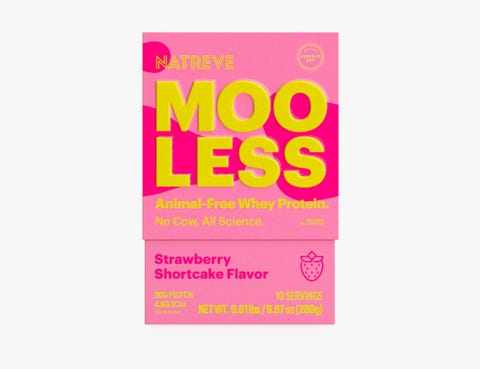
Natreve Mooless Animal-Free Whey Protein

The Most Interesting Nutrition Products and Supplements of 2022

Courtesy

Whey protein is a foundational supplement, but for those following animal-free diets for health or moral reasons, this pivotal powder has been off-limits for years. That is, until Natreve shook up the supplement industry earlier this year with the launch of Mooless, a first-of-its-kind animal-free whey protein powder that utilizes microflora for the sake of creating tasty, nutritious shakes. The microflora, courtesy of Perfect Day, are given an exact copy of the DNA sequence corresponding to cow’s milk protein, allowing for a more sustainable manufacturing process that cuts back on water consumption, greenhouses gas emissions and energy usage.

Price: $30

SHOP NOW

Momentous Collagen Shot

collagen peptides

Courtesy

Prime for on-the-go supplementation, these all-new single-serving packets from Momentous can make taking care of your joints, hair, skin and more a breeze. We like the convenience of the gel pouches, allowing for quick pickup that doesn’t require you to mix a shake or tote around a hefty pill bottle. Plus, the flavor is nice, albeit after you get used to the gel consistency. Each box contains 15 individual packets delivering 10 grams of collagen peptides, which is a respectable dosage, too.

Price: $42

SHOP NOW

Huge Supplements Wrecked Enraged

huge supplements wrecked enraged pre workout

Courtesy

The original Wrecked from Huge Supplements is our go-to pre-workout for sparking up our focus and energy before training. Still, though, there are days where you need a little more stimulants in your mix to power through your circuits. Enter Wrecked Enraged, the brand’s high-stim pre-workout boasting 200mg of caffeine per scoop. Available in two tantalizing flavors, this pre-workout also comes in a 40-serving tub, which can be great for stocking up for over a month’s worth of high-octane training.

Price: $45

SHOP NOW

Mikra CELLF

mikra cellf

Courtesy

Every time you stress your body, you cause damage to your cells. And as the wear-and-tear piles on with age, you become less able to fight off new stresses, whether they come from a taxing workout or late night out on the town. This is the exact dilemma Mikra’s CELLF aims to target, using clinically-tested formulas with the goal of preventing cellular breakdown. Single-serving packets make daily supplementation much easier, and the effects can be recognized rather quickly over routine use. If you’re looking for an innovative way to repair your cells for the sake of improved cognitive function, boosted energy, better sleep and more, this is the nutritional add-on for you.

Price: $98

SHOP NOW

Everlywell Multivitamin Gummy

everlywell multivitamin gummy

Courtesy

Adding a multivitamin to your daily routine can help you ensure you’re getting adequate doses of necessary vitamins and minerals. One of the newest additions to this supplement category comes from Everlywell, a brand best known for its at-home test kits covering food allergies, food sensitivity and other nutrition-based inquiries. Each chewable gummy contains hearty doses of key micronutrients including vitamin A, vitamin B5, vitamin B6, vitamin B12, vitamin C, vitamin D, vitamin E, biotin, folate and more. Plus, each bottle contains enough doses for a month’s worth of flu-busting goodness.

Price: $25

SHOP NOW

Optimum Nutrition Gold Standard 100{bf0515afdcaddba073662ceb89fbb62b6b1bf123143c0e06b788e1946e8c353f} Plant Based Protein Powder

vegan protein powder

Courtesy

Serving as one of our favorite vegan protein powders for muscle-boosting support, this latest product from Optimum Nutrition is a great addition to the brand’s “gold standard” lineup. Per serving, you can expect to take in 24 grams of protein, plus 8.4 milligrams of iron — an often difficult vitamin to acquire through a vegan diet. 150 calories is also a decent meal replacement for those unable to sit down for a more prepared dish. We recommend mixing with oat or almond milk to give each sip an enjoyable nutty taste.

Price: $35

SHOP NOW

Gatorade Gummies

gatorade gummies

Courtesy

Gatorade has long been a trusted source for keeping our bodies fueled and ready to go for a bevy of physical activities. But earlier this fall, the brand dove a little deeper into that notion with the launch of two Gatorade Gummies. These tasty chewables were formulated with scientists from the Gatorade Sports Science Institute to deliver key vitamins and nutrients, each with their own performance benefits. The cherry-flavored Recovery Gummies feature hearty doses of tart cherry powder and vitamin D to help with post-workout cooldowns, while the citrusy Immune Gummies deliver helpful notes of vitamin C and zinc, ideal for flu season and improving your body’s defense system.

Price: $47

SHOP NOW

Athletic Brewing Athletic Lite

athletic brewing athletic lite

Athletic Brewing Co

Okay, so beer might not be the most health-oriented beverage, but don’t tell that to the innovators over at Athletic Brewing Company. The brand’s lineup of tasty non-alcoholic concoctions has been on our radar for a while, but we were really intrigued with the recent drop of the all-new Athletic Lite. Serving as a great NA alternative to your favorite cheap beer, this brew is intended to be a go-to daily option with clean, crisp flavor notes and just 25 calories. As the trend of reducing alcohol intake continues with each passing year, we’re more than happy to sit back and relax with this tasty sipper for a well-deserved reward post-training.

Price: $14 (6 pack)

SHOP NOW

Liquid IV Hydration Multiplier+ Probiotic Kombucha

liquid iv hydration multiplier probiotic kombucha

Courtesy

Staying hydrated is a key factor to living a healthy lifestyle, and so is maintaining a proper microbiome. There are many ways you can target your gut health, but why not let a convenient, on-the-go supplement multitask for you? Liquid IV — makers of some of our favorite hydration-boosting powders — can tackle all the above thanks to the brand’s newest lineup of Hydration Multipliers containing probiotic-filled kombucha. These latest packets rely on a synergistic blend of 1 billion colony forming units (CFU) of the trademarked BC30 Probiotic as well as fermented tea vinegar powdered kombucha to deliver tasty beverages that can quench your thirst and boost your gut on the fly.

Price: $25

SHOP NOW

Ritual Synbiotic+

light blue ritual synbiotic bottle on white background

Courtesy

While kombucha-filled powders can be a great way to supplement your gut health, we understand they’re not for everyone. Yet, there’s still nutritional alternatives out there, like Ritual’s latest innovation — Synbiotic+. These daily capsules require zero refrigeration, which makes storage more convenient, and the probiotic blend contains 11 billion colony forming units from two of the world’s most clinically-studied strains of microbe: BB-12 and LGG. Plus, Ritual stands behind its product and outlines each and every ingredient with transparent, detailed information, even down to the supplier and the ingredient’s final location of manufacturing.

Price: $54

SHOP NOW

Verb Caffeinated Snack Bars

verb caffeinated snack bars

Courtesy

Need a quick boost but don’t want to fire up the espresso machine or shake up a pre-workout powder? These new, all-natural, plant-based snack bars from Verb can provide the same amount of caffeine as your normal morning cup of Joe, with the added perks of protein, carbohydrates and a mix of helpful vitamins. Available in a number of mouth-watering flavors, these can be a great alternative to finding energy throughout the day, especially for those wanting a different source from a traditional pot of coffee.

Price: $29

SHOP NOW

Zoa+ Pre-Workout Energy Drink

jars of pre workout

Courtesy

With 200mg of natural, clean caffeine from green tea extract and green coffee per can, this canned concoction from the people’s champion can really lay the smackdown to your tired, sluggish state. Our favorite canned pre-workout is also convenient for traveling athletes, as there’s no shaker or tub required to reap the benefits of this tasty beverage. Plus, Zoa+ also delivers B Vitamins, Gingko Biloba, 3,000 mg of performance-lifting L-citrulline and vitamins C and D for a slew of fitness-related benefits. So, whether headed to the gym, the track or the squared circle, consider this concoction for a clean boost of energy and focus.

Price: $40

SHOP NOW

Medical Writing for Medical Devices Training Course (March 15-16, 2023) – ResearchAndMarkets.com

DUBLIN–(Small business WIRE)–The “Health care Crafting for Medical Products Schooling Course” convention has been extra to ResearchAndMarkets.com’s offering.

This complete program has been built to supply you with a comprehensive understanding of the important elements of professional medical creating, with a specific target on health care products.

Crafting for medical equipment has its personal unique skill set and, with important regulatory adjustments in the field, all all those associated in clinical composing face a challenge to assure they have the essential abilities and sources to fulfil the necessities of the new regulation.

Less than the direction of our pro trainers, you will understand how to get ready a doc that is linguistically and stylistically acceptable and understand the successful use of visual things these as tables, graphs and move charts. The programme will study the information and composition of the CER – an integral portion of the submission process, and assure that you are fully informed of what a Notified Overall body is on the lookout for in your medical analysis.

Useful workout routines and dialogue will consolidate mastering, and practical guidelines and strategies from experts in the field of health-related producing and clinical gadgets will improve your awareness.

Who Need to Show up at:

  • Health-related gadget pros responsible for getting ready, creating and completing a CER
  • Clinical writers generating studies for health care machine brands
  • Regulatory affairs staff associated in preparing scientific documentation
  • Medical machine personnel who need a fundamental knowing of what is needed when drafting scientific stories for their merchandise
  • Deal analysis organisations (CROs)
  • R&D specialists

Key Subjects Covered:

Overview of composing and enhancing files

  • Substantive and technical aspects
  • Looking at logic, textual content circulation, wordiness and precision
  • On the lookout at the particulars these types of as language enhancing, abbreviations and acronyms
  • Making ready a very clear information for the intended reader

Polices applicable to the medical analysis of a clinical unit

  • Introduction to the European Health-related Product Regulation (MDR)
  • Direction documents for scientific evaluations – what is expected?
  • Notified Human body expectations

Producing regulatory paperwork

  • Do different audiences and documents need different techniques?
  • Corresponding with the authorities

Systematic literature searches for the CER

  • Powerful lookup procedures
  • Selecting on what source information is expected
  • State of the artwork

Features of English

  • Common glitches in English that really should be avoided
  • Transient overview of vital punctuation details influencing this means and readability

Improving readability – be variety to your reader

  • Structuring texts
  • In phrases of language, how perfect do regulatory files need to be?

Framework and material of the CER

  • What is needed to meet up with the regulation?
  • Contents of a CER
  • Conducting a medical analysis

CER case research workshop

  • Choosing on what source facts is needed

Introduction to other clinical gadget medical regulatory documents

  • PMCF prepare and report
  • Scientific investigation program and report

Proofreading essentials

  • Last checks – not just a spell examine
  • Practicalities, guidelines and resources

Vital acquire-household messages

Speakers

Janette Benaddi

Director of Clinical & Consulting Europe

NAMSA

Barbara Grossman

Biochemist

Hawkeye Clinical Constrained

For a lot more information and facts about this convention check out https://www.researchandmarkets.com/r/uewxl0

Mother-of-four reveals how she lost over 60 pounds in nine months

A mother of four has revealed how she lost an incredible 66 pounds in just nine months.

Sascha Farley said finding a program that worked for her, and switching up her exercise routine helped her keep on track with her fitness goals.

She chose to take part in The Healthy Mummy’s 28-day Weight Loss program and has now maintained her weight loss for five years.

She’d previously tried things such as intermittent fasting and restrictive calorie counting but it didn’t help, stating her confidence was at an all-time low.

“I didn’t think that living a healthy lifestyle was possible to enjoy, so I thought that it was always deprivation and punishment in the gym or being unhappy with your body so I couldn’t find the balance between the two. I didn’t have that knowledge and education,” Sascha said.

Mother-of-four reveals how she lost over 60 pounds in nine months
The mother of four took part in The Healthy Mummy’s 28-day Weight Loss program and has maintained her weight loss for five years.
Instagram/Sascha Farley

She said that upping her protein intake helped her on her way to her goals, as it boosted her metabolism, helped regulate hormones, and reduced her appetite.

She said switching up her exercise routine also helped her, with the recognition that every little bit helps.

“Whether it be the type, the time, the effort – it’s true we become conditioned to things we do consistently for a long period of time so ‘shock’ your body and you’ll get a reaction! Weight training is amazing for changing your composition,” she said.

A side by side image of Sascha Farley before and after she lost weight.
Sascha Farley said she tried things like intermittent fasting and restrictive calorie counting but it didn’t help.
Instagram/Sascha Farley

She added that things like setting a baseline, like three workouts a week, help you feel more motivated when you achieve those goals.

Things like parking further away from the shops or school drop-off also make a difference.

Upping her water intake by taking little sips throughout the day, eating every two to three hours, and drinking a smoothie twice a day also helped.

“Having a Healthy Mummy smoothie for breakfast and lunch was amazing when I was doing it. It accelerated my results as I knew exactly what I was eating and they are so filling, packed full of protein, vitamins, and minerals. I used the chocolate snickers recipe so I still got my calories in,” she said.

A side by side image of Sascha Farley before and after she lost weight.
Farley said upping her protein intake, switching up her exercise routine, and setting a baseline helped her achieve her goals.
Instagram/Sascha Farley

She said that swapping out her favorite things for healthier versions that she might crave also helped on her journey.

“I find when I have balance, I have better results because I don’t binge or overeat as much,” she said.

“Consistent balance is better than trying to be good all week and overeating all weekend! I have a piece of flourless chocolate cake every day!”

Now, she said her confidence is at an all-time high and it comes from her improved health and energy levels.

6 Best Diets of 2023, Vetted by Dietitians

6 Best Diets of 2023, Vetted by Dietitians

Natalia LavrenkovaGetty Images

Striving to fit a certain body image is out, achieving total body wellness is in. That mission starts in the kitchen, and it means enjoying meals that keep your heart healthy, steady your mood, nourish your organs, support a strong immune system and give you the energy you need to slay your busy days. If you’re looking to adjust your eating habits in the new year, keep this key word in mind: Satisfaction. Eating should be a pleasurable experience, and it’s totally possible to do that in a healthful and nutritious way.

“A healthy eating plan has to be sustainable for you and your lifestyle,” says Stefani Sassos, M.S., R.D.N., C.S.O., C.D.N., a registered dietitian and deputy director of the Good Housekeeping Institute Nutrition Lab.”Most diets don’t work because they focus on restriction. Commit to shifting your mindset to abundance in 2023.” Her advice? Instead of cutting out certain foods or entire food groups, which can mean missing out on crucial nutrients your body needs to function, focus on filling mealtimes with nutrient-dense foods that will nourish you now, plus help steer you toward a lifetime of healthy eating habits.

Our list of the best diets of 2023 focuses on heart health, foods to improve your brain function, eating more plants, sustainability and enjoyment. And if you want to shed a few pounds, we have some science-backed suggestions for how to do that in a healthy way, too. But these diets are not trendy quick fixes. Rather, they are designed to be maintainable and — you guessed it — enjoyable.

Our top picks:

    Regardless of what diet or eating plan you end up committing to, there are a few general things to keep in mind to support the goal of total body wellness:

    • Stay hydrated: “Drinking enough water on a daily basis is the single best thing you can do for your body and health,” Sassos says. Every single cell in your body requires water to function, and proper hydration can also improve sleep quality, cognition and mood. Commit to mostly drinking still or sparkling water, then keep it interesting by infusing your beverages with fresh fruit and herbs for added flavor.
    • Think plant-forward: Research shows that eating plenty of fruits and veggies can reduce your risk for several chronic diseases, including cancer, heart disease and diabetes, all while promoting better overall health. “Some nutrients found in fruits and veggies can’t be found anywhere else,” says Sassos. Instead of loading up on heavily processed items that often contain minimal nutrition and excess calories, focus on finding delicious ways to add more produce to your meals. For instance, make and freeze veggie egg wraps instead of buying fast food breakfast sandwiches, or instead of munching on chips for a snack, dunk veggie sticks in hummus or fruit slices in nut butter. You’ll feel more satisfied and satiated, plus boost your nutrient intake all at once.
    • Prioritize healthy fats: Your body needs healthy fats to function, because they’re a source of essential fatty acids, which the body can’t make itself, and certain vitamins can only be absorbed with the help of fats. The key is to swap saturated fats for unsaturated fats. The former can harm the heart over time, whereas healthy fats of the monounsaturated variety (found in foods like avocado, nuts and olive oil) can help protect your heart by reducing levels of “bad” LDL cholesterol and supporting levels of “good” HDL cholesterol in the blood, says Sassos.
    • Choose lean proteins: “Protein is a key part of any diet and is the building block of life,” Sassos says. “It’s important for growth, tissue repair, muscle function and more, and it also helps fight infection, keeps body fluids in balance, assists with blood clotting and even carries fats, vitamins, minerals and oxygen around the body.” Lean protein in the form of fish, poultry, soy-based options like tofu or tempeh and legumes, such as beans and lentils, are all optimal protein sources.
    • Go for grains: Whole grains are a key component of any nutritious diet. “Abundant in fiber, they have a range of healthy benefits, from supporting healthy digestion to promoting better glycemic control,” Sassos says. Brown rice, whole oats, farro, teff and quinoa are some great examples of this healthy staple.
    • Minimize sodium and added sugars: Your body does need a very small amount of sodium to work properly, but too much can be harmful to your health, particularly if you have or at risk for heart disease. “Still, Americans consume more than 3,400 milligrams of sodium daily on average, which is far more than the recommended 2,300 milligrams limit,” Sassos says. Likewise, too much added sugar can raise your risk for chronic diseases like heart disease, diabetes and some cancers. “The U.S. Department of Agriculture (USDA) and U.S. Department of Health and Human Services (HHS) recommends limiting added sugar to 10{bf0515afdcaddba073662ceb89fbb62b6b1bf123143c0e06b788e1946e8c353f} of your total daily calories,” says Sassos. “On a 2,000-calorie daily diet, that’s 50 grams per day.”
    • Get moving: “Although nutrition is a huge part of the health equation, complementing your healthy eating routine with exercise can increase the benefits and elevate the health of your body and mind,” Sassos says. Even a brisk 30-minute walk each day can have a positive impact.

      Our list of best diets hits all of those high points, and more. Read on to learn why each of these diets earned a top spot on our list.

      Take time to speak with your primary care provider and/or a registered dietitian before making changes to your diet. Pre-existing health conditions may prevent some from following prescribed dietary plans without affecting their health in unexpected ways. Make sure you identify any specific nutritional needs or potential physical side effects before selecting a long-term diet. Also note that weight loss, health and body image are complex subjects — before deciding to go on a diet, we invite you to gain a broader perspective with our exploration into the hazards of diet culture.

Advertisement – Continue Reading Below

1

Best Overall Diet

Mediterranean Diet

2

Best Diet for Heart Health

DASH Diet

3

Best Diet for Weight Loss

The WeightWatchers Program

4

Best Diet for Brain Health

MIND Diet

5

Best Plant-Based Diet

Flexitarian Diet

6

One to Watch

Nordic Diet

What are the benefits of a healthy diet?

Adhering to a style of eating that supports overall wellness helps ensure that you get the nutrients necessary to help your body function properly — a balanced diet supports the health of your heart, brain, bones, muscles, immune system, skin and every single cell. The right mix of foods helps give you energy, promotes quality sleep and even helps with stress relief.

What’s the best way to start a diet?

First, pinpoint what your goal is. Maybe you have heart disease risk factors that you want to control, perhaps you want to focus on preserving your brain function or you are looking to lose a few pounds to address a health condition. Or, you may just be someone who thrives when you have a plan to follow. If you have concerns about your weight or eating habits, it’s always a good idea to talk to your doctor before making any major lifestyle changes on your own.

How do you stick to a diet?

Don’t overthink it. “Healthy eating doesn’t need to be complicated,” says Sassos. “Some of the best healthy eating practices are simple and don’t require much time or money. If any diet or plan gives you anxiety or stress, it’s a sign to stop and return to the basics —drinking lots of water, eating your veggies and tuning in to your body’s natural hunger cues.” Most importantly, don’t let the flood of fleeting diet trends and fads you may see on social media fool you — most of these are either unsustainable long-term, unhealthy at their core or can lead to dangerous yo-yo dieting.

Advertisement – Continue Reading Below

U.S., global health officials worry about China transparency on virus spread

U.S., global health officials worry about China transparency on virus spread

U.S. and world wide health and fitness leaders say Beijing is not sharing plenty of facts about the unfold of Covid-19 in China, leaving the worldwide local community in the darkish about the scale and severity of the present-day wave of infection in the world’s most populous state.

The U.S. Centers for Sickness Manage and Prevention, in a statement Wednesday, claimed the lack of transparency from China could hold off the identification of new Covid variants that pose a danger to public health and fitness. China is sharing extremely handful of genomic sequences utilised to establish these kinds of variants, according to the CDC.

The CDC on Wednesday declared new testing necessities for airline passengers whose visits originate in China. All travellers, regardless of nationality or vaccination position, must get analyzed for Covid no more than two days in advance of their flight to the U.S. and current a unfavorable outcome to the airline before departure. The prerequisites go into impact on Jan. 5.

India, Italy, Japan and Taiwan have also imposed Covid take a look at requirements on airline travellers originating in China. The Chinese govt is battling a surge of infections immediately after easing its stringent zero-Covid coverage in the wake of social unrest before this calendar year.

Men and women get inhaled COVID-19 vaccine at the Center for Illness Manage and Prevention in Bijie, Guizhou province, China, December 29, 2022.

CFOTO | Future Publishing | Getty Visuals

A U.S. federal health official, in a get in touch with with reporters on Wednesday, said the Biden administration has extremely confined details on the amount of new Covid cases, hospitalizations and notably fatalities in China. Testing and casing reporting has also decreased in the place, which helps make the legitimate an infection price hard to decide, the official said.

China’s zero-Covid plan, which sought to crush outbreaks by critical steps, implies a substantial portion of the inhabitants does not have any immunity to the very transmissible omicron variants, the formal said. As a consequence, the Biden administration is forecasting that a large number of people today will be contaminated relatively promptly in China.

“What we’re involved about is a new variant that may emerge really in China,” said the official, who declined to be named as a condition of the push call. “With so many men and women in China remaining impacted in a quick period of time of time there is a opportunity, a chance that a new variant may perhaps arise.”

The latest genomic sequencing knowledge shared by overall health authorities in China suggests that Covid variants circulating in the country are similar to those recognized in the rest of the globe, according to a assertion this 7 days from GISAID, a general public databases primarily based in Germany.

In the past 180 times, China has sequenced and shared 412 Covid circumstances with GISAID, when compared to extra than 576,000 shared by the United States. Wellbeing authorities in China have shared fewer than 1{bf0515afdcaddba073662ceb89fbb62b6b1bf123143c0e06b788e1946e8c353f} of documented and sequenced Covid instances, whilst the U.S. has shared a lot more than 4{bf0515afdcaddba073662ceb89fbb62b6b1bf123143c0e06b788e1946e8c353f} and the U.K. practically 12{bf0515afdcaddba073662ceb89fbb62b6b1bf123143c0e06b788e1946e8c353f}.

The Earth Overall health Organization has also named on China to share far more data about what is transpiring on the ground as the virus distribute.

“WHO is quite concerned over the evolving scenario in China with increasing reviews of extreme condition,” claimed Dr. Tedros Adhanom Ghebreyesus, the head of the world overall health company, throughout a push briefing in Geneva final week.

CNBC Overall health & Science

Go through CNBC’s latest world wide health protection:

“In purchase to make a in depth possibility evaluation of the condition on the floor, WHO requires additional specific information on ailment severity, medical center admissions, and specifications for ICU support,” Tedros claimed.

The WHO mostly has anecdotal reports of unexpected emergency rooms and in some scenarios intensive treatment models filling up in China, in accordance to Dr. Mike Ryan, head of the world-wide health and fitness agency’s emergencies software.

“We don’t have comprehensive understanding of the effects,” Ryan mentioned of the Covid wave in China for the duration of the push meeting in Geneva very last week.

Dr. Maria van Kerkhove, the WHO’s Covid specialized guide, explained final week that omicron subvariants BA.5, BQ.1, BF.7 and BA.2.75 are all circulating in China. XBB has also been detected in China, which is a single of the most immune evasive variants yet.

The Institute for Wellness Metrics and Analysis, in a report published Dec. 15, claimed a significant wave of infection in China is unavoidable as Beijing relaxes its zero-Covid policy. There will be huge quantities of significant ailment in the elderly inhabitants and the loss of life toll will be appreciable, according to the report.

China faces a tough situation because its domestically created vaccines are not as helpful as Pfizer’s and Moderna’s mRNA shots. Vaccine protection amongst the elderly inhabitants in China also lags powering other nations.

“A single in 7 people on the world dwell in China and the acceleration of vaccination, the safety of the health and fitness technique all through this interval, is in the desire of seven out of 7 persons on this earth, Ryan claimed.

The U.S. has supplied China mRNA Covid vaccines and other assistance but Beijing has declined the give, the federal wellbeing formal said on Wednesday’s simply call.