
Millions of Americans could lose Medicaid insurance as the pandemic winds down

Perhaps the greatest success of the American health care system these last few benighted years is this surprising fact: The uninsured rate has reached a historic low of about 8 percent.

That’s thanks in part to the pandemic — or, more precisely, the slew of emergency provisions that the government enacted in response to the Covid crisis.

One policy was likely the single largest factor. Over the past three years, under an emergency pandemic measure, states have stopped double-checking if people who are enrolled in Medicaid are still eligible for its coverage. If you were enrolled in Medicaid in March 2020, or if you became eligible at any point during the pandemic, you have remained eligible the entire time no matter what, even if your income later went up.

But in April, that will end — states will be re-checking every Medicaid enrollee’s eligibility, an enormous administrative undertaking that will put health insurance coverage for millions of Americans at risk.

The Biden administration estimates upward of 15 million people — one-sixth of the roughly 90 million Americans currently receiving Medicaid benefits — could lose coverage, a finding that independent analysts pretty much agree with. Those are coverage losses tantamount to a major economic downturn: By comparison, from 2007 to 2009, amid the worst economic downturn of most Americans’ lifetimes, an estimated 9 million Americans lost their insurance.

Some will lose coverage because they are no longer eligible due to a change in income or circumstance, such as a child turning 18. States are supposed to direct these people toward other insurance options, such as the Affordable Care Act marketplaces.

But many of the people who end up losing their benefits — even most, according to some projections — could be people who are actually still eligible for Medicaid but slip between the cracks of the system. People who have recently moved are one particular concern, as are children and people with disabilities.

For people who watch health policy closely, the coming “redetermination” process is one of the biggest stories of the year, with major ramifications for Americans’ health.

A lot of people are going to lose coverage no matter what. That is inevitable. The emergency “continuous coverage” provision, which cost nearly $150 billion over the past three years, was never going to be indefinite. The US health system is not set up to provide that many people, some of whom are no longer eligible for the program, with indefinite health benefits, unless they are old enough to qualify for Medicare.

But the goal, according to people who advise and advocate for people on Medicaid in states across the country, should be to minimize the number of Americans who lose their Medicaid benefits even if they are still eligible for them, and to make sure that the people who no longer qualify for Medicaid get other coverage.

Don’t let too many people fall through the cracks. Otherwise, the coverage gains of the past few years could be quickly eroded.

“If people lose Medicaid, whether they’re ineligible or remain eligible for Medicaid, and they’re not connected with another form of insurance, that’s potentially devastating for individuals,” Emma Morris, a policy analyst at the Oklahoma Policy Institute, told me. “This is a really pivotal point.”

This year’s coverage losses could be particularly dramatic. But they’re also a symptom of a bigger, more persistent problem that predated the pandemic: People cycle on and off Medicaid coverage all the time, including for reasons as mundane as paperwork. It’s a problem that, historically, many states have shown little interest in solving, and one that is now reemerging with a vengeance.

The end of Medicaid emergency continuous coverage, explained

The task in front of public officials is enormous: check the eligibility of every single one of the 90 million people currently on Medicaid to confirm they still meet the criteria for their benefits. And if they don’t happen to reach someone because that person moved, or they think a notice from the state is junk mail? That person will find themselves out of luck — and out of Medicaid.

Preventing that worst-case scenario will depend on states getting the word out early and often and using all of the tools available to them to reach people. Whether they will actually do that is already creating some concern. Congress has given states up to 12 months to complete the redetermination process. But in Texas, where as many as 1 million people may lose coverage, state officials have said they want to finish it in eight months, for reasons that are not clear.

“That raises a concern of trying to do this fairly complex job in a shortened timeline and the risk that might lead to adverse redetermination outcomes for people that that still are entitled to being in Medicaid,” Jason Terk, a physician and chair of the Texas Public Health Coalition, said.

In an ideal scenario, many beneficiaries won’t have to do anything to affirm their Medicaid eligibility. States can check existing data sources to verify a person’s income. If they are still eligible, they will keep their benefits. If they are not, the state should let them know what their insurance options are. (We’ll come back to that.)

The problem is these automatic checks are something a lot of states were terrible at doing prior to the pandemic. Almost all states say they conduct what are known as ex parte renewals, meaning they use existing public data to verify people’s eligibility without the person having to do anything. Ex parte renewals were supposed to be mandatory under the Affordable Care Act. But, according to Jen Wagner at the Center on Budget and Policy Priorities, enforcement has been lax: A few states don’t do them at all, and 20 of them said they completed less than half of their renewals this way. Some states, including Texas, have decided not to adopt policies that make ex parte renewals easier, such as assuming people who are eligible for SNAP, or food stamps, are also eligible for Medicaid.

Now states’ ability to perform those tasks is crucial. Most states say their redetermination plans start with ex parte renewals, which will test the effectiveness of their databases and IT systems. And many Medicaid offices are beginning this process understaffed: One in five jobs posted at state Medicaid offices were unfilled, according to the National Association of Medicaid Directors. In some states, nearly half of the jobs, more than 40 percent, were unfilled.

“We’re seeing states struggling right now to keep up now, when you’re not doing renewals,” Wagner said.

The first way states are trying to minimize risk is by starting the process with certain groups of people who may be at less risk if they lose coverage, such as those who have never filed a claim while enrolled in Medicaid; for those recipients, the possibility of disrupting medical care seems lower. In states like Oklahoma, Missouri, North Carolina, and Florida, where I interviewed patient advocates and state Medicaid officials to get a better sense of states’ preparation, the plan was usually to save more vulnerable populations — older people, people with disabilities, and children — for the later phases.

For people whose eligibility cannot be confirmed via a public database, states will have to do it manually. That will mean sending out mail and other forms of communication to ask beneficiaries to send in information so their eligibility can be verified.

That can be a difficult task. People move, some frequently. They ignore mail. They may not know this is happening in the first place. Most states allow people to report eligibility details or change their contact info on their websites or over the phone, but not all do — and those services, such as a call center, have to be adequately staffed. Otherwise, problems can arise and people may give up rather than put up with a hassle.

In Florida and Texas, two states worth watching closely given their large size and right-leaning politics, Republican leaders have not appeared very engaged on the issue, even as doctors and activists in those states credit the state health agencies with taking it seriously.

“The political leadership is not particularly enamored with or concerned about necessarily enhancing Medicaid policy here in the state of Texas,” Terk said. “I would hope, and I would try to be optimistic, that the governor’s office would be more forceful in his messaging. … It would be helpful if that were to happen. But I’m not sure that it’s reasonable to expect that.”

There are myriad ways administrative friction leads to people losing benefits when they shouldn’t. States have to be invested in preventing it. In states like Missouri and Oklahoma, top elected officials have been actively fighting against the implementation of Medicaid expansion, which made many low-income adults newly eligible for the program; now many of the people who became eligible through the expansion in the past few years will have their eligibility checked for the first time. Policy analysts worry some of those people could lose coverage simply because they aren’t familiar with the process.

Another way people could lose coverage in the coming months is if they are legitimately no longer eligible for Medicaid but fail to get enrolled in a different insurance plan.

States could make a big difference in preventing that, by directing people to the ACA marketplaces (where they may qualify for government assistance) and the navigators who receive federal funding to help people sort their marketplace options and sign up.

Medicaid offices across the country have been planning for this for months. But it’s not clear some states are doing everything they can on to make sure people who are no longer eligible are enrolled in a new health plan In Florida’s redetermination plan, for example, the actual mechanisms for directing people to their other coverage options are left vague and navigators are not mentioned at all.

“A lot of these plans sound excellent. The question is, what do they look like in implementation?” Alison Yager, executive director of Florida Health Justice, told me. “There are invariably going to be challenges. This is too huge for there not to be challenges.”

According to the Georgetown Center for Children and Families, nine states have not even posted their public plan for this Medicaid unwinding. A similar number have not shared any kind of communications toolkit, which could be useful to the advocates and providers who will be on the front lines of educating people about the situation. (Here is an example from the state of Texas.)

Some people may have no viable option for coverage at all, if they’ve had a change in circumstance that renders them ineligible (such as a child turning 18) but they live in a state that hasn’t expanded Medicaid under the ACA nor do they have a high enough income to qualify for subsidies to purchase private insurance.

Florida is one of those non-expansion states. One family there, who shared their story with Florida Health Justice, has three members who all need regular monitoring and check-ups because of complex medical conditions. They were supposed to lose their Medicaid coverage in 2020, when their son turned 18, but that was postponed through the continuous coverage provision. When that policy ends, they may become uninsured because Florida has not expanded Medicaid under the ACA.

It all adds up to a dramatic and sudden US health policy problem that has laid dormant for the past three years: churn.

The problem of Medicaid churn remains

It is an absurdity of the American health system, compared to those of other developed countries, that millions of vulnerable people could end up becoming uninsured in a matter of months. But even in normal times, because of how our health system is set up, people with low incomes shift frequently between different insurance coverage, going from Medicaid to ACA insurance subsidized by the federal government or not having any insurance at all.

It’s called “churn,” and it has long been recognized as a problem. In 2018, about 10 percent of Medicaid enrollees cycled on and off the program within a year.

Sometimes, people can simply have a few months where they pick up extra work hours, boosting their income to the point they are no longer eligible, and they lose coverage. (Eligibility checks vary across states in normal times.) The next month, their earnings may drop back down, making them eligible once again — but then they have to sign back up.

It adds to the workload for those understaffed Medicaid offices and it can disrupt health care for the patients too. People don’t fill prescriptions when they have to pay more money out of pocket. They skip doctor’s appointments and other vital services.

Now, after the three-year pause on redeterminations eliminated that problem, the end of the emergency coverage will bring it back.

States could be doing more to prevent Medicaid churn — but, at least so far, they’re not. The low rate of ex parte renewals that automatically confirm eligibility was one way the US was coming up short pre-pandemic.

States are also not taking advantage of other optional policies that the federal government has made available. A state can, for example, extend coverage for a woman who becomes eligible during pregnancy through their first year after her child is born. Only three states have actually done so, according to the Georgetown Center for Children and Families.

A year of continuous coverage for kids is more common, and states such as Oregon and Washington have even approved multi-year continuous eligibility for children. On the other hand, more than a dozen states have not adopted that policy either and a number of others have conditions that limit their effectiveness.

Congress has recently added some new requirements to address the problem for the longer term, including that all states provide children with 12 months of continuous coverage starting next year. That should help. But it won’t eliminate the problem entirely. It will come back again to how well states perform in checking and re-checking people’s eligibility, now and in the future, and whether they are being held accountable when they fall short.

There has been more sustained interest in the problem of Medicaid churn with the end of the emergency coverage provision approaching. But it remains to be seen how long it will last. A reversion to the pre-pandemic normal would put beneficiaries at a higher risk going forward of losing their coverage than they should. Research has routinely shown people have more access to health care, use more health care, and self-report better health when they are enrolled in Medicaid. That is what people are losing when they lose their benefits.

Churn is inevitable in the multi-payer structure that the US has set up to finance its health care. But we could be handling it better. The massive redetermination process will be an immense test, forcing states to re-check the eligibility of every single beneficiary. But even once it’s over, individual patients will still face the risk of losing coverage when they perhaps should not. The problems churn creates are not going away.

“Churn doesn’t have to be what it is. Unwinding doesn’t have to be a disaster,” Wagner told me.

The stakes for the rest of 2023 are enormous, and Medicaid agencies have not always performed well in the past in making sure everybody who is eligible for Medicaid gets on it. Now, health coverage for millions of Americans hinges on their being able to get it right.

Looking for a good fitness trainer? Steer clear of these 5 signs

You ultimately decided to get in form and you have taken the plunge to get what you want. You have expended tons of money on the fitness center membership. You have bought new pair of footwear and gymnasium clothing to function out in type, but you haven’t seen any variations. If you have been operating out each and every day but haven’t witnessed any success in the past couple months, it could be mainly because your individual coach is not the very best in shape for you. You should really attributes of a terrible and a excellent physical fitness coach to know if its value investing your dollars.

Red flags of a negative physical fitness coach

If you have invested a lot of cash and time into your physical fitness journey but have not found well known results, you need to check out out for these signals of a undesirable physical fitness coach. Physical fitness trainer Miten Kakaiya not long ago took to his Instagram account to share the red flags you need to glimpse out for when choosing a conditioning coach for your journey.

1. Ghosts you immediately after taking your payment

When you had been joining, did they make large promises about swift results? And now that you have taken the health club membership for 6 months, your conditioning coach is nowhere to be noticed! That should be your cue to both modify your coach or consider help from someone who is prepared to give you their consideration.

2. Does no common observe-ups

Sure, they convey to you physical exercises but do they vanish immediately after that? If you are investing time and funds into a certain trainer, the least they can do is to fork out focus to what you are executing. If they really do not retain a observe of your progress or acquire follow-ups, you require to converse to your trainer. Just after all, nobody would like an unreliable fitness coach.

Also Go through: 5 points sabotaging your pounds-loss journey

3. Asks you to try to eat 6 situations a working day

Workout and diet are two pillars of a healthy overall body. If your personal trainer does not just take care of your requirements and only focuses on generating you take in 6 situations a working day, it is not a fantastic signal.

signs of a good fitness trainer
Is your health coach the ideal just one for you? Graphic courtesy: Shutterstock

4. Pushes you to do extra cardio

Does your exercise coach press you to do a ton of cardio? Lousy trainers only emphasis on a person sort of exercising like cardio or excess weight lifting. Every qualified health and fitness trainer understands that they should really merge cardio and bodyweight coaching to get the most effective effects.

Also Examine: Fasted cardio vs fed point out cardio: What is superior for more rapidly weight reduction?

5. Forces you to eat dull salads

Although having salads is a good way to include healthier veggies and fruits in your diet, it is not the only way to retain a wholesome bodyweight. Regardless of your conditioning target, your eating plan must contain all healthy vitamins.

Features of a superior health coach

Now you know who is not a very good physical coach, so who qualifies as a single? Properly, it is vital to know who qualifies as a excellent personalized trainer to make your health and fitness journey much more productive. They have to have to have specific features that will support you figure out if they are the ideal for you.

Kakaiya writes, “A fantastic Mentor is every little thing when you are just beginning. It is a make or crack it kind of predicament when it arrives to deciding upon your manual for your health and fitness journey.”

A very good conditioning coach really should be equipped to recognize your body and its limits. They ought to not force you to do something you are unpleasant about. Working out with the support of your conditioning coach really should not experience like a load. They should not thrust you to dread the gym and feel demotivated, he shares. So, does your physical fitness coach qualify? If you’re nonetheless not certain, there’s extra to a great physical fitness coach.

“A fantastic mentor will assure that even if progress arrives little by little, the approach feels like a joyride and you can remain dependable with the life style improvements you created even following attaining your ambitions,” shares Kakaiya.

So, make positive you check your personal coach for a month just before you choose to subscribe for a calendar year very long membership!

Hubs-built journeys into the body for medical education

Hubs-built journeys into the body for medical education
Courtesy of NYU Langone Health and fitness Grossman School of Medication

Kristen Ramirez and Greg Dorsainville of the NYU Grossman Faculty of Medicine produce about how instructors use Mozilla Hubs, a VR platform that’s obtainable and non-public by layout, to instruct pupils about the human physique.

Kristen Ramirez is a investigation Instructor at NYU Grossman School of Medicine. She is a human evolutionary biologist by coaching and anatomist by trade, publishing on the evolution of human joints and improvements in anatomy professional medical education and learning. Over the past two decades she has launched the use of immersive XR and VR teaching applications to the anatomy curriculum. 

Greg Dorsainville explores how new media and immersive computing can unlock the potential of both educators and learners at the NYU Grossman Faculty of Medicine’s Institute for Improvements in Healthcare Training. His target is on how XR can grow the opportunity for experiential active mastering ordeals.


The child who sat huge-eyed each and every Saturday early morning as Skip Frizzle loaded her course into the magic faculty bus has developed into today’s clinical university student. They have been primed to study from participating, demonstrative and immersive visualizations pioneered by PBS’s 1st-ever absolutely animated collection.

Now, these budding doctors are coming into into a medical discipline shaped by the modern revolution in minimally invasive strategies and developments in scanning techniques and technologies. A physician’s anatomical expertise is progressively staying put to use further than the actual physical exam and operating area, this means learners need to have to be well prepared to watch the system in novel methods. When they won’t be shrinking down to microscopic scales and sailing through the intestine at any time soon, developments in medical technologies will connect doctor and patient in nonetheless unseen means.

Instantaneous renderings of 3D electronic versions of patients, pin-head cameras and externally managed surgical tools have been the moment the musings of science fiction. Not any more. These health care advancements are appearing in conjunction with new business systems for leisure and education and learning alike. Experiments have correlated video activity enjoying with much better performance on laparoscopic surgical treatment expertise. Now, adoption of many Extended Fact (XR) educating and instruction methods is taking place at medical educational institutions and teaching hospitals across the region.

‘To the bus!‘

In XR, the magic occurs by the technologies made use of to obtain activities combining real and virtual features. These experiences extend the sensory notion of the consumer over and above their actual physical environment into a digital area. This happens along a spectrum of serious-to-digital conversation ranging from single feeling inputs like adding a cartoon filter on Facetime or Snapchat to entire immersion in a significantly off environment with a virtual fact (VR) headset. 

Unsurprisingly, the human physique is really sophisticated. Miles of nerves, arteries and veins weave close to muscular tissues, bones and organs. Not only do potential doctors will need to know the names of every single arterial branch and intestinal fold, but also where by all these buildings sit relative to just about every other, how they interact and most importantly, how circumstances afflicting one particular affect the other. Conventional dissection techniques authorized pupils to slowly descend layer by layer further into the entire body. This mirrored typical techniques through surgical treatment. Now, biomedical developments revolutionized the solution to invasive treatments, and anatomy faculty have needed to adjust their preparation of their future doctors to match these new interactions and visualizations. As electronic belongings complement the doctor’s whole perspective of their affected individual, XR instructing tools will nutritional supplement the purpose of the cadaver, connecting learners with the human body like in no way prior to. 

Just after examining commercially obtainable components and software package alternatives we encountered the lots of gaps nevertheless remaining to fill in this rising sector. We’re not yet all set to wholly abandon our bodily styles and anatomical donors for a plug-and-play XR module. Instead we discovered crucial regions exactly where an immersive view would be most impactful. Recognizing we needed to customized-construct our activities, we turned to Mozilla Hubs.

Mozilla Hubs permits you to generate immersive virtual worlds on the net. With Hubs, you can customize numerous facets of your 3D space and invite many others to join you with a hyperlink on a cell unit, desktop laptop or computer or VR headset. Hubs is open up supply and extensible, backed by a local community of artistic internet builders, artists, designers and function hosts who contribute to strengthening and constructing on Hubs.

It was amongst this local community that we had been ready to get the skills and leverage the newest equipment produced in the system to make our individual tailor made XR activities. On a person facet, our school was capable to leverage the intuitive controls afforded by VR systems to design these anatomical spaces prior to passing them around to our multimedia developer for optimization and use in the virtual world. Alongside one another we established the scenes mixing multimedia, refined interface cues and open accessibility methods inside of and outdoors of Hubs to create areas steeped with know-how. Layout sessions iteratively layered academic material with multimedia add-ons generating scenes that well balanced the awe VR can invoke with the understanding targets. At the time we, as architects and builders, had been satisfied, we were prepared to, as Ms. Frizzle would say, “take possibilities, make problems, and get messy” by bringing learners into our creations.

Discipline trips

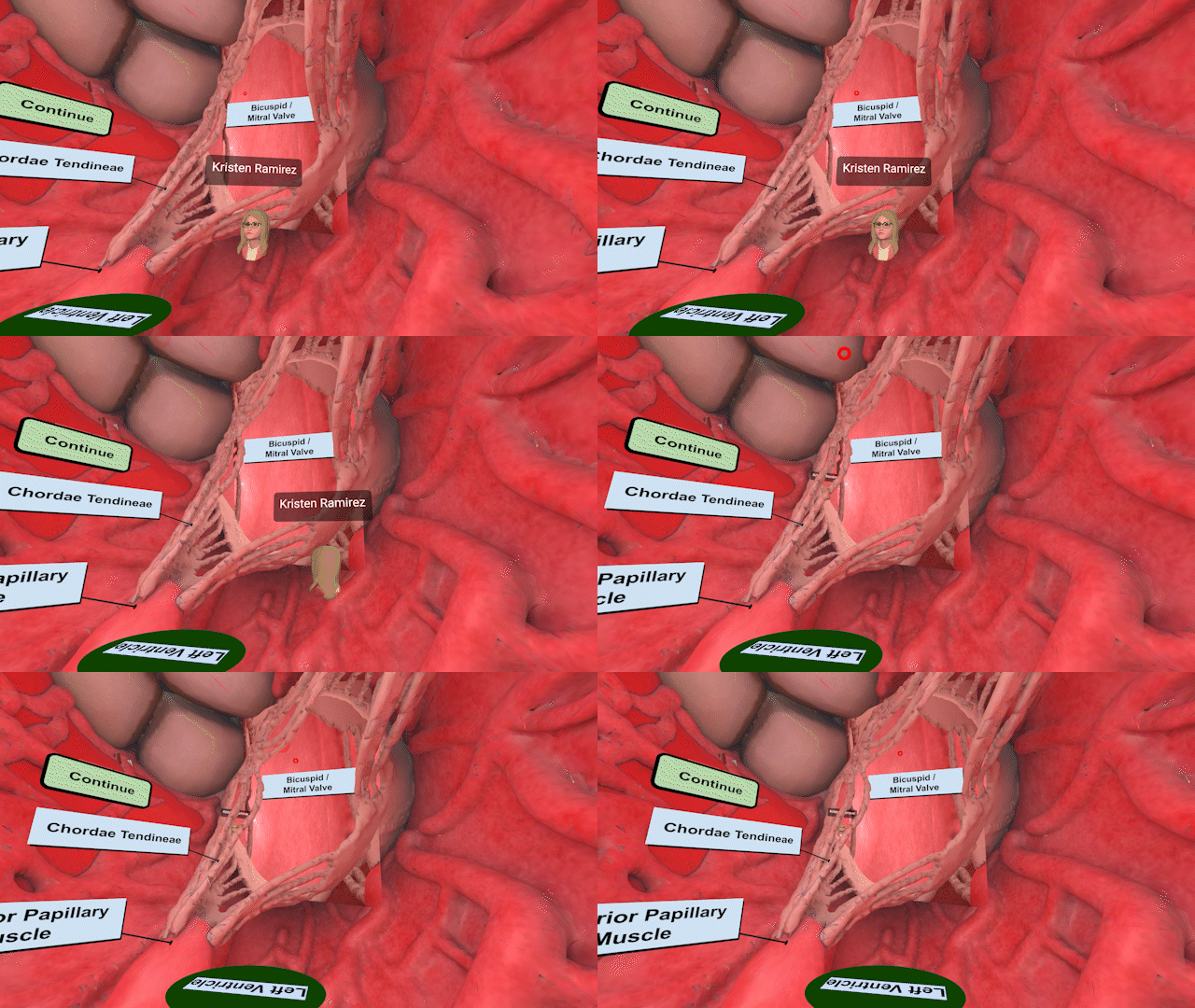
Our initial journey into the virtual area with our students introduced them into the chambers of the coronary heart, with blood cells whooshing past to guideline the way through the circulatory method. This was the slide of 2020 our students had been understanding remotely due to the pandemic. Not only ended up they trying to figure out how to hook up their 2D laptop or computer screens to the 3D anatomy content material, they ended up seeking to hook up with each individual other and their identities as incipient professional medical learners. Hubs promised to be the reply to the two dilemmas. We envisioned bringing them all alongside one another within a 3D educational natural environment allowing for them to converse to each other and to school even though interacting with a elaborate anatomical room on their computer screens. 

A 3D simulation shows the left ventricle of the heart. Labels read: Left ventricle. Papillary muscle. Chordae Tendineae. Bicuspid/Mitral Valve. Continue. An icon for the instructor is labeled Kristen Ramirez.
Courtesy of NYU Langone Wellness Grossman Faculty of Drugs

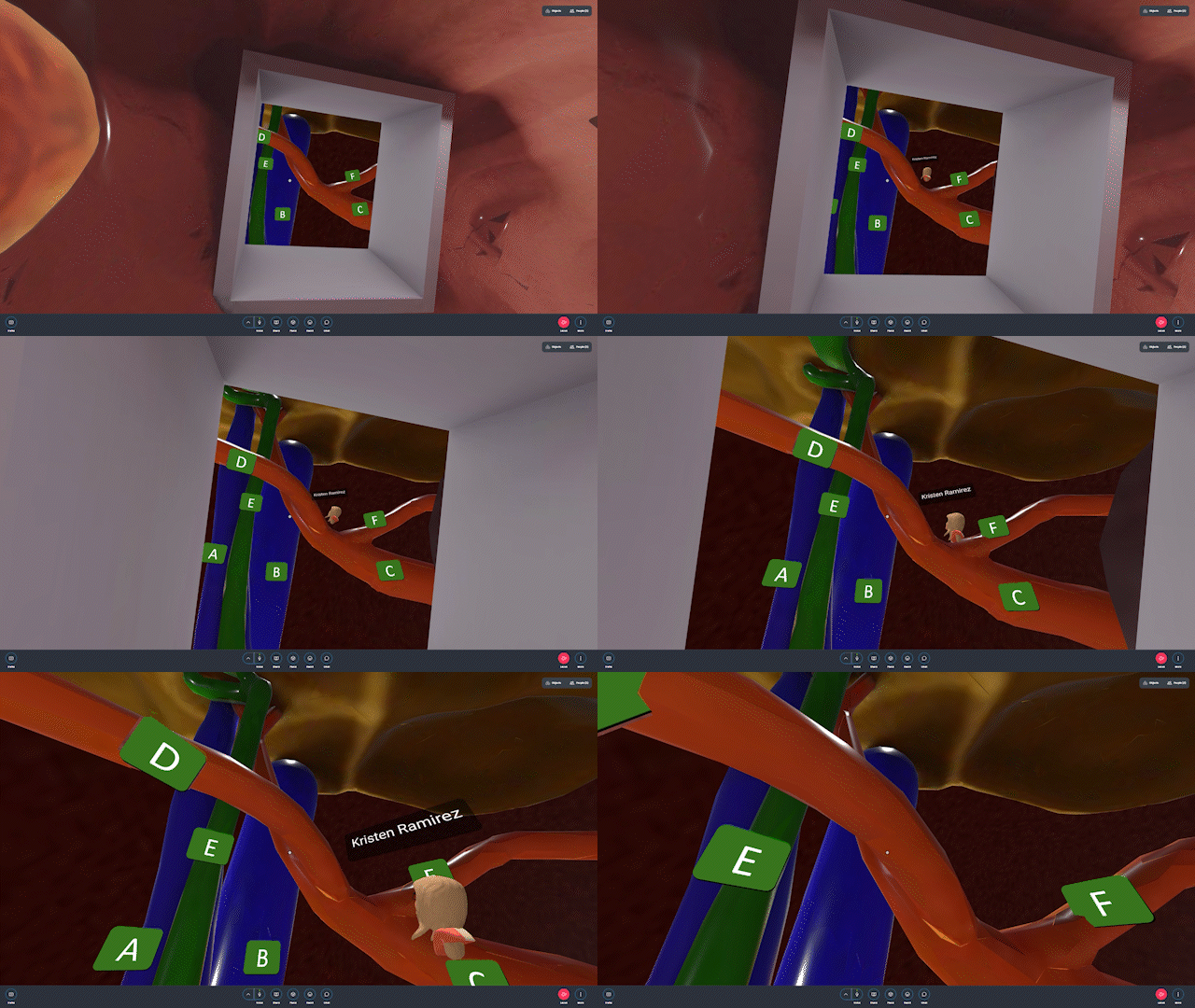
As the maiden voyage, we experienced very couple anticipations. But throughout the celebration, we acquired as a lot about our students’ hopes, wants and wants as they did about the human heart, and we commenced to formulate finest procedures for orientation, structure and interactions for our areas. Afterwards that year we designed an “escape room” by means of the GI tract. The Hubs virtual area was synced with an outdoors source manual of thoughts, clues and guidelines to help pupils in acquiring from the tummy to the intestines, saving the gallbladder together the way. 

A 3D simulation shows an “escape room” through the GI tract.
Courtesy of NYU Langone Wellness Grossman College of Medicine

As soon as our students had returned to campus we were thrilled to much more intimately link the immersive understanding with other anatomy lab articles and much more thoroughly immerse the pupils into the heart. The point that Hubs is net-based mostly and available on several products allowed us to translate this digital knowledge to an in-person celebration. We extra in much more media like video clips of heart valves beating and college-recorded narrations to fully transportation students into the heart by itself for private excursions past labeled structures – the exact structures college students had just held in their own arms minutes prior to in the anatomy lab. 

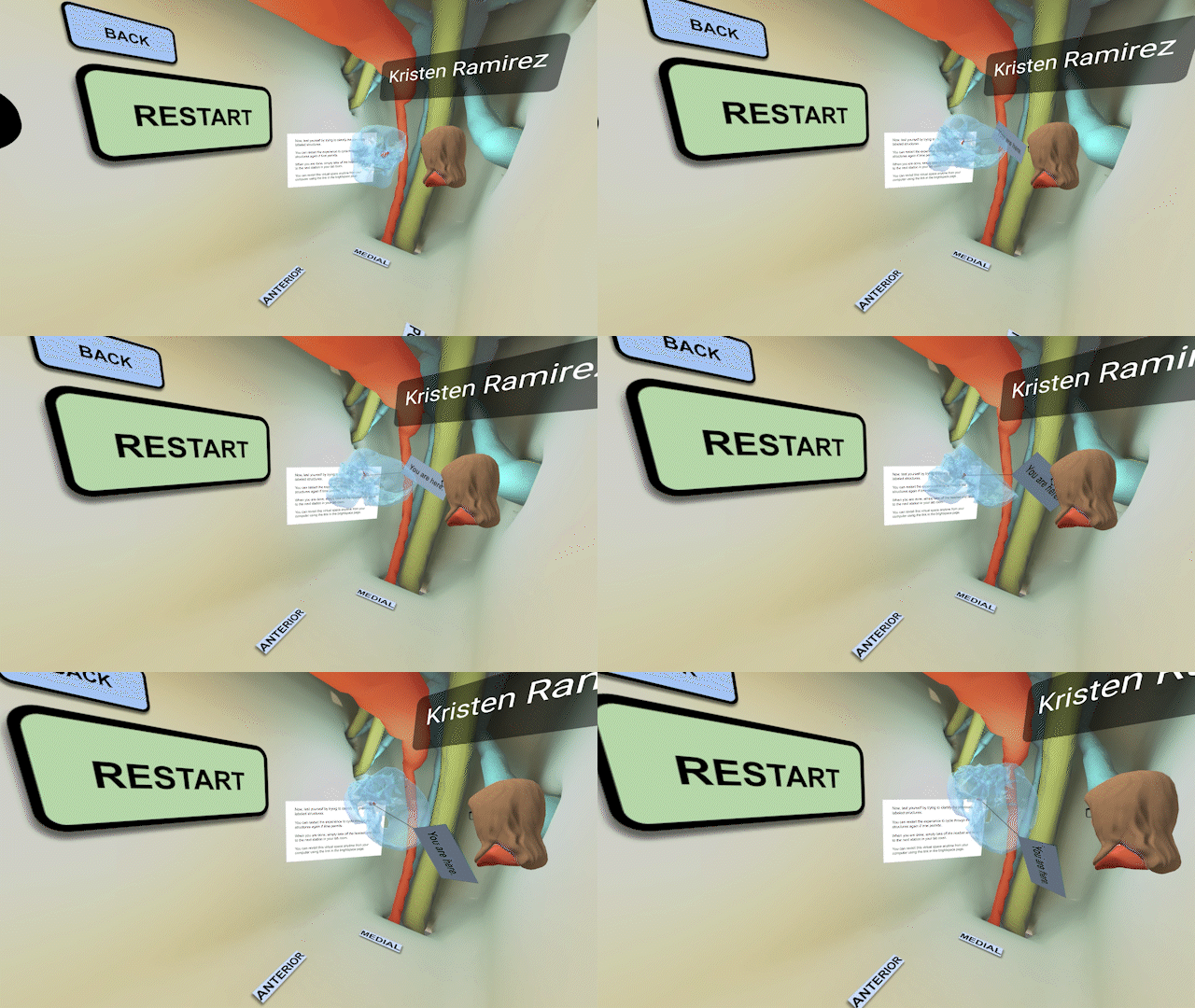
A 3D rendering shows pterygopalatine fossa, which sits somewhere in the middle between the eye, mouth, cheek and nose. In the VR headset, students can figure out where this tiny space actually sits by grabbing and enlarging a transparent skull with a blinking “you are here” sign pointing to a relatively small divot between two bones. They then look around and see direction labels at their feet to self-orient.
Courtesy of NYU Langone Wellness Grossman Faculty of Medication

The most current area we formulated is, in truth, more compact than a pea. It sits somewhere in the center among the eye, mouth, cheek and nose. To make factors additional hard, it has seven openings in and out, connecting it to most regions of the head. Generations of college students have grumbled in excess of the pterygopalatine fossa, lovingly nicknamed the awful-palatine fossa. In the VR headset, college students can figure out exactly where this small area basically sits by grabbing and enlarging a transparent skull with a blinking “you are here” indication pointing to a relatively small divot between two bones. They then search all-around and see direction labels at their ft to self-orient. Go up to the eyes, ideal to the nose, change all around for the mind. As they progress they enjoy arteries and nerves system via the head’s incredibly very own Grand Central Station, appreciating their route and interactions together the way. 

Finding out as educators

Even in these early phases, initial suggestions from learners is optimistic, and we system to create new experiences centered on university student-noted issues with other anatomical regions. Even though the use of XR as academic applications is promising, there is usually a charge-advantage analysis to be had for any new XR intervention. Is the new data, or the new usually means to existing this information and facts, really worth the expenditure of time and money to get equally faculty and learners ready to obtain this software? With an supreme objective of schooling, an XR working experience ought to very first strike those objectives before layering on cool aesthetics and sophisticated interactions. 

Further than the value of the device by itself is the context in which it is deployed. Like any new technological know-how however in its infancy, consumers have to have to be slowly released and acclimated to XR. New adopters should take into account the ecosystem outdoors of the headset like temperature, place and other interruptions, just as essential as the assets in just the virtual earth. Considerations more than distress and disorientation for students highlights the will need for experts in person working experience and scene optimization as a part of the enhancement group, proactively mitigating issues by leveraging suitable layout rules. 

In our exercise, XR is a source that enhances the conventional lectures, texts, actual physical designs and cadavers utilised in anatomy schooling. Our deployments are in conjunction with these other assets to clearly show our college students the human body from all angles and perspectives. By recreating bodily areas in a virtual environment, it furthers the serious-to-digital link among different training equipment, or what we simply call Prolonged Mastering. These resources increase our students’ finding out outside of the bodily lab and outdoors the confines of our program, offering a depth of understanding and very long-long lasting unforgettable experiences that will make them the medical professionals of tomorrow.  

Now, if only we could get Lily Tomlin to narrate our up coming industry excursion within the human physique.


Study a lot more about Mozilla Hubs below:

Running faster or for longer: Find out which is better

For a extended, working has been considered to be the greatest physical activity that can assistance a single achieve their conditioning ambitions. But functioning also will involve retaining specific issues in mind — like speed, period, suitability, and safety — to ensure the best possible effects. As such, what must one look at when getting up running? Relatively than jogging at a higher pace and quickly experience out of breath, the thought must be to run for more time at a slower or average rate, indicates Dr Sudhir Kumar, a neurologist, adding that these kinds of functioning is “ideal.”

Responding to a Twitter user’s experience of cutting down his pace from 7.05 to 7.45 minutes pace for every kilometer and, thus growing the operate time by 10 minutes, which resulted in his coronary heart price dropping to 143, Dr Kumar tweeted, “Great heading it will support you, in the extensive run, to be fitter and healthier. Rate thrills (but kills) — true for working as properly. For maximising overall health-connected added benefits, operate slower and operate lesser.”

Getting a cue, we attained out to professionals to realize how spending notice to the tempo would make a variation to not just your goal but also your heart level and endurance concentrations.

Referring to the the latest spike in incidents of persons collapsing while operating out owing to more than-exercising, Dr RR Dutta, HOD- interior medicine, Paras Hospitals, Gurugram claimed that exertion of any variety is not healthful, permit by itself speedy operates.

“Pace is very good and can persuade your adrenaline rush but it can arrive with a price tag. For an individual with high blood pressure, functioning rapid can generate complex troubles,” he claimed.

According to Dr Dutta, program checkups are necessary to understand the strengths and weaknesses of the overall body. “If you are inclined to fluctuations in blood force, its superior to keep strenuous exercises at bay. Rather, decide on a little something gentle like going for walks. There have been examples of several persons who have missing kilos soon after just going for walks for an hour or two constantly each individual solitary day. Continue to keep your rate constrained and discuss to your health practitioner or an qualified about what should really be the suitable system of working out for you,” Dr Dutta advised indianexpress.com.

Running faster or for longer: Find out which is better 1 should start with mild workout (Supply: Getty Pictures/Thinkstock)

Notably, people who previously run frequently “may not face” any issues with elevated tempo, according to Dr Subhendu Mohanty, interventional cardiologist, Sharda Medical center, Noida, provided they meet up with all health and fitness parameters. However, for rookies and amateurs who are not utilised to jogging, they should not run at quick pace to start with. “It is hazardous as it straight impacts your heart rate, which can need quick professional medical intervention,” said Dr Mohanty.

What is the suitable rate?

Retaining a 7-8 minute rate for every kilometre is prompt, Dr Dutta mentioned, including that it is pertinent to consult with a health practitioner to have an understanding of your overall health problem and inquire them to propose an ideal rate that does not hurt your heart wellbeing.

At the identical time, maintain your diet plan, drinking water consumption, and rest routine and meditate often so that it encourages your actual physical actions to have a wholesome well-remaining.

📣 For much more life-style information, stick to us on Instagram | Twitter | Fb and really do not miss out on out on the most up-to-date updates!

11 Foods That Can Negatively Affect Your Health

The much more we learn about nourishment, the extra scientists discover that several of the processes we use to make foodstuff delicious and shelf-secure strip the foodstuff of considerably of its diet. 

Whilst feeding on highly processed foods sometimes can be offset by a eating plan rich in vegetables, fruits, total grains and proteins, sure meals preparations only will not bring a great deal nourishment to the desk, making them some of the worst meals for you. 

When the adhering to foods make up the key section of your diet plan (or you never also reward from lower-oil, increased-fiber food items) they have been affiliated with worse health results.

11 meals with very low nutritional benefit that can impact your health

Although the adhering to meals are notably missing in nutritive value, the stage of having to pay consideration to this list is considerably less about chopping every single product out solely and far more about noticing how tiny they carry to your diet plan. We don’t propose you prevent these foodstuff fully, in point, as foodstuff restriction can perhaps trigger disordered eating. The primary takeaway below is that it truly is Alright to take in the food items this record, as extensive was you happen to be also consuming nutrient-rich food items that provide you with the vitamins and minerals you need to have. 

Many of the following meals have hugely refined grains, high amounts of trans fat or other processed fat that are tricky for the entire body to use properly. The food items sources just deficiency numerous of the essential vitamins like dietary fiber that promotes intestine wellness. Around time, depriving your overall body of the quite a few vitamins, minerals and vitamins and minerals of complete food items like fruits, vegetables and total grains could generate deficiencies that have health-related indications. 

White bread 

White bread is made with a variety of bread flour that is processed from wheat. The processing eliminates bran and germ: parts of wheat grain. Full wheat will usually be darker and denser, owing to the reality that it has more nutrients and far more fiber. These two features are excellent for your digestion and give your system the diet it wants. White bread has a wonderful light taste but it is produced of just the endosperm layer of a wheat grain, and it consists of fewer nutritional benefit. In its place, choose for entire grain bread which is loaded with essential nutrients.

To learn more about how complex carbs aid retain you healthier, examine out why you ought to be eating far more carbs, not less.

Potato chips 

Numerous of the motives why ingesting too quite a few chips can be dangerous is since they never present a balanced supply of energy. The total of oil and very simple carbohydrates they comprise tends to make them calorie-dense, but they aren’t correspondingly complete of valuable nutrients like vitamins. Chips that really don’t comprise any preservatives are a good choice for an occasional delicious indulgence, but consuming almost nothing but chips in a meal will leave your entire body wishing for additional vitamins, protein and fiber.

French fries

French fries consist of several of the similar vitamins and minerals as chips, even though there is certainly extra precise potato in a french fry. The crispiness of a french fry, however, does not have to be owing to deep excess fat frying, which has a whole lot of oils if you try to eat them often. In an air fryer, a slim sheen of oil (or even zero oil) can nonetheless get you a home made, low-salt batch of french fries created from essentially only potatoes. If your diet plan currently has sufficient oil in it, this could be a superior way to get a crispy handle without the need of going more than your day by day value. 

Fried chicken 

Chicken is a tasty lean protein, but the breading on fried rooster tends to incorporate a ton of white flour, oil and salt. These three ingredients, of class, are great in moderation, but opting for grilled chicken or air fried rooster could help you to decrease harmful elements if you are now obtaining additional than the encouraged amount of money. 

Processed meats 

Commonly, processed meats have several nutrients in them that, when consumed in extra, have been linked to negative health care outcomes. Processing meats occasionally involves incorporating nitrates and nitrites, which have been linked to greater cancer risk when eaten out of moderation. Also, sodium is built into processed meat at relatively significant concentrations. Every time possible, prepare dinner and consume fresh new meat.

Sugary cereals 

Like consuming sweet, sugary cereal usually has a whole lot of basic carbs and sugars in contrast to a lessen protein, fiber and vitamin articles. As a breakfast selection, sugary cereals can also consequence in a blood sugar crash that can make you truly feel hungry before long following feeding on the cereal. Opting for a decrease sugar cereal that has extra protein and fiber bundled, as very well as a plant-based mostly or dairy milk can assistance you experience comprehensive and energetic more time.

Margarine 

Margarine was turned to when the saturated fats in butter were being seen as a destructive for our wellness. Even so, margarine may differ: in some international locations, they have damaging trans fats that are not conveniently processed by the physique and in many cases they have a similar amount of money of processed saturated excess fat. Read the label or decide for a much less processed oil, like olive oil, as a bread topper if you genuinely want to slash butter from your diet plan.

Frozen entrees 

All frozen entrees usually are not created equivalent — flash-frozen veggies and cooked rooster, for occasion, often are reduced in preservatives and are a fantastic way to try to eat if you will need advantage foods. Nevertheless, for premade meals, check out what kinds of meals and other merchandise are in your food, particularly if you are concerned about preservatives or coloring in your eating plan.

Boxed mac and cheese 

Though some of the outstanding models of mac and cheese have been located to be substantial in damaging chemicals, a big reason they are deemed harmful is owing to the higher sum of easy carbs and fats and low dietary price. If you appreciate the cheesy pasta, nevertheless, really don’t despair: There are a wide variety of versions now that are both incorporating total grains, veggies like cauliflower and lessen degrees of preservatives and fats. 

Baked merchandise

Cakes, donuts and other baked goods can be mouth watering. However, they can be loaded with simple carbohydrates and saturated fat. They also have really tiny fiber, protein or natural vitamins. If you make your personal baked items, nonetheless, it is simple to make a treat that will provide additional diet, be it with some whole wheat flour substituted in, an unsaturated body fat substituted for butter or adding fruits or grated zucchini to improve vitamin content material.

The information and facts contained in this posting is for academic and informational needs only and is not meant as health and fitness or professional medical suggestions. Constantly seek advice from a physician or other skilled wellbeing provider regarding any thoughts you may have about a medical affliction or wellness goals.

The lack of diversity in clinical trials is leaving women, people of color behind | Analysis

By Daniel Merino and Nehal El-Hadi

Its a great working day when you come across a piece of garments that suits flawlessly. A very good shirt, the correct pair of shoes or a very well-lower costume is at ease, appears to be like wonderful and feels like it was made just for you. Now imagine a globe wherever each shirt was the similar size, every shoe was the very same design and there weren’t even distinctions between the reduce of men’s and women’s clothing. Acquiring dressed in the early morning would be clunky, and outfits would be not comfortable. In other text, one particular dimension does not fit all.

But, this absence of bespoke possibilities is much more or considerably less the fact of medication today. Inspite of the many biological discrepancies amongst individuals of distinctive genders, races, ages and lifetime histories, probabilities are that if two individuals walk into a doctor’s workplace with the exact same signs or symptoms, they are going to get about the similar therapy. As you can envision, a whole assortment of treatments – from medication to tests – could be significantly more effective if they have been intended to function with lots of distinctive varieties of bodies, not just some abstract, generic human.

In this episode of The Dialogue Weekly podcast, we converse to a few researchers who are searching at means to make medication much better suited to you. It starts with simply just generating positive that scientific demo participants look like the real inhabitants of patients a drug is meant to handle. And as we take a look at in this episode, in the long term, precision medicine could assistance just about every man or woman get health care treatment that is customized to their possess biology, just like a personalized shirt.

In 1977, the U.S. Food stuff and Drug Administration introduced a established of policy pointers that explicitly banned “women of childbearing age” from taking part in clinical trials of new medicine. Although done out of a panic of triggering birth flaws, the end result was that for extra than a ten years, new medicine had been heading to market place with little information about how they might have an affect on gals. Due to systemic biases, analysis has located that men and women of shade are routinely underrepresented in medical trials nowadays, too. For the most element, health care investigate has been completed on wholesome, youthful and middle-aged males of European descent.

This is a difficulty in the U.S, in accordance to Jennifer Miller, a bioethicist at Yale College. “If you’re not included in the demo, this raises questions about no matter whether the drug’s safety and efficacy information and facts applies to sufferers like you,” she suggests.

In the latest several years, a variety of researchers across the U.S. – like Julia Liu, a professor of medicine at Morehouse Faculty of Drugs – have been hoping to figure out techniques to increase the variety of medical trial members. Part of the dilemma, Liu describes, stems from a fantasy inside drugs that Black folks really don’t like to participate in medical research because of to the heritage of abuses the U.S. professional medical method has inflicted on African People, like the infamous Tuskegee Experiment. But when Liu started operating her possess trials on a new prostate most cancers check at a hospital that serves a the greater part-African American populace, she found rather the reverse.

“It turned out that just about everybody I questioned claimed, ‘I would enjoy to do that,’” explains Liu. “Half of the qualified people agreed.” Black clients had been just as eager to participate in study as white clients, and according to Liu, a huge rationale for absence of diversity in medical trials is that they are typically run out research hospitals in wealthier, whiter metropolitan areas, not out of hospitals with diverse clients.

According to Miller’s study, only 4{bf0515afdcaddba073662ceb89fbb62b6b1bf123143c0e06b788e1946e8c353f} of trials in new several years made use of a agent population, but she is optimistic. Females are now substantially better represented in trials, and with regard to equivalent racial illustration, “that 4{bf0515afdcaddba073662ceb89fbb62b6b1bf123143c0e06b788e1946e8c353f} does explain to us is that it is probable to get this correct.”

Initiatives like people of Liu and Miller are very similar to how organizations make shirts in distinct measurements to improved in good shape distinctive bodies. The moment researchers do this perform, health treatment providers can pick which medication are very likely to work greater and have fewer threats for different clients dependent on their particular person demographics.

Better illustration is a get started, but any one who has been fortunate enough to get customized-made outfits appreciates just how perfectly a shirt can seriously in good shape. This is the idea at the rear of precision medication. According to Keith Yamamoto, who directs the precision drugs centre at the College of California, San Francisco, in the U.S., in the near potential it may perhaps be probable to “achieve an understanding of wellbeing and sickness to the extent that we could give information to Dan Merino, not just men and women like Dan.”

This approach to medication would include fundamental biology, a person’s unique genetics and life historical past and the wealth of all present professional medical research – precision medicine is an data and computation trouble. To work, it desires superior data – the agent facts lacking from scientific trials. As Yamamoto said, “Precision drugs will fall short if we never address people issues in a head-on way.”

Hear to the total episode of The Dialogue Weekly to discover out a lot more.


This episode of The Conversation Weekly was made by Katie Flood. It was prepared by Katie Flood and Daniel Merino. Sound layout is by Eloise Stevens, and the theme audio is by Neeta Sarl.

You can come across us on Twitter @TC_Audio, on Instagram at @theconversationdotcom or through electronic mail. You can also indication up for The Conversation’s free of charge e-mails below. A transcript of this episode will be offered quickly.

Listen to The Conversation Weekly by means of any of the applications listed previously mentioned, down load it directly by using our RSS feed or discover out how else to hear listed here.The Conversation

Daniel Merino is the Affiliate Science Editor & Co-Host of The Discussion Weekly Podcast. Nehal El-Hadi is the Science + Technologies Editor & Co-Host of The Dialogue Weekly Podcast. This piece initial appeared on The Conversation.
The Conversation