What CrossFit Kids is teaching children about exercise and nutrition.

This is an installment of Good Fit, a column about exercise.

I took my first CrossFit Kids class when I was 10 years old, the summer between fifth and sixth grade. I remember a circuit that involved situps and running around cones, facilitated in the parking lot outside the CrossFit “box” my mom went to. I was immediately hooked. In part, I’m sure, because it was fun—the instructors were kind and encouraging, the other kids nice. But more fundamentally, because of what I hoped it would do: make me thin.

CrossFit itself is famously controversial, even when it’s just adults in question. Its critics argue that the workouts, which encourage participants to complete complex weightlifting movements as quickly as possible, are injury minefields. Die-hards say that this caricatures CrossFit, and that the mistakes of some coaches aren’t representative of the whole community.

At a more fundamental level, CrossFit founder Greg Glassman has described CrossFit as “a religion run by a biker gang”—and CrossFit the company historically appears to have incorporated the worst elements of both. Glassman stepped down as CEO and then sold CrossFit in 2020, following deeply racist comments about the murder of George Floyd, which themselves intersected with a corporate pandemic response defined by both dismissiveness and ignorance of science. (Glassman also faces allegations of workplace sexual harassment, which he denies but which were thoroughly reported by the New York Times.) Those crises set off a domino of CrossFit gyms’ disaffiliating from the brand—and the company, under new leadership and ownership, now faces the challenge of charting its future.

The controversy surrounding CrossFit’s exercise philosophy and the brand’s serious culture problems are even more pressing when you take into account the CrossFit Kids program, which has been a part of the company since 2006. The aim of the program is to provide “a physically and psychologically fun and safe space for kids to socialize while supporting a healthier lifestyle,” Nick Pappas, a CrossFit Kids seminar trainer (aka a trainer who trains trainers), said in an email. More than 3,500 CrossFit affiliates offered kids programs as of 2018, and that year there were 407 grade schools registered as affiliates, the company told me. Participants range in age from 3 to 18.

When I started CrossFit, the classmates who called me fat behind my back—and the adults who tried to subtly suggest various exercise routines to me—had already convinced me that I needed to lose weight. At CrossFit Kids, that was never explicitly the goal: The instructors talked about healthy lifestyle choices and the mental benefits of movement. But it was impossible to separate the kids’ classes I took from my underlying shame, vulnerability, and deeply rooted fatphobia. The atmosphere of the classes certainly did not dispel the idea that a central goal of exercise was to have a particular body shape: Adults at the gym discussed macros and the calories they were burning on the rowing machine, and swapped anecdotes about fellow gym-goers who had come in overweight but now wore size 4 Lululemons. During yearly CrossFit Open competitions, they showed videos of pro CrossFitters without an ounce of body fat.

For me, this environment was magnetic: I went to every class my parents would take me to, bought a situp mat to use at home, went on long walks around my neighborhood during my free time, and began tracking calories on an app, trying to keep myself under a strict limit. That summer, I lost 30 pounds.

The praise and surprise from teachers, coaches, and random friends of my parents taught me an important lesson: Under no circumstances could I stop what I was doing. For the next seven years, I didn’t. I graduated from a CrossFit Kid to a CrossFit Teen, snatching and push-jerking and kipping my way through adolescence. I earned medals from CrossFit Teens competitions, as well as a tear in the cartilage of my hip socket from overuse. I moved into adult classes.

Because it was my first serious encounter with exercise, CrossFit has shaped the way I approach fitness. In an effort to better understand how, I decided to read the 154-page CrossFit Kids training guide, which is available for free online.

The training guide, a CrossFit Kids bible of sorts, first came out in 2011 (about three years after I started CrossFit) and is now on its fourth edition. It’s paired with the CrossFit Kids Starter Curriculum, a 269-page resource full of sample workouts and games. This is important because, while trainers have some flexibility, CrossFit generally follows a clear, top-down structure—it’s not like, say, your local yoga studio, where instructors design their own routines.

The guide starts by walking through the fundamental logic behind CrossFit: Our ancestors ate varied, unprocessed foods and were constantly moving, whereas we eat Cheetos and sit behind a screen all day. CrossFit, then, “is one component of how to change the behaviors of adults, in an attempt to reverse our maladaptation to our current circumstances.” (Is a 10-minute pullup and clean circuit really a close approximation of a hunter-gatherer lifestyle? Don’t think about it.) CrossFit Kids, the guide continues, is an attempt to “break the cycle” and “reduce Exercise Deficit Disorder and poor lifestyle choices”—before 3-year-olds have a chance to grow up into Cheeto-munching, scrolling adults.

Some of the guide is a useful breakdown of how to teach young children the basics of exercise movements. Preschool participants might learn, for example, how to deadlift (without any weight) through cues to assume an “angry gorilla position,” an instruction that still comes back to me when I prepare to deadlift. Older kids add in real weight and learn more complex movements like front squats, thrusters, and push presses. And teen classes include scaled-down versions of the standard set of adult exercises. The guide acknowledges an “undercurrent of concern that children lifting loads is inherently dangerous” but argues that such concern “has been discredited by modern sports science.” Indeed, there is fairly good consensus that strength training, including just learning about form, can be beneficial for children, so long as actual weights are not introduced until around age 7, and after that, only light weights. At the end of the day, safety is dependent on how well instructors plan their classes and monitor their athletes. I was lucky to have good trainers who prioritized safety, carefully broke down movements, and gave me weightlifting confidence and skill that aren’t easy to access, especially for teen girls.

The food stuff is iffier. Trainers are instructed to incorporate nutrition education into their classes—children can be taught, for example, to associate foods with various kinds of nutrients via “plastic food replicas and teams shouting answers, all in an exciting game format.” Although the CrossFit Kids training guide specifically discourages calorie counting and “panacea” supplements, it recommends that “everyone optimize their own ratios … by weighing and measuring food” and repeats the CrossFit nutrition mantra, still prominently credited to Glassman on CrossFit’s main site: “Eat meat and vegetables, nuts and seeds, some fruit, little starch, and no sugar. Keep intake to levels that will support exercise but not body fat.” The guide also includes 40 pages of paleo recipes for things like “Pumpkin Nut Muffins by Primal Blueprint” and “Crockpot Buffalo Chicken Lettuce Wraps by Skinny Taste.” And while I can see the importance of incorporating general nutrition education into exercise programs (for example, protein is important!), the focus on no sugar, low body fat, and paleo muffins feels like an explicit, and dangerous, replication of diet culture propaganda. Not only can you have high body fat and be good at weightlifting, being heavy, including via a belly, can actually help with lifting.

Nonetheless, this exercise and nutrition regimen has produced an impressive star: After starting CrossFit at age 10, Mallory O’Brien won last year’s CrossFit Open at just 18 years old, becoming the youngest person to do so—and she’s a front-runner to win this year’s CrossFit Games. (You should probably watch this video of 17-year-old O’Brien clean-and-jerking 245 pounds.) O’Brien came to CrossFit as a competitive gymnast and trained with a private coach, so our experiences are very different—but we’re both roughly part of the generation that saw CrossFit Kids grow up, and grew up alongside it. Indeed, CrossFit recently pointed out in a video profile of O’Brien that she is among the first group of professional CrossFit athletes who started the sport as children.

There are also probably thousands of more attainable, real-world success stories of kids finding an outlet for their emotions and developing skills and community. If I don’t squint back at it too hard, I could perhaps even put my experience among them. I fumbled around for years in team sports before finding in CrossFit a place where I felt as if I belonged: It was the first time I had ever felt “good” at anything physical, because my progress was measured individually. Exercise became a habit, an escape, and even something I could find joy in. Two years after starting CrossFit, at age 12, I was fit enough to run a half marathon, my first of many such races.

Though I stopped CrossFit at 17, when I went to college and moved away from my beloved box, I kept running and lifting weights. I have CrossFit to thank for my relative comfort in the weights section of the gym, a place that (unless you, for instance, played college rugby or pledged Sigma Chi) is notoriously intimidating.

But I also walked away with a real, deep belief that my self-worth was tied to exercise—that there was such thing as a “correct” body, and that exercise is what would keep my body that way. I still feel enormous pangs of guilt every time I take a rest day, even though logically, I know that resting is a critical part of any fitness regimen. Sometimes I still can’t tell if I run marathons because I truly enjoy distance running or because I’m so programmed to believe that the best version of a sport is always the most “intense” version. I’m not sure I can blame CrossFit for these attitudes—perhaps I would have learned the same thing in track or ballet or basketball, as plenty of people do.

When I read the CrossFit Kids Training Guide, I felt desperate to find red flags, something I could point at to definitively explain my screwed-up relationship with my body. But mostly, the guide seemed like a replication of the tired narrative of “lifestyle choices” and diet culture that underlies a lot of the ways we talk about exercise. CrossFit might, per the founder, have a bit of a religion-slash-biker-gang aura around it—but what it transmitted to me about food and body fat wasn’t all that different from the standard cultural dogmas.

On my training runs, I occasionally pass a CrossFit gym. When I do, despite myself, I can’t help but notice that I miss it.

Read more installments of Good Fit.  

Why Congress quietly just gave the FDA more power

Congress not long ago, and quietly, gave the Food and drug administration the energy to prohibit off-label takes advantage of of healthcare units.

“I assume it is a shift in the proper route,” Randall Stafford suggests. “The Food and drug administration ought to be on the lookout for places of off-label use the place the rewards to hurt balance is unclear and, in people conditions, mandate further examine.”

But others say the new authority enables the Fda to interfere with the medical doctor-client romance.

They’re also worried that the electric power could extend to prohibiting off label use of prescription medicines.

“Which is truly arrogant to imagine that the federal governing administration is the one and only a single who knows better than the medical professionals at the state boards of medication about what excellent drugs is or what it isn’t,” Brad Thompson suggests.

Today, On Level: Why Congress quietly just gave the Food and drug administration additional electricity.

Attendees

Zachary Brennan, senior editor at Endpoints News, wherever he addresses the U.S. regulatory agency. (@ZacharyBrennan)

Randall Stafford, professor of medicine at the Stanford Faculty of Medication.

Brad Thompson, legal professional at the business Epstein Becker Eco-friendly who counsels professional medical device and drug solution companies on Fda regulatory difficulties.

Company

Why Congress quietly just gave the Fda a lot more electrical power

Zachary Brennan: “There have been really a sequence of 3 main court conditions that the Food and drug administration experienced shed and, you know, dropped kind of a collection of appeals connected to the situations. And they experienced in the beginning needed to insert language into what’s identified as the person payment agreements, which occur each five several years. And which is in essence how the Fda receives compensated by business in get to meet certain deadlines for drug approvals.

“And so they tried to insert into that piece of laws and Republicans blocked it. And then they, you know, received to the omnibus and, you know, had been in a position to get two out of a few of this reversal language into the omnibus. And yeah, I indicate, I imagine this is just a incredibly unparalleled point that we will not see commonly from the Fda wherever they’re actually legislatively overturning courtroom losses.”

How a lot of expanded authority does it give Fda?

“It is really strictly related to system regulation. And strictly similar to the banning of products. So, you know, I guess you can constantly variety of make the assert that there’s a slippery slope to, you know, therapeutics and medicines and how the Fda regulates off label use and all of that. But, you know, just based on the language of what’s in the omnibus, it just relevant to units. So anything else is kind of a hypothetical. We’ll see what transpires in the long term.”

Usually, how does Food and drug administration ascertain these things?

Zachary Brennan: “This is kind of a skipped misconception about the Food and drug administration. The Food and drug administration is a knowledge pushed agency run commonly by MD’s and PhD’s. It is really not, you know, bureaucratic paper pushers that are, you know, building decisions not based on the literature and not centered on the information at hand. And as you pointed out before, you know, there have only been a few equipment, or two precise units due to the fact they overturn the electrical stimulation a single.

“But two other units. 1 was powdered gloves and the other a person was like prosthetic hair fibers again in the early ’80s. So the Food and drug administration does not usually use this ability incredibly often. And I believe it has, at least in the past, been utilised in cases where by the information are form of overwhelming. But, you know, once more, they now have this new electrical power. It is unidentified what they are going to do with this new electrical power. And it truly is really distinctive from medicines, also. We see in many cases a drug wins an accelerated approval, commonly in oncology, and they have to operate the confirmatory demo.

“And if the demo fails or if the trial succeeds, the drug can be pulled from the marketplace pretty speedily. But doctors can go on to prescribe that drug for that sign. Even if it gets pulled. With units, it is unique. As soon as a product receives pulled, it then, you know, according to legal professionals that I’ve spoken to, it then turns into unlawful to use that product. So it is sort of a various way that the Food and drug administration regulates devices and prescription drugs in that perception.”

On unit makers as important parts of FDA’s funding

Zachary Brennan: “I consider the Food and drug administration does pretty considerably count on both equally the pharmaceutical and the healthcare machine industries to present them with adequate information. You know, the Fda does not have individuals sitting down all-around combing by means of databases of hours seeking for, you know, adverse events of health-related units, that kind of thing. So they are extremely significantly reliant on, you know, companies stepping ahead and that’s what the restrictions type of mandate that the organizations have to do, you know, report X amount of adverse functions.”

Explain to us how anything at all gets utilised off-label to start out with. How frequent is the exercise?

Randall Stafford: “The exercise is quite widespread equally for units as very well as medications. And basically an off-label use is a use of a product or drug for a unique clinical problem or indication that has not been scrutinized by the Food and drug administration in its clearance or acceptance procedure. And off-label use occurs for a large range of scenarios. There are conditions in which a generic drug, for instance, might locate new utilizes, and in that situation, you can find minor incentive for the generic companies to request expanded approval or supplemental acceptance of a new indicator for that drug.

“There are definitely cases in which clinicians have used all present remedies that are on label and are hunting for techniques to handle their sufferers. Outdoors of the normal indications authorised by the Fda. Fundamentally the Fda accepted indication is no for a longer period get the job done. And there is a specific type of innovation primarily hunting for a cure to assistance sufferers.”

On an illustration of an off-label system

Randall Stafford: “Allow me give you a single case in point of a specific system whose use did rise in conditions of off-label use. You will find a specific stent that is really made for use in cancer of the bile program near the liver. This is a unit that is intended to be palliative. That is, you will find no sense in which this is curing a cancer, but it’s allowing people to proceed to are living and, in some feeling, conserving their liver from the common effects of the cancer.

“It was discovered that this device, this stent, which essentially is a wire mesh that retains open a blood vessel or a bile duct, could be employed in renal artery stenosis. And there was a time when use of this device off-label was pretty usually applied for the process of opening up a patient’s renal artery to attempt to reverse a challenge of kidney failure.”

On Food and drug administration electric power to promote off-label equipment

Brad Thompson: “I assume one issue that we in all probability all car concur on is that Food and drug administration has very solid management above the makers and how they promote these solutions. They have the energy in the course of the approval method to determine just what the label can say, what is on label. And then by means of their enforcement mechanisms, they have the capability to control actually anything at all and almost everything that the producer does in purchase to boost the item.

“And some of the greatest fines compensated by drug and machine firms have been for when they mess up and they endorse something for an off-label use. There are actually hundreds of situations of these types of enforcement and the organizations have to fork out huge fines. So there actually is no flexibility below on behalf of the firms when it comes to these off label takes advantage of. The only concern is how individuals who get them can use them.”

Jamaicans urged to adopt healthy lifestyles to prevent renal failure

Minister of Wellness and Wellness, Dr Christopher Tufton (correct), in dialogue with Guide Nephrologist at the Spanish City Healthcare facility in St Catherine, Dr Roger Smith (centre), when traveling to the facility’s dialysis unit on Wednesday, February 8 to analyze 10 new dialysis devices and household furniture, which the institution acquired not long ago under a $30-million financial commitment. Looking on is the hospital’s Senior Clinical Officer, Dr Jacqueline Wright-James.

Minister of Wellness and Wellness Dr Christopher Tufton is encouraging Jamaicans to make healthier lifestyles a precedence in order to overcome renal failure, which remains a major wellbeing load on family members and the nation.

He was talking all through a visit to the dialysis device at the Spanish City Medical center in St Catherine on Wednesday, February 8 to examine 10 new dialysis devices and home furnishings that have been provided to the facility under a $30-million financial commitment.

While noting that the device is accommodating additional patients, Dr Tufton explained somewhere around 300 folks are on the waiting around list, incorporating that the “demand changes every single working day, and gets worse”.

“Renal failure is a big aspect of our way of life in Jamaica. What we are viewing is that cardiovascular ailments and strokes are turning out to be extra dominant in our population,” Dr Tufton pointed out.

He emphasised that the issue is significantly impacting hospitals and is a main “debilitating factor” for citizens, in conditions of their wellness and the cost to the place.

Dr Tufton said consequent on weekly remedy for kidney people in personal health care services costing up to $45,000, it is vital that individuals give really serious consideration to altering their existence.

“The ailment is exceptionally highly-priced, and there is a restrict to which we can go in phrases of how many persons can get dialysis,” the Minister pointed out.

Dr Tufton stated with the expansion of the Spanish Town Clinic, added space can be created to allow the establishment to accommodate as lots of as 30 devices, up from the complement of 18.

Specialist Nephrologist at the healthcare facility, Dr Roger Smith, underscored the importance of endeavor interventions for the early detection of kidney sickness, coupled with once-a-year screening.

This, he noted, is especially essential for individuals with hypertension and diabetes, including that folks with these diseases must undertake frequent clinical checks.

“You have to know your quantities. A lot of periods, men and women have in no way experienced a kidney take a look at in their overall life, and the 1st time they observed out about kidney ailment is when they are admitted to the clinic for some other issue, and by then it is much too late,” Dr Smith stated.

He encouraged that amid the measures to manage the disease are exercising regularly, preserving a nutritious diet plan, averting processed food items, and residing a typically healthful way of living.

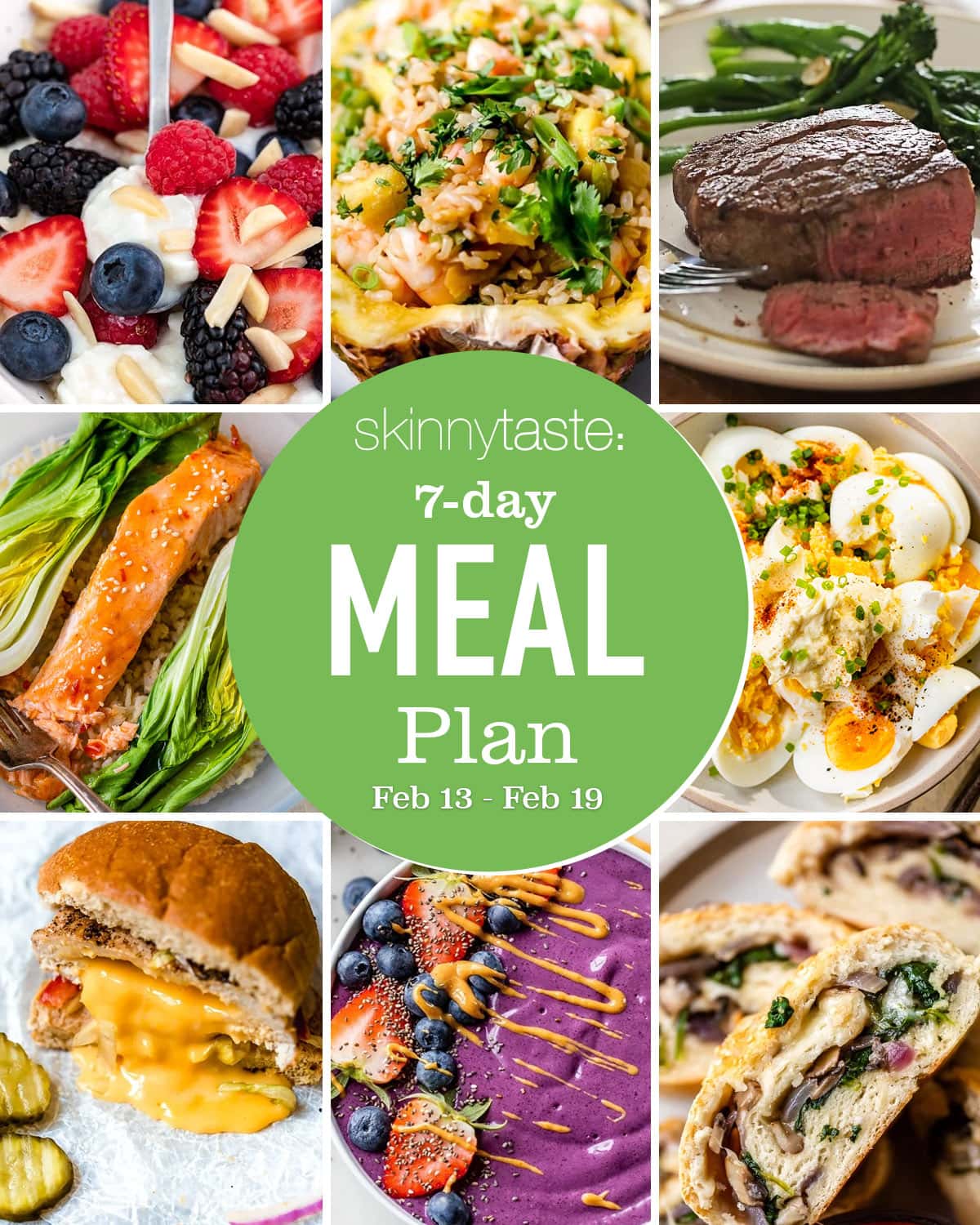
7 Day Healthy Meal Plan (Feb 13-19)

This post may contain affiliate links. Read my disclosure policy.

A free 7-day, flexible weight loss meal plan including breakfast, lunch and dinner ideas and a shopping list. All recipes include macros and WW points.

7 Day Healthy Meal Plan (Feb 13-19)

7 Day Healthy Meal Plan

Valentine’s Day is here! I feel like this year is flying by already! You can start the day with these cute Heart Shaped Chocolate Chip Banana Pancakes! If you are looking for a romantic meal at home, some favorites entrees are my Perfect Filet Mignon for Two or my Scallops over Wilted Spinach Parmesan Risotto and end the meal with the perfect dessert- Chocolate Covered Strawberries!

With grocery prices soaring, many of us are having to adjust, scale back and/or get more creative with our meals. One of the absolute BEST ways to stay within a budget and maintain healthy eating habits is to MEAL PLAN. You can get more 5-day Budget Friendly Meal Plans by signing up for Relish+ (get a 14-day free trial here!)

Ultimate Skinnytaste Meal Planner

Skinnytaste Ultimate Meal Planner

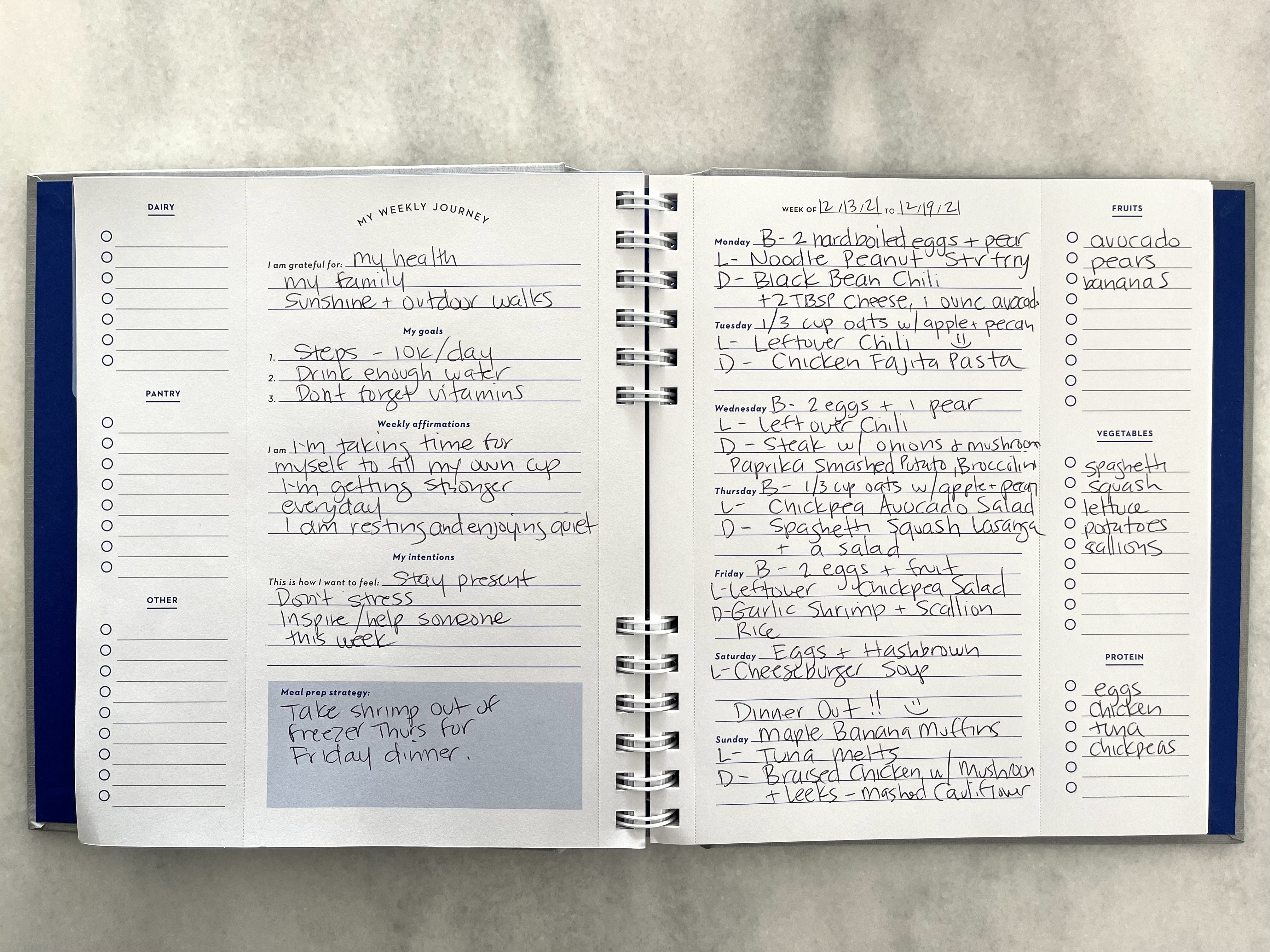
Get the Skinnytaste Ultimate Meal Planner! The 52 week spiral bound meal planner has weekly meal planning grids you can tear out and put on your fridge if you wish, a 12-week meal plan, 30 (15 new) recipes, and tear-out grocery lists. I love starting my week with gratitude, affirmations and intentions, so I included a space for that as well. I hope you will love this as much as I do!

Skinnytaste Ultimate Meal Planner

Buy the Skinnytaste meal planner here:

A note about WW Points

All recipe points have been updated to reflect the new WW program, points will display under the recipe title. I will keep the ww button in the recipe card, click on that and it takes you to the Weight Watchers website where you can see the recipe builder used to determine those points and add it to your day (US only, you must be logged into your account). All cookbook recipes in the cookbook index are also updated!

About The Meal Plan

If you’re new to my meal plans, I’ve been sharing these free, 7-day flexible healthy meal plans (you can see my previous meal plans here) that are meant as a guide, with plenty of wiggle room for you to add more food, coffee, beverages, fruits, snacks, dessert, wine, etc. or swap recipes out for meals you prefer, you can search for recipes by course in the index. Depending on your goals, you should aim for at least 1500 calories* per day. There’s no one size fits all, this will range by your goals, your age, weight, etc.

There’s also a precise, organized grocery list that will make grocery shopping so much easier and much less stressful. Save you money and time. You’ll dine out less often, waste less food and you’ll have everything you need on hand to help keep you on track.

Lastly, if you’re on Facebook join my Skinnytaste Facebook Community where everyone’s sharing photos of recipes they are making, you can join here. I’m loving all the ideas everyone’s sharing! If you wish to get on the email list, you can subscribe here so you never miss a meal plan!

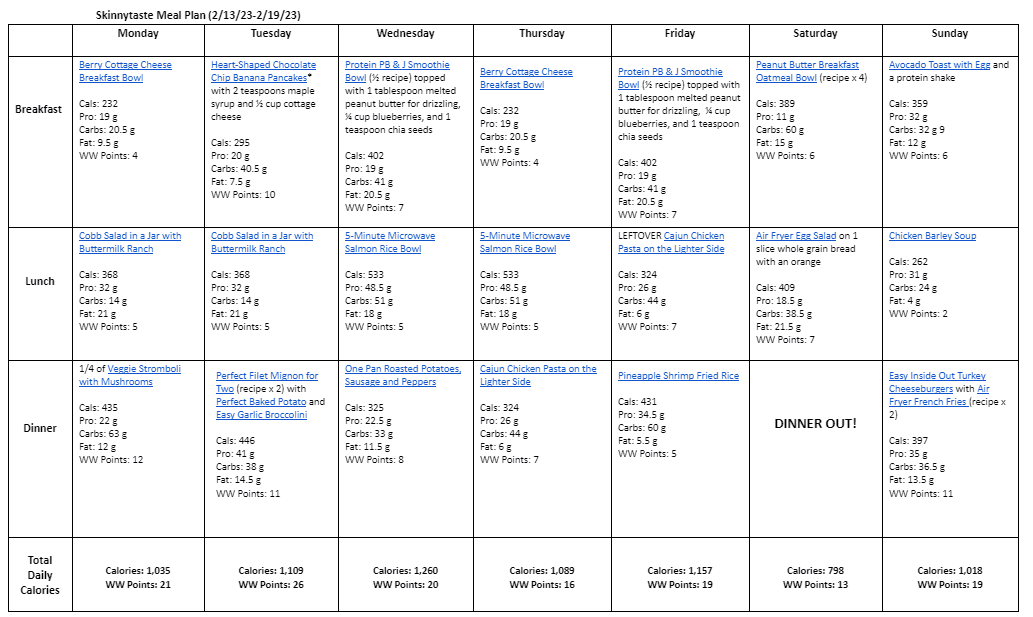
Meal Plan:

Breakfast and lunch Monday-Friday, are designed to serve 1 while dinners and all meals on Saturday and Sunday are designed to serve a family of 4. Some recipes make enough leftovers for two nights or lunch the next day. The grocery list is comprehensive and includes everything you need to make all meals on the plan.

MONDAY (2/13)
B: Berry Cottage Cheese Breakfast Bowl
L: Cobb Salad in a Jar with Buttermilk Ranch
D: 1/4 of Veggie Stromboli with Mushrooms

Total Calories: 1,035*

TUESDAY (2/14)
B: Heart-Shaped Chocolate Chip Banana Pancakes** with 2 teaspoons maple syrup and ½ cup cottage cheese
L: Cobb Salad in a Jar with Buttermilk Ranch
D: Perfect Filet Mignon for Two (recipe x 2) with Perfect Baked Potato and Easy Garlic Broccolini

Total Calories: 1,109*

WEDNESDAY (2/15)
B: Protein PB & J Smoothie Bowl (½ recipe) topped with 1 tablespoon melted peanut butter for drizzling,  ¼ cup blueberries, and 1 teaspoon chia seeds
L: 5-Minute Microwave Salmon Rice Bowl
D: One Pan Roasted Potatoes, Sausage and Peppers

Total Calories: 1,260*

THURSDAY (2/16)
B: Berry Cottage Cheese Breakfast Bowl
L: 5-Minute Microwave Salmon Rice Bowl
D: Cajun Chicken Pasta on the Lighter Side

Total Calories: 1,089*

FRIDAY (2/17)
B: Protein PB & J Smoothie Bowl (½ recipe) topped with 1 tablespoon melted peanut butter for drizzling,  ¼ cup blueberries, and 1 teaspoon chia seeds
L: LEFTOVER Cajun Chicken Pasta on the Lighter Side
D: Pineapple Shrimp Fried Rice

Total Calories: 1,157*

SATURDAY (2/18)
B: Peanut Butter Breakfast Oatmeal Bowl (recipe x 4)
L: Air Fryer Egg Salad on 1 slice whole grain bread with an orange
D: DINNER OUT

Total Calories: 798*

SUNDAY (2/19)
B: Avocado Toast with Egg and a protein shake
L: Chicken Barley Soup
D: Easy Inside Out Turkey Cheeseburgers with Air Fryer French Fries (recipe x 2)
Total Calories: 1,018*

*This is just a guide, women should aim for around 1500 calories per day. Here’s a helpful calculator to estimate your calorie needs. I’ve left plenty of wiggle room for you to add more food such as coffee, beverages, fruits, snacks, dessert, wine, etc.
**Freeze any leftover cooked pancakes, if desired.

*Google doc

EXPLAINER: How Does COVID-19 Affect the Heart? | Health News

The proof is distinct: COVID-19 an infection is risky for the coronary heart.

Approximately a few yrs into the pandemic, research right after study has proven that while COVID-19 at first sparked problems about the lungs, consideration is overdue for the heart.

“I feel we have to have to start conceptualizing and wondering of COVID as a possibility component for coronary heart disorder,” says Ziyad Al-Aly, a clinical epidemiologist at Washington University in St. Louis.

It’s an crucial trend to fully grasp as extra than 100 million Us citizens have experienced COVID-19 – a variety that carries on to increase every single day with no signs of ceasing.

A modern investigation from the American Heart Affiliation located that deaths connected to coronary heart illness rose appreciably in the course of 2020, the initially yr of the pandemic. The number of People who died from cardiovascular illness jumped from 874,613 fatalities in 2019 to 928,741 in 2020 – topping the past significant of 910,000 recorded in 2003.

Probably additional notable was that the age-altered mortality price, which accounts for adjustments in the variety of more mature adults in the inhabitants from yr to calendar year, increased in 2020 for the initial time in a ten years.

“COVID-19 has each immediate and oblique impacts on cardiovascular health and fitness,” Michelle Albert, the American Coronary heart Association’s volunteer president, claimed in a statement. “As we uncovered, the virus is associated with new clotting and irritation. We also know that several persons who had new or present coronary heart illness and stroke signs and symptoms were hesitant to look for medical treatment, specially in the early days of the pandemic.”

The 7 days in Cartoons July 18-22

EXPLAINER: How Does COVID-19 Affect the Heart? | Health News

The sample has been documented by other teams as well. The Smidt Coronary heart Institute at Cedars-Sinai discovered in an evaluation that fatalities from heart assaults rose drastically all through COVID-19 surges. The pattern was outstanding throughout all age groups but most significant between people ages 25-44, which is an age team that is not usually considered at superior chance for a coronary heart assault.

“There is something quite different about how this virus influences the cardiac threats,” Susan Cheng of the Smidt Heart Institute stated in a statement about the research. “The change is most likely owing to a blend of pressure and swelling, arising from predisposing elements and the way this virus biologically interacts with the cardiovascular program.”

Yet another latest examine out of the United Kingdom located that individuals infected with COVID-19 had a larger likelihood of quite a few cardiovascular disorders as opposed with uninfected participants in equally the short expression and long expression, like myocardial infarction, coronary coronary heart sickness, coronary heart failure and deep vein thrombosis. The authors recommended that the results indicate that COVID-19 people really should be monitored for at minimum a 12 months after recovery from an infection to diagnose cardiovascular complications.

COVID-19 can have an affect on the coronary heart even if a person’s coronavirus an infection is delicate. Analysis from Al-Aly that was published past calendar year found that individuals who were reinfected had been 2 times as very likely to die and 3 moments more most likely to be hospitalized than those who had been infected at the time. They had been also a few situations a lot more likely to put up with from heart difficulties.

“However we sliced it with weighted analyses by age and race and sexual intercourse and prior professional medical situations, the chance was in all places, which means it truly almost did not spare anybody,” Al-Aly suggests.

Authorities estimates demonstrate that the majority of the U.S. has been infected with the coronavirus. It is drastically bigger than the official range offered that infections can be asymptomatic and the outcomes from at-property exams are not automatically documented. The large range signifies much more focus requirements to change to all those who are getting infected a second, 3rd or fourth time as many specialists imagine COVID-19 will proceed circulating for a long time to occur.

“Reinfection is extra and extra turning out to be the norm mainly because most of the folks in the U.S. have had it at minimum once,” Al-Aly suggests.

Which is why he options to carry on the review to glance beyond the a person-year mark. He hypothesizes that at some level – he indicates possibly the fifth, sixth or seventh COVID-19 infection – any infection after that level will maybe be just like a cold.

“We assume that eventually, the threat perhaps will flatten with time,” Al-Aly suggests.

Investigate on COVID-19’s effect on the coronary heart is increasing, but researchers agree that extra notice is needed. A preprint research posted on medRxiv past month executed a systematic evaluation of far more than 100 scientific tests examining COVID-19 and prolonged-phrase cardiac signs or symptoms. The substantial-high quality experiments that they determined believed 4{bf0515afdcaddba073662ceb89fbb62b6b1bf123143c0e06b788e1946e8c353f} of COVID-19 survivors described upper body soreness and just about 3{bf0515afdcaddba073662ceb89fbb62b6b1bf123143c0e06b788e1946e8c353f} reported heart arrhythmia. The authors emphasised that although these percentages appear little, they equate to a lot of individuals.

“Accumulating proof shows that long-time period cardiac signs of COVID-19 are widespread and can very last for months and even beyond one particular calendar year,” authors wrote in the review.

It is rare for COVID-19 to directly infect the coronary heart muscle mass. The virus normally will cause issues in other parts of the body that can bring about coronary heart destruction.

“Even if the virus is not exclusively impacting your coronary heart, it could be impacting your lungs or an additional organ that’s demanding the coronary heart now to do the job tougher to compensate for that,” claims Jayne Morgan, a cardiologist and the government director of well being and local community schooling at Piedmont Healthcare in Atlanta.

A lot awareness has especially been paid to myocarditis – a issue in which the heart gets infected that is ordinarily a reaction to a viral an infection. Irritation of the heart can cut down its potential to pump blood to the relaxation of the human body. Most situations are self-resolving and go absent in two months. But the scarce instances that last for a longer period than two months are regarded persistent and can substantially weaken the heart, top to coronary heart failure and loss of life.

“When we speak about myocarditis, it can be extremely, extremely severe or it can be self limiting,” Morgan claims. “So it truly is nearly the very same game of Russian roulette that you happen to be enjoying with having COVID. You can get a incredibly moderate sort or you can die from it. You just just take the risk, so having multiple infections and finding reinfected and reinfected only boosts your threat of last but not least obtaining the bullet in the chamber.”

Myocarditis has also been a recurrent matter between COVID-19 vaccine skeptics, who have seized on a connection in between the mRNA shots from Pfizer and Moderna and myocarditis. Just lately, skeptics were brief to improperly blame the collapse of Buffalo Costs basic safety Damar Hamlin on the vaccine as he suffered cardiac arrest through a match in January.

And in Florida, the surgeon standard last 12 months encouraged in opposition to the use of mRNA COVID-19 vaccines in adult males ages 18-39, indicating that the “benefit of vaccination is likely outweighed by this abnormally higher hazard of cardiac-relevant dying among the males in this age team.” The selection was slammed by many health and fitness officials.

A analyze out of England past 12 months found that people today infected with COVID-19 in advance of receiving a vaccine have been 11 times extra at threat for establishing myocarditis inside of 28 times of tests favourable for the virus. This threat was slice in half for folks who had obtained at least just one dose of vaccine.

“Myocarditis is an uncommon issue,” the authors wrote in the analyze. “The hazard of vaccine-related myocarditis is small, with up to an additional 2 situations for each million persons in the 28-day time period right after exposure to all vaccine doses other than mRNA-1273. This is significantly lessen than the 35 more myocarditis functions observed with SARS-CoV-2 an infection prior to vaccination.”

Al-Aly suggests it is nevertheless important to accept that vaccine personal injury is true.

“They absolutely direct in rare scenarios to coronary heart complications together with, most notoriously, myocarditis,” he says. “But the rates are logs of magnitude decrease than the premiums of myocarditis, for illustration, or other heart challenges with COVID.”

CU Winter Giving Efforts Target Students, the Homeless & Medical Research

CU Winter Giving Efforts Target Students, the Homeless & Medical Research AmeriCU

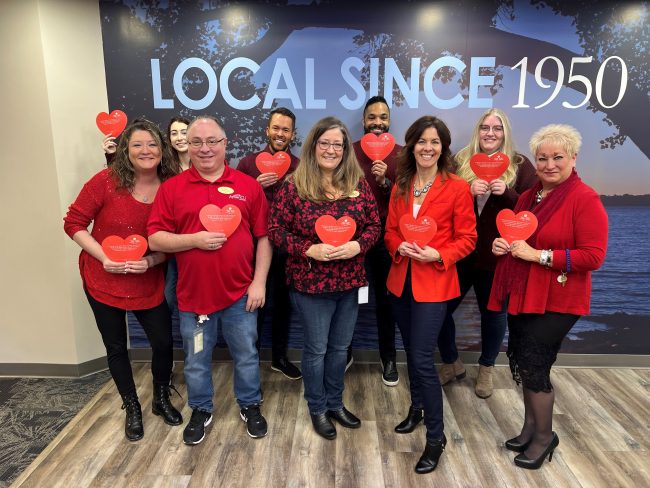
Staff users from the $2.6 billion, Rome, N.Y.-centered AmeriCU’s Liverpool Economical Middle in Liverpool, N.Y., gear up for the credit score union’s thirty day period-extended American Coronary heart Affiliation marketing campaign. For the duration of the thirty day period of February, members can take part in the AHA’s Have a Coronary heart campaign by stopping by any AmeriCU branch to obtain a red coronary heart to raise awareness for heart wellness in their communities. The money lifted will go towards lifetime-preserving analysis that assures anyone has an chance to get pleasure from a healthful existence cost-free from heart ailment and stroke.

First Financial FCU Initially Fiscal FCU

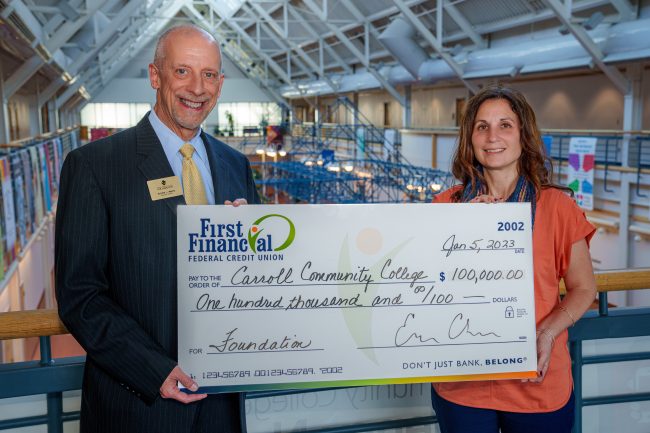
Andrea Rapp (suitable), marriage marketing manager for the $1.2 billion, Sparks, Md.-centered Initial Economic Federal Credit history Union, presents a check to Carroll Group Higher education Foundation Government Director Steven L. Wantz. FFFCU just lately pledged $100,000 about a five-calendar year time period to the Basis, with options to donate $20,000 each and every calendar year through the 2027-28 school yr. Proceeds will gain the Foundation’s athletic program, new commence software and scholar emergency aid fund. In addition, the credit rating union donated $10,000 to the non-revenue Carroll County Foodstuff Sunday and $5,000 to its lover of 32 several years, Carroll County Community Educational facilities.

Neighborhood CU Community CU

Sharon Garfield, a 10-12 months member of the $1 billion, Dallas, Texas-centered Community Credit score Union, receives a shock $49,999 reward for her excellent financial savings habits just after becoming preferred as the credit union’s 2023 Prize Cost savings Account grand prize winner. All over the yr, Prize Personal savings Account holders acquire a single drawing entry for every single $25 regular monthly typical stability in their account. They are then eligible for weekly drawings, culminating with the once-a-year grand prize, which is drawn each individual Jan. 1 centered on the typical month-to-month harmony in their account at the near of the organization day on Dec. 31.

RTN FCU RTN FCU

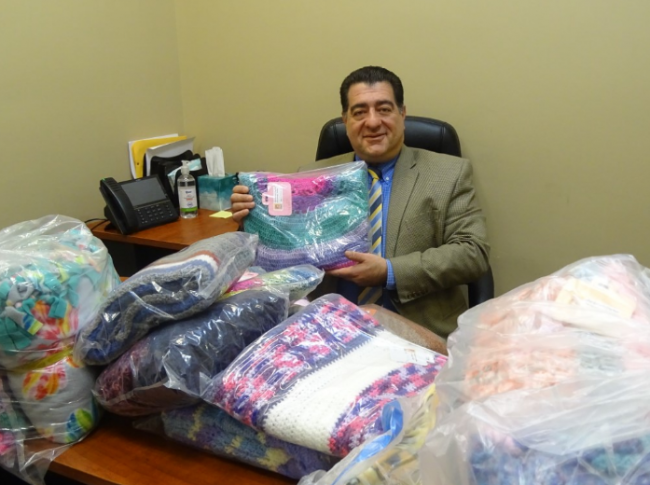
Michael Menas, branch manager for the $1 billion, Waltham, Mass.-dependent RTN Federal Credit Union, displays handmade donated blankets. RTN just lately donated dozens of handmade blankets, as nicely as $250 toward the purchase of blankets, clothes and pajamas, to the Massachusetts Coalition for the Homeless’ A Bed for Each Little one System. The energy was part of the Present of Warmth Blanket and Clothes Push that is coordinated just about every winter season by the Cooperative Credit score Union Association. The blankets for infants and kids had been knitted by volunteers from Blankets 4 Youngsters, a knitting, quilting and sewing team from the Amesbury Senior Community Heart in Amesbury, Mass., precisely for the yearly generate.

SAFE CU Safe and sound CU

Two residents of Sacramento Cottage Housing Inc. in Sacramento, Calif., display off their artwork. The $4.5 billion, Folsom, Calif.-dependent Safe and sound Credit Union not too long ago awarded a $5,000 grant to Cottage Housing to fund new instructional programs for its formerly homeless consumers so they can discover crucial lifetime and economic expertise. The grant was awarded as a result of the credit union’s Community Sustainability Grant Software, and in December, Protected invited the neighborhood to choose two grant recipients presenting education courses that address inequities. Voters selected Cottage Housing and the Construction Market Education Foundation to every obtain $5,000 grants. (Photo: Sacramento Cottage Housing Inc.)

SeaComm FCU SeaComm FCU

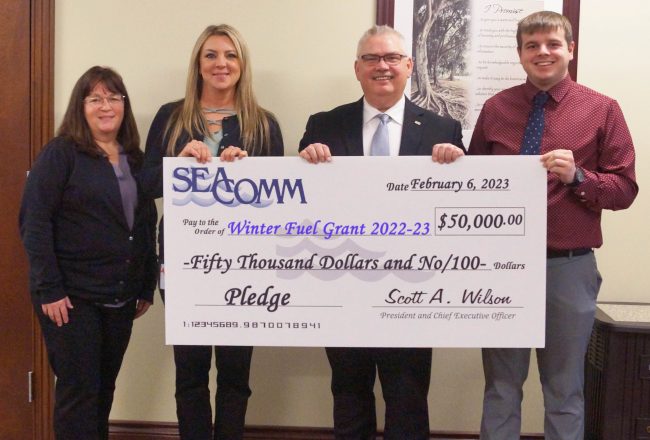
Previous November, the $775 million, Massena, N.Y.-centered SeaComm Federal Credit score Union pledged $50,000 to support associates in have to have with dwelling heating expenditures. Associates utilized for the grant on the net, in branches and via mail through Jan. 6, and after just about 1,000 apps were submitted, SeaComm’s Winter season Gas Grant Committee cautiously picked 100 associates to receive gas grants worthy of $500 every single. At the time picked, the recipients were being notified, and the money were being dispersed to nearby gasoline providers for credit to their account. Pictured from left to appropriate are Dealer Romance Supervisor Danielle Uppstrom, House loan Supervisor Tara Cusworth, President/CEO Scott A. Wilson and Personal loan Functions Agent Chandler LaPlante, all with SeaComm.

You should send out your Neighborhood news objects to Natasha Chilingerian at [email protected]