
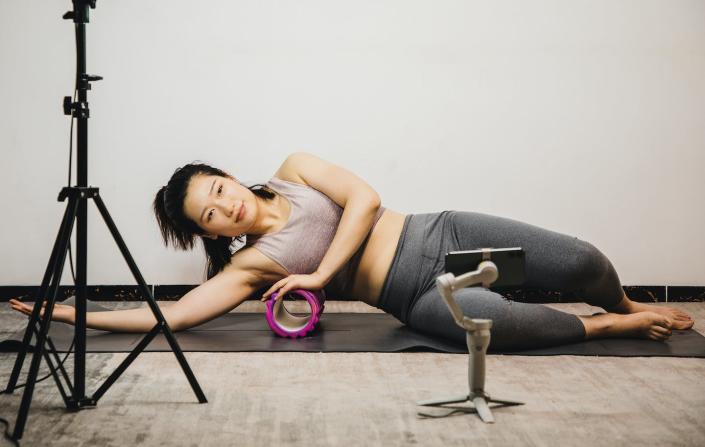
Social media and misrepresentation can go hand in hand – and that’s especially the case in the loosely regulated fitness and nutrition industry.
We both have experience with personal training, but from different perspectives.
To improve his fitness regimen, Tim has sought out experienced trainers, while Ashley ran an online fitness and nutrition company before getting her doctorate.
She went through all the hoops to obtain credentials – training as a bodybuilder, obtaining certifications from the National Strength and Conditioning Association and studying nutrition through the National Academy of Sports Medicine. She also used Instagram to grow her business.
And yet both of us realized that individuals with no credentials or expertise were building their own brands on social media – sometimes making more money than those who were credentialed.
It made us wonder: How is this possible?
To explore this, we followed 488 fitness and nutrition influencers on Instagram for six months, analyzing over 50,000 posts, 8 million follower comments and 620,000 influencer replies to figure out how they used words and images to attract and interact with followers.
In our forthcoming Academy of Management Journal article, we explain how just establishing a social media presence doesn’t mean a would-be influencer can easily reach clients, as the social media platform’s algorithm determines who sees what posts, and when. And even if influencers do attract large followings, social media users shouldn’t necessarily buy what the influencers are selling.
The rise of the influencer
Social media use has more than tripled in the past decade, and many young people now aspire to become successful influencers. A Morning Consult poll from 2019 found that 54{bf0515afdcaddba073662ceb89fbb62b6b1bf123143c0e06b788e1946e8c353f} of Americans ages 13 to 38 said they would become an influencer if given the chance.
But what exactly does it mean to be an influencer?
Influencers are people who use social media to sell products or services – either their own or those of another company or brand. Successful influencers gain better placement in their followers’ social media feeds, obtain brand endorsements, facilitate networking opportunities and cultivate other revenue streams.
They do this by getting social media users to engage with their accounts – to follow their profiles, like their posts and write comments.
Although the algorithms social media platforms use to decide what users see are shrouded in mystery, it’s generally understood that algorithms will boost accounts that have a lot of followers and regularly interact with these followers.
Gaming the algorithm
Successful influencers will leverage these different degrees of user engagement to build and grow their businesses. But they need to be strategic about which images and words they use, since each can influence different parts of the algorithm.
Images generally attract someone’s attention before text, and they’re also processed more quickly than text. So influencers must choose their images wisely.
We found that images that reinforce the influencers’ competence – in the case of fitness influencers, photos and videos highlighting their physiques and ability to perform exercises, or “before and after” photos of themselves and their clients – had the largest effect on their number of followers.
Our data showed that for every image post signaling their competence, fitness influencers boosted their followers by almost 3{bf0515afdcaddba073662ceb89fbb62b6b1bf123143c0e06b788e1946e8c353f}. That’s significant when you consider that each additional follower can result in more revenue from sponsors and sales. According to the music licensing site Lickd, Instagram users with 5,000 followers can earn about US$350 per sponsored post, and influencers with 100,000 followers can earn double that.
The trick, of course, is attracting sponsors.
But amassing lots of followers isn’t the only path to ensuring success on social media. Influencers also need their followers to interact with their posts. This is typically much more time-intensive for users than clicking “follow” and mindlessly scrolling. But this sort of engagement can easily sway the algorithm.
Most social media users want to feel they’re building a community, not just spewing their thoughts into a digital void. So successful influencers can cultivate connection by regularly replying to their followers’ comments.
This can be something as simple as “Hey @instagram_girl292, I love that you tried our new product. We are so excited to hear what you think about the next one!”
We found that influencers who project warmth and reply to comments garner 21{bf0515afdcaddba073662ceb89fbb62b6b1bf123143c0e06b788e1946e8c353f} more positive replies from current and new followers.
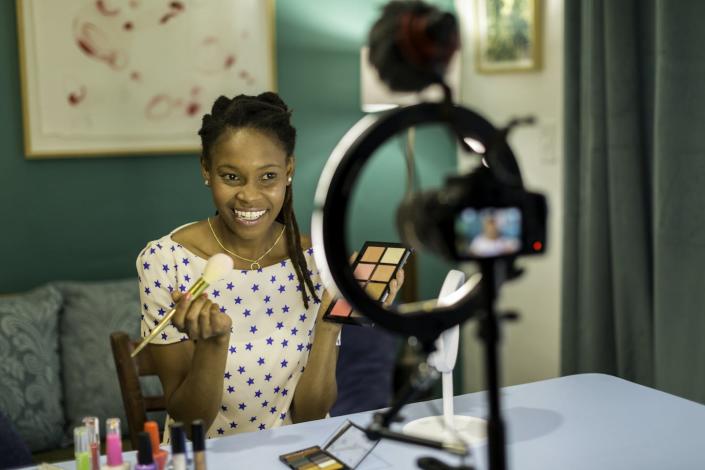
Buyer beware
It’s important to remember that influencers can project competence without actually having it – and that regular engagement with followers says little about the quality of the product they’re selling.
In the sample we used for our study, fewer than 20{bf0515afdcaddba073662ceb89fbb62b6b1bf123143c0e06b788e1946e8c353f} of the influencers reported having any credentials.
The fitness industry is especially prone to manipulation. While brick-and-mortar gyms traditionally require their personal trainers to have advanced credentials, such as certifications in fitness or nutrition, there is no industry governing body ensuring that people who call themselves trainers have the necessary background and experience. Therefore, anyone can become a trainer and sell their products and services online and through social media.
In fact, many fitness influencers doctor their images, giving themselves unrealistic and unattainable bodies.
Worse, they may not ever follow through on their promises.
For example, social media influencer Brittany Dawn was sued by thousands of her followers in February 2022 after they claimed she sold them fitness and meal plans she never delivered. Pitching herself as someone who could help people rebuild their relationship with food, Dawn had attracted followers and customers who had struggled with eating disorders. Responding to the criticism, Dawn, whose trial is set to begin on March 6, 2023, said, “I jumped into an industry that had no instruction manual.”
Providing custom meal plans is outside most personal trainers’ scope of expertise, unless they also happen to be nutritionists. But given the lack of industry oversight, few customers knew this. Instead, Dawn, like many other social media influencers, lured followers by posting attention-grabbing photos and interacting with customers in ways that made them feel like they had a personal relationship with her.
That means that it’s up to everyone to do their homework on what they’re buying – and not be blinded by shapely legs, an alluring smile and six-pack abs.
This article is republished from The Conversation, an independent nonprofit news site dedicated to sharing ideas from academic experts. The Conversation is trustworthy news from experts, from an independent nonprofit. Try our free newsletters.
It was written by: Ashley Roccapriore, University of Tennessee and Tim Pollock, University of Tennessee.
Read more:
The authors do not work for, consult, own shares in or receive funding from any company or organization that would benefit from this article, and have disclosed no relevant affiliations beyond their academic appointment.
