WHO highlights oral health neglect affecting nearly half of the world’s population

A new Global Oral Health Status Report published today by the World Health Organization (WHO) provides the first-ever comprehensive picture of oral disease burden with data profiles for 194 countries, giving unique insights into key areas and markers of oral health that are relevant for decision-makers.

The report shows that almost half of the world’s population (45{bf0515afdcaddba073662ceb89fbb62b6b1bf123143c0e06b788e1946e8c353f} or 3.5 billion people) suffer from oral diseases, with 3 out of every 4 affected people living in low- and middle-income countries. Global cases of oral diseases have increased by 1 billion over the last 30 years—a clear indication that many people do not have access to prevention and treatment of oral diseases.

“Oral health has long been neglected in global health, but many oral diseases can be prevented and treated with the cost-effective measures outlined in this report,” said WHO Director-General, Dr Tedros Adhanom Ghebreyesus. “WHO is committed to providing guidance and support to countries so that all people, wherever they live and whatever their income, have the knowledge and tools needed to look after their teeth and mouths, and to access services for prevention and care when they need them.”

Rapid increase of oral diseases

The most common oral diseases are dental caries (tooth decay), severe gum disease, tooth loss and oral cancers.  Untreated dental caries is the single most common condition globally, affecting an estimated 2.5 billion people. Severe gum disease  ̶  a major cause of total tooth loss  ̶  is estimated to affect 1 billion people worldwide.  About 380 000 new cases of oral cancers are diagnosed every year.

The report underscores the glaring inequalities in access to oral health services, with a huge burden of oral diseases and conditions affecting the most vulnerable and disadvantaged populations. People on low incomes, people living with disabilities, older people living alone or in care homes, those living in remote and rural communities and people from minority groups carry a higher burden of oral diseases.

This pattern of inequalities is similar to other noncommunicable diseases such as cancers, cardiovascular diseases, diabetes, and mental disorders. Risk factors common to noncommunicable diseases such as high sugar intake, all forms of tobacco use, and harmful use of alcohol all contribute to the global oral health crisis.

Barriers to delivering oral health services

Only a small percentage of the global population is covered by essential oral health services, and those with the greatest need often have the least access to services. The key barriers to delivering access to oral health services for all include:

  1. Oral health care requires high out-of-pocket expenditures. This often leads to catastrophic costs and significant financial burden for families and communities.
  2. The provision of oral health services largely relies on highly specialized providers using expensive high-tech equipment and materials, and these services are not well integrated with primary health care models.
  3. Poor information and surveillance systems, combined with low priority for public oral health research are major bottlenecks to developing more effective oral health interventions and policies.

Opportunities to improve global oral health

The report showcases many promising opportunities to improve the state of global oral health including:

  • adopting a public health approach by addressing common risk factors through promoting a well-balanced diet low in sugars, stopping use of all forms of tobacco, reducing alcohol consumption and improving access to effective and affordable fluoride toothpaste.
  • planning oral health services as part of national health and improving integration of oral health services in primary health care as part of universal health coverage.
  • redefining oral health workforce models to respond to population needs and expanding competencies of non-dental healthcare workers to expand oral health service coverage; and
  • strengthening information systems by collecting and integrating oral health data into national health monitoring systems.

“Placing people at the heart of oral health services is critical if we are to achieve the vision of universal health coverage for all individuals and communities by 2030,” said Dr Bente Mikkelsen, WHO Director for Noncommunicable Diseases.

She added: “This report acts as a starting point by providing baseline information to help countries monitor progress of implementation, while also providing timely and relevant feedback to decision-makers at the national level. Together, we can change the current situation of oral health neglect.”


Note to editors

To watch the launch event on Friday, 18 November from 14.00 – 15:30 CET, please register at  https://who.zoom.us/webinar/register/WN_hDqiDjW9TBm4fSVljj3zQw.

The Global Oral Health Status Report uses the latest available data from the Global Burden of Disease (GBD) project, the International Agency for Research on Cancer (IARC) and global WHO surveys. The report is directed at policymakers, practitioners, researchers, development agencies and members of the private sector and civil society. 

In 2022, the World Health Assembly adopted a global strategy on oral health with a vision of universal health coverage for oral health for all individuals and communities by 2030. A detailed action plan is under development to help countries translate the global strategy into practice. This includes a monitoring framework for tracking progress, with measurable targets to be achieved by 2030.

How to Manage Risk for Medical Devices

All medical devices have risk.

“You, as the manufacturer, are responsible for determining the risk of your medical device and if that risk is acceptable,” said Joseph Tartal, FDA deputy director in the Division of Industry and Consumer Education, who presented during the agencies virtual public workshop Understanding Risk with Medical Devices, Tuesday.

To start, it helps to understand the terminology.

While “risk” has no formal across-the-board definition in FDA documents, Tartal describes risk as looking at the harm that the device can cause patients and users and their environment. That includes harm from medical device failures.

Risk in this realm does not mean financial risk, he said.

The combination of the probability of occurrence of harm and severity of that harm go into determining the risk of a medical device.

But it’s not only risk that comes into play in risk management. Benefit is new to FDA’s definition of risk when it comes to medical devices, according to Tartal.

Here too there is no formal definition for benefit, but Tartal describes the benefit as “… the positive impact or desired outcome of the use of a medical device on the health of an individual or a positive impact on patient management or public health.”

Analyzing medical device risk

To analyze risk, systematically use available information to identify hazards and estimate risk. There are different approaches for this. Tartal suggested starting here: identify possible hazards, including user error; calculate or estimate risk in normal and fault conditions; determine risk acceptability; reduce risk to an acceptable level; and evaluate changes to make sure you’re not introducing new hazards.

It is up to the manufacturers to identify possible hazards and risk associated to reduce the risk to acceptable levels, according to workshop speaker Tonya Wilbon, branch chief, Postmarket and Consumer Branch, Division of Industry and Consumer Education at FDA.

Risk occurs throughout a device’s lifecycle, she said.

FDA uses risk-based decisions for medical devices, too

FDA classifies medical devices based on risk, with class 1 medical devices being the lowest risk and class 3 being the highest, Tartal noted.

“The Office of Regulatory Affairs uses risk to schedule medical device inspections. Recall classifications are based on risk, as are enforcement actions,” Tartal said. “We even use risk analysis tools such as health hazard evaluations and health risk assessments when determining a recall’s classification.”

The International Organization for Standardization (ISO) 14971 2019 “Medical Devices Application of Risk Management to Medical Devices” is the international standard for medical devices accepted around the world and is recognized by the FDA to establish a risk management process.

Risk management technique examples

Tartal talked about three commonly use risk analysis techniques: Preliminary Hazard Analysis (PHA), Fault Tree Analysis (FTA), a top-down approach; and Failure Mode and Effects Analysis (FMEA), which looks at risk according to individual line items, single component, or single processes.

Preliminary Hazard Analysis, usually done early in a device’s development, helps identify and prioritize hazards, hazardous situations and events that can cause harm, according to Wilbon.

“For each hazard identified, you identify and document the hazardous situation, the possible harm, the severity of the harm, and the probability of the hazard and hazardous situation leading to harm,” she said.

The Preliminary Hazard Analysis also includes identifying possible risk control measures, according to Wilbon.

Those doing risk analyses might use the Fault Tree Analysis to analyze identified hazards, estimating their probability and identifying situations when they might occur.

And Failure Mode and Effects Analysis identifies and evaluates individual fault or failure modes and is a bottom-up method that starts with cause and works toward effect or how it affects device use. This technique analyzes not only device failure but also failures in manufacturing and component assembly, Wilbon said.

Enter benefit-risk analysis

Once manufacturers have made all risk reduction measures and only acceptable residual risk remains, FDA conducts a benefit-risk analysis. FDA’s benefit-risk analysis considers many factors when determining benefits and risk for Premarket Approval Application (PMA) and de Novo classification; substantial equivalence in Premarket Notifications (501(k)); Investigational Device Exemption (IDE); and product availability, compliance, and enforcement decisions, according to Wilbon.

The factors that FDA considers in each of these areas often differ. For example, medical necessity is a factor FDA considers only when doing benefit-risk analysis for availability, compliance, and enforcement decisions, while “magnitude of benefit” applies in all four categories.

“… severity of risk or harm is considered during premarket review process and when making product availability, compliance and enforcement decisions,” she said.

Wilbon used the example of a benefit-risk analysis in product availability, compliance, and enforcement for a human chorionic gonadotropin (hCG) device—essentially, an over-the-counter pregnancy test that detects hCG in urine.

She said a healthcare provider noticed a higher rate of positive results, but the positive results were not confirmed in blood samples. So, the device yielded a higher rate of false positives than expected by the manufacturer. The manufacturer identified the problem in specific lots and disclosed that the end user is not able to detect this malfunction.

FDA considered that there are other such devices on the market that don’t have the same risk and reduced the benefit due to the test’s potential inaccuracy. Considering these and other factors, FDA decided there was no need for the product to continue to be available, and FDA and the manufacturer decided to recall the device, classifying it as a class 2 recall, according to Wilbon.

“… risk management activities are essential throughout the product lifecycle and not just required during design validation,” Wilbon said. “…  manufacturers should use more than one risk management technique in their risk management process.”

New YouTube Channel “Healthy Dinner Recipes and Ideas with Kelly” Helps Busy Families Plan Nutritious Meals

Kelly DePadro started her YouTube channel with the motivation of teaching people to make great, healthy recipes for dinner without spending too much time preparing and cooking the food.

ATLANTA, Nov. 18, 2022 /PRNewswire-PRWeb/ — The “Healthy Dinner Recipes and Ideas with Kelly” YouTube channel hopes to inspire and equip home chefs with a more intentional, creative and enjoyable cooking experience. Kelly DePadro’s main goal is to help others serve meals that the entire family will enjoy and prepare food the way God intended it to be. As a devout Christian, Kelly believes that we need to be intentional with the food we consume to take care of our health. In the world today, it is not always easy with many temptations for fast, premade meals with preservatives and other unhealthy additives that offer a lack of nutrients. She believes that nuts, vegetables, fruits and grains that are organic in nature are what the body needs to stay in prime condition. Her helpful videos show how simple it is to follow her meal plans from start to finish. Some of her delicious, easy-to-prep dinner recipes she demonstrates include one pot creamy Italian chicken pasta, chicken tortilla soup, Italian meatballs and sauce, baked rice and sweet treats, such as homemade cinnamon swirl bread and coconut chia seed pudding. The recipes shared on the “Healthy Dinner Recipes and Ideas with Kelly” channel use only the healthiest of ingredients and her step-by-step demonstrations are simple for anyone to follow.

Link to YouTube Channel:
https://www.youtube.com/@healthy-dinner-recipes-ideas/videos

“The purpose of the “Healthy Dinner Recipes and Ideas with Kelly” channel is to help families achieve physical, mental and spiritual health, through wholesome, fast and low prep meals,” says Kelly DePadro.

More about Kelly DePadro:
As a busy mother of three, Kelly DePadro, discovered a way to make dishes that all of her family members love by developing easy, quick and healthy recipes. Friends and family kept asking for her culinary secrets, so she started her “Healthy Dinner Recipes and Ideas with Kelly” YouTube channel. She hopes to help others dine on tasty, nourishing meals with little effort involved and just a few ingredients.

Media Contact

Kelly DePadro, Healthy Dinner Recipes and Ideas with Kelly, 678-595-2877, kellydepadro@gmail.com

SOURCE Healthy Dinner Recipes and Ideas with Kelly

Why did a rural Nevada county turn down money to create a public health department?

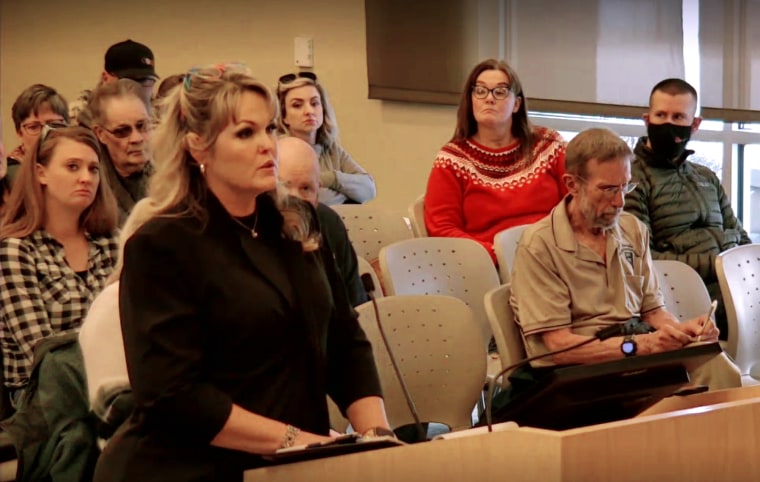
ELKO, Nev. — When Elko County commissioners rejected a $500,000 grant from the Centers for Disease Control and Prevention that could have helped the county create a health department or health district, Kayla Hopkins pleaded with them to reconsider.

Hopkins, who has lived for nearly nine years in the sprawling rural county that forms the northeastern corner of Nevada, told the board how she struggled through postpartum depression and needed mental health resources.

“I was unable to get the help that I needed,” Hopkins said during a public meeting in late 2021, adding that she fell into what could be considered a mental breakdown. She said she was sent by air ambulance more than 300 miles away to Carson City, where she received care in a psychiatric facility for 10 days.

“I was away from my family,” Hopkins said. “I was away from my support system here, and I still struggle with mental health, and I still cannot get the help that I need because we just don’t have it here.”

Pleas from Hopkins and others weren’t enough to sway the elected commissioners. Neither were 11 letters from local health leaders urging the board to take the infusion of public health funding. Four of the county’s five commissioners, citing concerns about government overreach and their lack of trust in federal agencies, voted against pursuing the grant. Nearly a year later, as the pandemic grinds toward a third year and with the arrival of monkeypox, the county still is without a public health department to respond.

And the same mistrust of agencies administering grants for public health persists elsewhere.

Elko County, home to about 54,000 people, wasn’t alone in rejecting federal aid aimed at bolstering public health in the past year. Experts say they were surprised and concerned to see the rare local or state leader, swayed by political partisanship, dismiss funding opportunities for historically limited public health systems.

As many conservative leaders and their constituents railed against measures meant to combat Covid — things like masking policies and promoting vaccines — the pandemic revealed long-standing fissures in the country’s public health infrastructure, particularly in rural and underserved communities.

“Partisan politics has poisoned the well to a point that we’re willing to sacrifice the health of our citizens,” said Brian Castrucci, president and CEO of the de Beaumont Foundation, a national nonprofit that advocates for public health policy. “Is the political grandstanding worth it?”

Over the past two years, officials in Idaho, Iowa, and New Hampshire rejected Covid relief money, their decisions often accompanied by political pronouncements about federal government overreach. And officials representing local governments across the country, including Cochise and Pinal counties in Arizona, echoed those moves. A survey of local governments in 15 states conducted by the National League of Cities found more than 200 small governments declined pandemic relief funds, a small percentage of the money available to small governments.

Elko commissioners turned down a workforce grant funded by the CDC, money intended to “establish, expand, and sustain a public health workforce, including school nurses.” The funding would have flowed through the state to the county, allowing it to hire two employees dedicated to public health services for two years.

County workers in charge of researching the grant and pitching it to the board said the idea was to conduct a study in those two years that would help them determine how much it would cost to create a local health department or a health district, involving neighboring counties.

Elko County has not had a public health department since budget woes pushed officials to dissolve it more than 15 years ago.

Adriane Casalotti, chief of government and public affairs for the National Association of County and City Health Officials, said communities across the country have generally clamored for increased funding during the pandemic, which strained already underfunded and understaffed public health infrastructure.

“That being said,” Casalotti said, “in recent months, I’d say, we’ve heard of a handful of health departments that either would not apply for or couldn’t accept … specific grants,” involving Covid vaccines.

At an Elko County commission meeting in late 2021, then-transit management coordinator Abigail Wheeler pitched the grant to the board and a roomful of residents eager to air their grievances about the CDC and levy claims of federal government overreach, overspending, and corruption regarding the pandemic response.

Wheeler began by asking county commissioners to keep an open mind.

Why did a rural Nevada county turn down money to create a public health department?
Abigail Wheeler presented a grant from the Centers for Disease Control and Prevention to the Elko County, Nev., commission last year, telling it the funding could help the town create a health department or district and give Elko more local control over public health. The commission disagreed.Elko County via Kaiser Health News

“I am very aware that this is basically the worst timing that this grant could come forward because there’s a lot of distaste over public health because of what’s happened with Covid and our whole community, our whole country, and worldwide,” she said. “We have been beat to death, the fallout of the Covid pandemic.”

Wheeler, now the grants and contracts manager for the county, began by reminding the commissioners that creating a local health department or district was a goal that predated the pandemic and the polarization it triggered.

A 2019 meeting with the state Department of Health and Human Services underscored the need for more local public health infrastructure.

“They’re thinking about things like tuberculosis and measles and restaurant inspections,” Wheeler said. “They’re not thinking about Covid. And they’re saying to themselves, ‘We can’t get to you if you had a TB case. We’re 370 miles away from Elko County.’”

Elko is like a landlocked island, Wheeler said during an interview with KHN. Though smaller in population compared with Clark or Washoe counties in Nevada, Elko spans more than 17,000 square miles, making it the fourth-largest county by area in the contiguous U.S. and the second-largest in Nevada.

“We have to be our own cavalry,” Wheeler said.

Commissioners and community members who opposed the grant said Elko didn’t need more public health resources or a health district or department. They said they were concerned about giving up local autonomy and growing bureaucracy. They also expressed mistrust of the CDC.

“You’re 100{bf0515afdcaddba073662ceb89fbb62b6b1bf123143c0e06b788e1946e8c353f} factual that the timing couldn’t be worse,” said Jon Karr, then the chairman of the commission, during the meeting. Although he said he did not buy into all the conspiracy theories about the CDC that others touted, he added that he did not think CDC officials should be trusted.

Commissioner Rex Steninger said he voted against the grant because he feared the commission would be “subservient” to the new entity. “Grants always have strings attached,” he wrote in an emailed response to questions from KHN. “We do not want the CDC tenacles [sic] reaching in to Elko County.”

Wheeler pointed to the fractured local public health system during the meeting, saying creating a health district or department could help reduce bureaucracy and give the county more control over decisions in state officials’ hands. She said it’s evident the county needs more resources, citing public health response duties she took on in her position as transit manager.

“We’re not public health experts, we’re just people who are willing to step up to the plate and take this on,” Wheeler said, referring to other county employees who helped with the public health response to Covid.

Wheeler was disappointed the county board turned down the grant opportunity, she told KHN in October. She said she would still like to see public health become a function of the county someday.

Since speaking at the meeting nearly a year ago, Hopkins said she found the mental health services she needed locally. But not everyone is as lucky as she is to find the help they need close to home, she said. The county’s decision to reject the CDC grant makes her sad, she said, but she accepts it was the commission’s decision to make.

Other local leaders saw the need for increased public health resources amid the pandemic. The Elko City Council wrote a letter of support for the CDC grant the day before the commission rejected it. “We know for sure it’s not something that the city wants to tackle by ourselves,” said Curtis Calder, city manager. “But if our regional partners want to do it as a partnership, we stand at the ready to assist where we can.”

Other rural Nevada counties have collaborated with the University of Nevada-Reno School of Medicine to create the Central Nevada Health District, serving four counties and a small city near Reno. “If we won’t step up and help ourselves and our constituents, we can’t complain when the State doesn’t provide what we need or expect,” wrote Dr. J.J. Goicoechea, a commissioner in neighboring Eureka County and the interim state veterinarian, in an emailed response to KHN.

Casalotti said there are advantages to having local health departments staffed and run by people who live in the community as opposed to a state government hundreds of miles away.

“One of the things that we’re hopeful that people can learn from the pandemic is that you don’t want to have to build the plane while flying it,” she said. “At some point, you need to take the leap because the next crisis is just around the corner.”

But polarization remains an obstacle, Castrucci said.

“This has become a holy war, this has become a war of right and wrong,” he said. “I don’t know how to get through that to a place where we are prioritizing the health of our nation.”

KHN (Kaiser Health News) is a national newsroom that produces in-depth journalism about health issues. Together with Policy Analysis and Polling, KHN is one of the three major operating programs at KFF (Kaiser Family Foundation). KFF is an endowed nonprofit organization providing information on health issues to the nation.

Follow NBC HEALTH on Twitter & Facebook.

Investigation raises concerns about poor FDA oversight of clinical trials

Investigation raises concerns about poor FDA oversight of clinical trials
Credit: Pixabay/CC0 Public Domain

COVID-19 vaccines and drugs were developed at “warp speed” and now experts are concerned about the US Food and Drug Administration’s (FDA) inadequate surveillance of clinical trial sites, reports an investigation published by The BMJ today.

Regulatory documents show that only nine out of 153 Pfizer trial sites were subject to FDA inspection prior to licensing its COVID-19 mRNA vaccine. Similarly, 10 out of 99 Moderna trial sites and five of 73 remdesivir trial sites were inspected, writes investigative journalist Maryanne Demasi.

Notably, the FDA received a complaint from whistle-blower Brook Jackson, about misconduct at three clinical trial sites that were testing Pfizer’s COVID-19 vaccine, while she was employed as a regional director. Jackson observed a range of problems including falsified data, unblinded patients, and inadequately trained vaccinators who were slow to follow up on adverse events. “I thought that the FDA was going to swoop in and take care of everything,” said Jackson. The FDA did not, however, inspect the trial sites in question.

Experts have criticized the FDA’s oversight of clinical trials, describing it as “grossly inadequate.” They say the problem, which predated COVID-19, is not limited to a lack of inspections, but also includes failing to proactively notify the public or scientific journals when violations are identified, effectively keeping scientific misconduct from the medical establishment.

The FDA is “endangering public health” by not being candid about violations that are uncovered during clinical trial site inspections, says David Gortler, a pharmacist and pharmacologist who worked as an FDA medical reviewer between 2007 and 2011 and then as a senior advisor to the FDA commissioner in 2019-2021.

The FDA oversees clinical research of FDA-regulated drugs and devices in the US and abroad, if the product is intended for the US market. It conducts routine visits for trials, reviews records of those sites or the institutional review boards (IRBs) that oversee trials locally and follows up on complaints of violations. The FDA does not have a target for the proportion of trial sites it inspects.

Despite the estimated hundreds of thousands of clinical trial sites in operation across the US and abroad, the FDA told The BMJ that it only has 89 inspectors for its bioresearch monitoring program, which assures the quality and integrity of data submitted to the agency in support of new product approvals and marketing applications, but that it is recruiting more inspectors to reach its yearly average of 100.

“I don’t think that it is a sufficient number of staff to do that kind of level of oversight,” says Jill Fisher, professor of social medicine at the University of North Carolina. “The FDA must have enough of a presence to dissuade investigative sites from committing fraud,” she continues.

Between March and July 2020, at the peak of pandemic restrictions, the FDA paused its site inspections and only “mission critical” inspections were carried out. However, Gortler says this was the precise time that the FDA should have ramped up its oversight, not scaled back, especially since COVID-19 products were being developed at warp speed and intended for millions of people.

The FDA told The BMJ it takes oversight of clinical trials seriously and had adapted to travel restrictions, publishing draft guidance for remote regulatory assessments, which describes virtual inspections using live streaming and video conferencing and requests to view records remotely.

The FDA has a long history of failing to adequately oversee clinical trial sites, notes Demasi. For example, a 2007 report by the Department of Health and Human Services’ Office of the Inspector General found the FDA audited less than 1{bf0515afdcaddba073662ceb89fbb62b6b1bf123143c0e06b788e1946e8c353f} of the nation’s clinical trial sites between 2000 and 2005 and was highly critical of the agency because it did not have a database of operational clinical trial sites.

In response, the FDA said it created a dedicated task force and “developed new regulations and guidance further to improve the conduct of clinical trials and enhance the protection of people participating in clinical trials,” but denied The BMJ an interview with a member of the task force.

Further, a 2020 investigation by the journal Science into the FDA’s enforcement of clinical research regulations between 2008 and 2019 concluded that the agency was often light handed, slow moving, and secretive. It said that the FDA rarely leveled sanctions and when it did formally warn researchers about breaking the law, it often neglected to ensure that the problems were remedied.

Although the FDA publishes its inspection reports, they are not proactively disclosed. Nor does it typically notify journals when a site participating in a published clinical trial receives a serious warning or alert the public about the research misconduct it finds.

Demasi points to reports of insufficient staff and low morale at the FDA. Fisher says the FDA “needs to be better funded and staffed to conduct inspections. At a minimum, the agency needs to inspect sites when complaints or concerns have been filed.”

Gortler doesn’t agree, however, that the FDA is under-resourced. With a total budget of $6.1bn in 2021, he suggests the agency needs to be leaner and more efficient, with employees interested in improving public health. “Half of its budget, about $3bn, is discretionary, which means it could have hired contractors, retirees, or repurpose existing workers. It chose not to. The FDA was just yawning its way through the pandemic. The entire agency is broken.”

More information:
Maryanne Demasi et al, Investigation: FDA oversight of clinical trials is “grossly inadequate,” say experts, The BMJ (2022). DOI: 10.1136/bmj.o2628

Provided by
British Medical Journal


Citation:
Investigation raises concerns about poor FDA oversight of clinical trials (2022, November 16)
retrieved 17 November 2022
from https://medicalxpress.com/news/2022-11-poor-fda-oversight-clinical-trials.html

This document is subject to copyright. Apart from any fair dealing for the purpose of private study or research, no
part may be reproduced without the written permission. The content is provided for information purposes only.

New health care regulators ask OneCare executives for measurable results

New health care regulators ask OneCare executives for measurable results
OneCare Vermont officials present their budget proposal to the Green Mountain Care Board in October 2019. From left: Vicki Loner, CEO; Tom Borys, vice president of finance and Sara Barry, COO. Photo by Mike Dougherty/VTDigger

OneCare, the nonprofit that distributes millions of public and private health care dollars to providers throughout Vermont, has asked state regulators to greenlight a $15 million operating budget — a slight decrease from this year — as part of an annual review process. 

This is the first OneCare budget cycle for most members of the Green Mountain Care Board, the five-member body that regulates major players in Vermont’s health care sector, including hospitals. And the board’s new members seem keen to put OneCare executives in the hot seat. 

During a five-hour marathon hearing last week, the board repeatedly pressed OneCare executives for quantitative results, whether that meant reducing Vermonters’ health care costs or improving their quality of care.

“Vermonters, either through taxpayer-funded health care groups, out-of-pocket expenses, copays or insurance, have borne the bulk of those staggering numbers,” said Owen Foster, the board’s new chair, at the start of the meeting. “And for that they deserve results.” 

Owen Foster, chair of the Green Mountain Care Board, at the board’s office in Montpelier on Oct. 27. Photo by Riley Robinson/VTDigger

Thom Walsh, who was appointed to the board in December, asked OneCare CEO Vicki Loner to name the organization’s top three key performance indicators, or metrics of success. Loner declined to name any, saying, “They’re going to our board to be reviewed.” 

OneCare is an accountable care organization, or ACO. It’s been described as a policy experiment because it’s intended to shift the state’s health care spending from a fee-for-service model to one in which providers get a flat fee per patient, with incentives to keep people well for the lowest cost. It funnels money from Medicare, Medicaid and private insurers to health care providers across the state, ranging from big hospitals to independent primary care doctors. 

OneCare has a $15 million operating budget to manage these various contracts between payers and providers and to conduct data analysis of the health care system. Its operating costs are funded by Vermont hospitals, which pay millions in fees each year to be part of the ACO. 

Tom Borys, OneCare’s vice president of finance, cited OneCare’s increased enrollment as one of his top indicators of success. He argued that increased participation in an ACO model is inherently good because it changes the incentive structure behind participants’ health care. 

But Walsh quickly cut him off, seemingly unimpressed. 

“What I’m struggling to find is an outcome that would be meaningful to Vermonters, and you may be able to say something like, ‘reduced (emergency department) visits,’” Walsh said. “Those are outcome measures that matter to patients, and I can’t find them.” 

As part of this year’s budget process, OneCare submitted a study comparing it with a group of 20 similar ACOs nationwide. OneCare outperformed other ACOs on some cost metrics, including cost of inpatient and outpatient surgeries. 

However, it found OneCare patients went to the emergency department at significantly greater rates, averaging 36{bf0515afdcaddba073662ceb89fbb62b6b1bf123143c0e06b788e1946e8c353f} higher than patients in other ACOs. Vermonters in OneCare had 18{bf0515afdcaddba073662ceb89fbb62b6b1bf123143c0e06b788e1946e8c353f} fewer visits to primary care providers and paid 30{bf0515afdcaddba073662ceb89fbb62b6b1bf123143c0e06b788e1946e8c353f} more for prescription drugs. 

In a June 2021 report, State Auditor Doug Hoffer recommended that the care board find a clear way to measure the ACO’s effectiveness, to determine whether OneCare saved Vermonters more money than it cost. The auditor said that assessment should be a prerequisite for any new all-payer agreement with the federal government, which is expected to be worked out in the next few years. 

“On a high level … it’s important that any regulated entity, like OneCare going before the board, gets a good, careful review,” Mike Fisher, chief health care advocate at Vermont Legal Aid, said after the hearing. “And so I’m pleased to see the level of questioning from the board.” 

OneCare executives pushed back on some of the board members’ demands for quantitative impact. They argued that changing the entire health care system takes a long time. 

“How do you manage the one-year payer contract cycles and performance expectations with long-term outcomes that, our clinicians remind us all the time, it’s going to take years, decades, generations to address?” OneCare Chief Operating Officer Sara Barry said. 

When governments or organizations invest in big, upstream factors that impact people’s health — things such housing, walkable communities and food security — those benefits don’t have an immediate, measurable impact on the health of a group, Loner said. OneCare executives also noted that about half of the ACO’s lifespan has been during the Covid-19 pandemic. 

Walsh agreed with executives that systems change is a long game but countered that six years should be enough time to at least have some way of measuring results. 

“If OneCare’s role was to support through data analytics, maybe trainings and other things over time, wouldn’t there be improvements that we could point to, right?” Walsh said. “If we look year over year, and it’s been going on for five or six years, wouldn’t there be improvements that we could point to, even if it’s just a little piece?”

About 296,000 Vermonters are “attributed” to OneCare — meaning they see a provider who participates in OneCare and is accountable to the ACO’s performance targets. These 296,000 patients are expected to generate $1.4 billion in health care spending in 2023, an expected $97 million increase from this year. 

Overall, OneCare’s requested $15 million operating budget would reduce its expenses by about $248,000, or 1.6{bf0515afdcaddba073662ceb89fbb62b6b1bf123143c0e06b788e1946e8c353f}, from 2022. The ACO cut costs by reducing its in-person workspace and by combining some operations, such as data analytics, with UVM Health Network, executives told the care board. 

OneCare’s budget request includes a roughly 3{bf0515afdcaddba073662ceb89fbb62b6b1bf123143c0e06b788e1946e8c353f} cost-of-living increase for employees. If the budget were approved, Loner, the CEO, would make more than $490,000 next year. 

Aside from the organization’s operating expenses, OneCare would also be responsible for another $29.9 million, which it would distribute to health care providers throughout the state. 

That money includes bonus payments for providers who reach certain population health goals. It would also fund targeted investment and programs in specific areas, such as about $212,000 for the state’s five nonprofit Area Agencies on Aging.

In response to questioning by Foster, Loner said OneCare had conducted no cost-benefit analysis on how it should allocate money to particular programs or types of providers. 

The proposed budget would raise hospital participation fees by 1{bf0515afdcaddba073662ceb89fbb62b6b1bf123143c0e06b788e1946e8c353f}, generating a total of $19.8 million. If approved, this budget also “escalates risk quite dramatically” for Vermont hospitals, Borys, OneCare’s vice president of finance, told the care board.

By participating in OneCare, hospitals join a risk pool. If hospitals meet certain cost targets and quality goals by the end of the year, hospitals can earn funds from the pool. If hospitals miss these targets, they could owe money — potentially millions. Theoretically, this payment model is meant to change financial incentives, to encourage coordinated care and reduce expensive or unnecessary services. 

With the onset of the pandemic, OneCare had substantially reduced how much risk hospitals took on through their shared pool, from $42 million in the pre-pandemic portion of 2020, down to about $16 million for the past couple years. The proposed 2023 budget would raise the stakes for hospitals back to roughly pre-pandemic levels, at $36 million. 

At last week’s meeting, Foster asked OneCare executives what the hospitals’ risk actually means: If a hospital fails to meet certain targets and owes money at the end of the year, who ultimately pays that penalty? 

“Would any executives or individuals who are responsible for that loss have, actually, any skin in the game?” Foster said. 

Hospital leaders are not individually responsible to OneCare’s goals, Borys said, but they are accountable to their boards. 

“In the sense that if they had to make a large shared loss payment, the boards are going to consider that when evaluating management,” Borys said.

“So if the hospitals, ultimately as an organization, would foot the bill, is it fair to say that by and large, Vermonters are paying that?” Foster said. “Given that’s the source of the revenue streams?”

“I think through extension, there’s some truth to that,” Borys said. “But I will also add that the complexity of health care funding is huge. And if the general belief is that every dollar that funds health care comes from individual people, which is probably fair, then I’d say the answer is yes.”